🚀 Key Takeaways
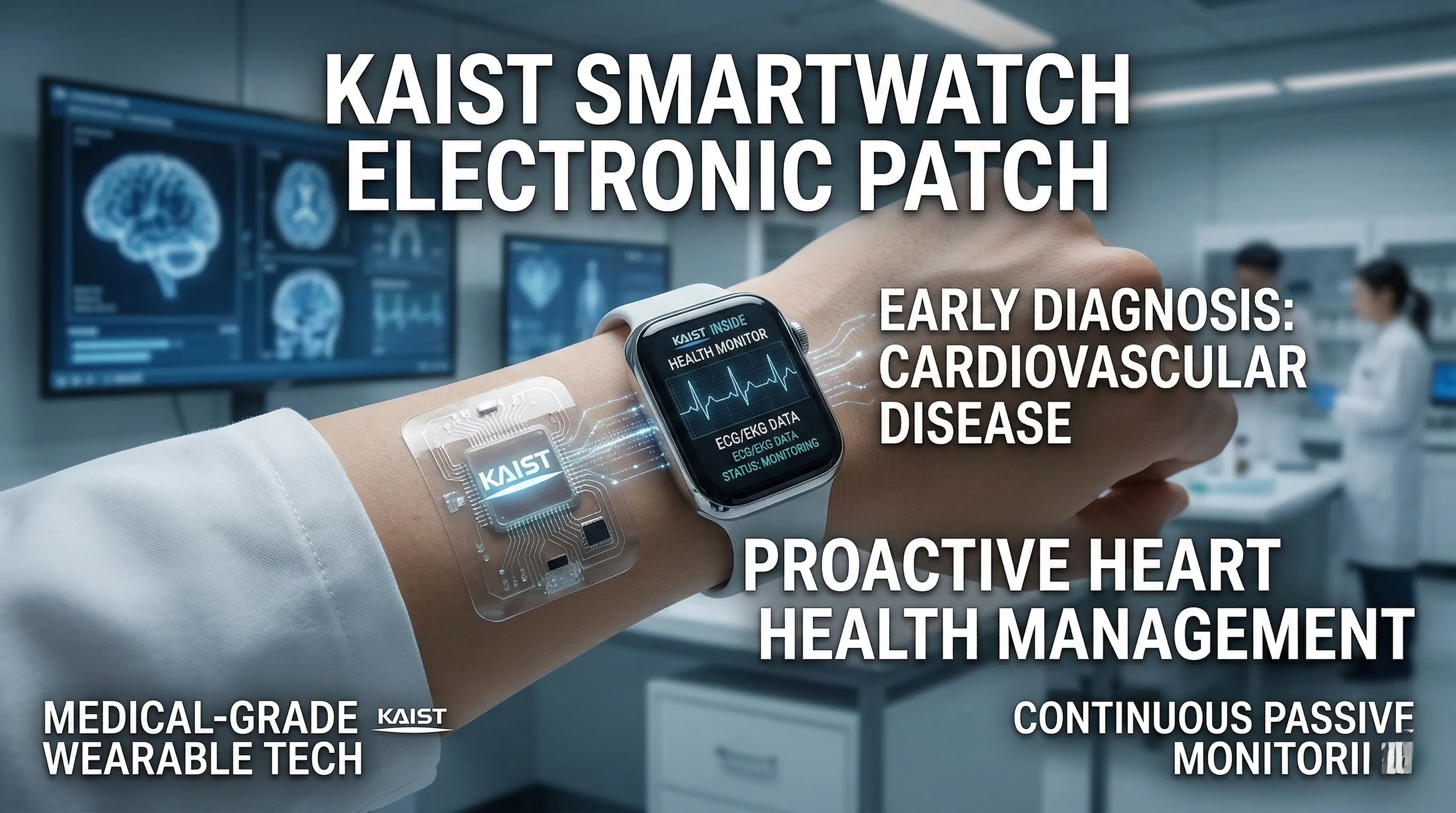
- KAIST has developed an innovative "Electronic Patch" designed for critical health monitoring.
- The primary feature of this smartwatch component is the early diagnosis of cardiovascular disease, aiming for proactive health management.
- As of now, there is no public user sentiment, reviews, or detailed specifications available, indicating its early stage or limited release status.
Wearable technology is rapidly evolving from simple activity tracking to sophisticated medical diagnostics.
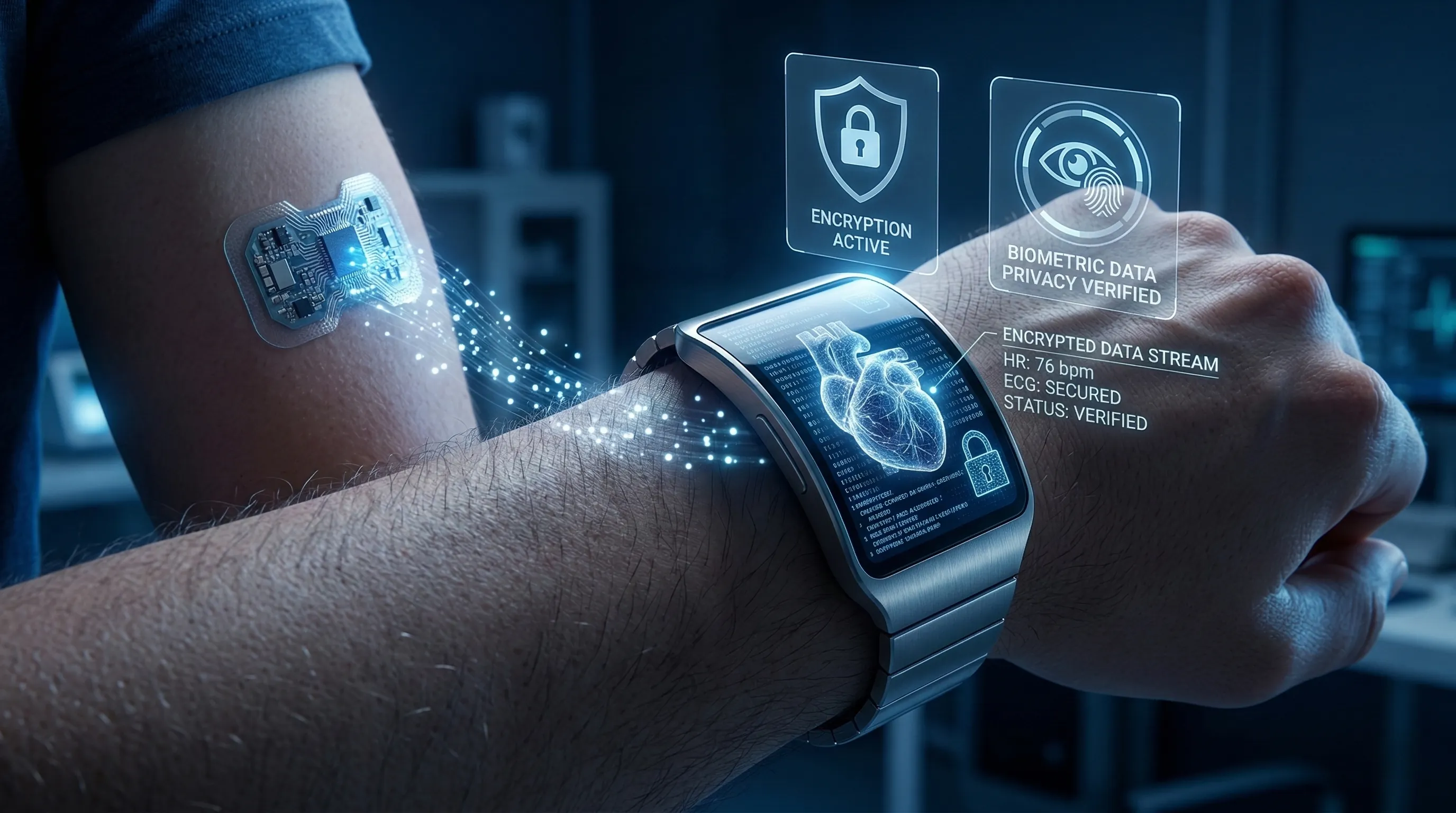
At the forefront of this shift, KAIST has announced a significant advancement: an "Electronic Patch" designed to integrate seamlessly with smartwatches.
About KAIST:
The Korea Advanced Institute of Science and Technology (KAIST) is South Korea’s premier research university.
Known globally for its cutting-edge innovations in robotics, AI, and biotechnology, KAIST consistently ranks among the top technical institutions in the world.
This innovation aims to tackle one of the most pressing global health challenges by providing a specialized tool for the early diagnosis of cardiovascular disease.
By identifying cardiac irregularities at their nascent stages, the technology empowers individuals to move toward preventative care rather than reactive treatment.
This development underscores the growing importance of integrated wearable solutions for monitoring and managing serious medical conditions in daily life.
1. At a Glance: Key Details
| Category | Detail |
|---|---|
| Device Name | KAIST Smartwatch 'Electronic Patch'. |
| Primary Function | Early diagnosis of cardiovascular disease. |
| Developer | KAIST (Korea Advanced Institute of Science and Technology). |
| Current Status | Early announcement/development; no public reviews, complaints, or detailed specifications available. Awaiting clinical trials and regulatory approval. |
| Inferred Core Technologies | Advanced biometric sensors (e.g., ECG/EKG, PPG, bioimpedance), on-device AI/Machine Learning algorithms for data analysis and pattern detection. |
2. A Patch to Predict: Redefining the Future of Wearable Health
The KAIST Electronic Patch is not just another accessory; it represents a fundamental shift in how we approach heart health.
By integrating cutting-edge materials with biometric precision, this device moves beyond the limitations of current consumer electronics.
🔹 Core Innovation: The "Digital Skin" for Your Heart
This specialized wearable, developed by KAIST, is engineered as a thin, flexible "Electronic Patch" that adheres directly to the skin.
Unlike bulky chest straps or loose-fitting wristbands, its form factor ensures consistent and high-fidelity data collection.
The primary objective is to facilitate the early diagnosis of cardiovascular disease, a feat that requires medical-grade sensitivity.
The announcement of this technology positions the patch as a significant leap forward in the evolution of personal health monitoring.
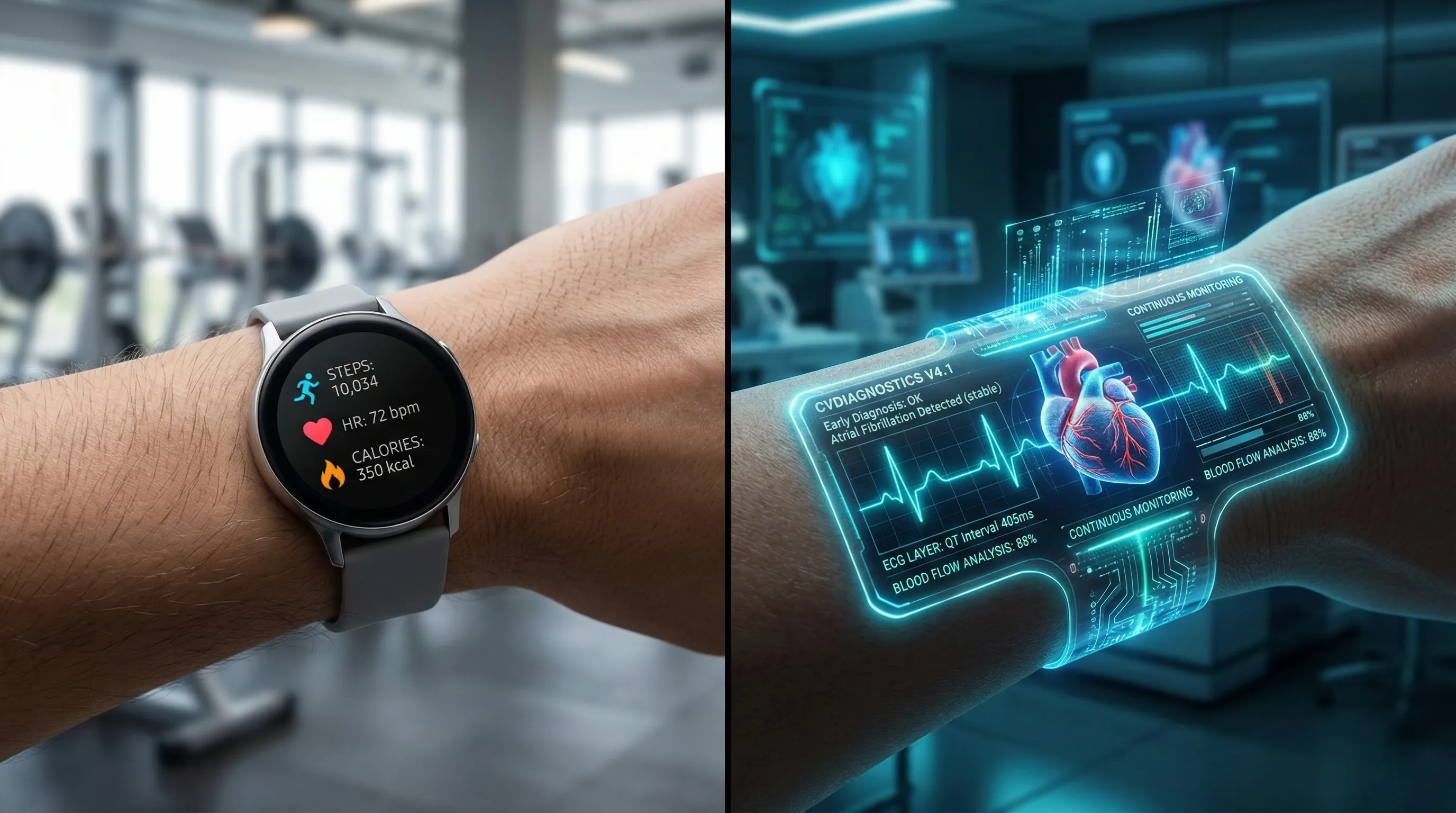
🔹 Beyond Step Counting: From Fitness to Clinical Scans
For years, the wearable market has been dominated by fitness metrics such as step counts, calorie burn, and sleep duration.
However, the KAIST patch redefines this paradigm by shifting the focus toward proactive clinical diagnostics.
This transition from "Steps to Scans" means the device functions as a "Cardiac Sentinel," constantly searching for subtle irregularities.
By capturing cardiac data at its nascent stages, it provides a level of insight typically reserved for hospital-grade equipment.
🔹 The Strategic Impact: Personalized and Proactive Care
The true power of this innovation lies in its capacity for early detection and timely medical intervention.
Identifying a potential issue before symptoms manifest can dramatically improve patient outcomes and survival rates.
This technology enables a personalized healthcare pathway, allowing users and doctors to manage heart health with surgical precision.
As we move toward a future of preventative medicine, KAIST’s electronic patch stands as a crucial component in reducing the global burden of heart disease.
3. The Science of a Sticker: Deconstructing the Tech Behind the Patch
The KAIST Electronic Patch is not merely a sensor; it is a sophisticated Deep Learning-integrated platform that redefines non-invasive diagnostics.
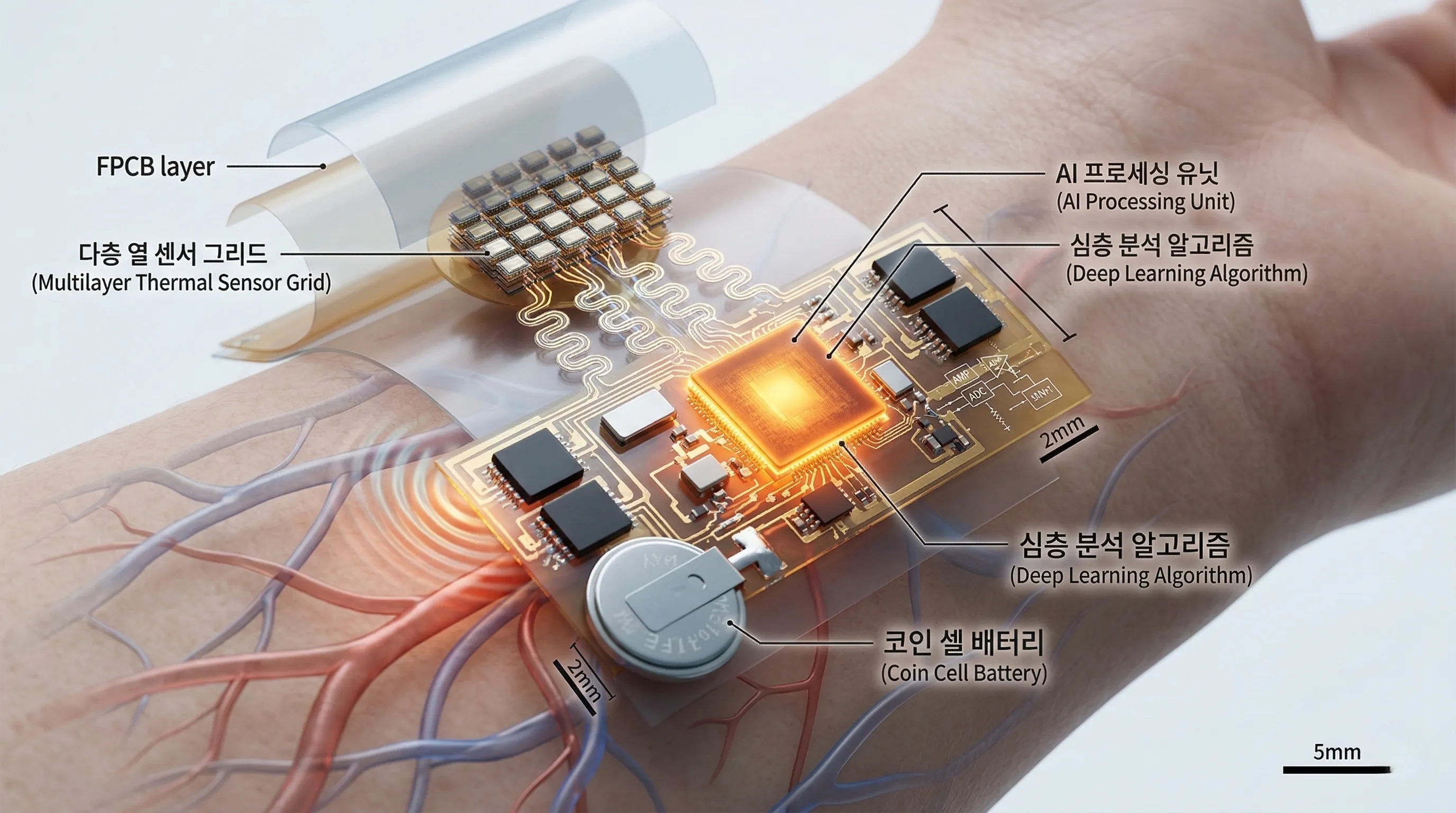
At its core, the device utilizes a groundbreaking technology known as "Multilayer Thermal Gradient Sensing."
🔹 Deep Learning & Multilayer Thermal Sensing: The Core Engine
Traditional wearable sensors often struggle with accuracy because they cannot account for the varying depths of blood vessels beneath the skin.
Professor Kwon Kyung-ha’s team solved this by stacking temperature sensors at different depths to analyze the three-dimensional movement of heat generated by flowing blood.
By integrating a Deep Learning algorithm, the patch can simultaneously extract both the vessel depth and the actual blood flow velocity in real-time.
Experimental results show a staggering level of precision, with an error margin of less than 0.12 mm/s—a measurement finer than a human hair.
🔹 The "72.6% Breakthrough" in Blood Pressure Accuracy
One of the most significant impacts of this technology is its synergy with existing wearable hardware.
When this electronic patch is combined with the Photoplethysmography (PPG) sensors found in standard smartwatches, it reduces blood pressure estimation errors by up to 72.6%.
This massive improvement allows a commercial smartwatch to approach the reliability of hospital-grade equipment.
This capability is pivotal for detecting early signs of hypertension, arteriosclerosis, or acute shock without the need for bulky ultrasound machines.
🔹 Actionable Insights from Micro-Thermal Data
The fusion of AI and thermal sensing allows for continuous, passive monitoring of cardiovascular markers during daily activities.
Whether you are exercising, holding your breath, or experiencing external stress, the patch maintains a clinical-grade perfusion index.
The objective is to translate raw thermal fluctuations into actionable health alerts, enabling users to detect life-threatening conditions long before symptoms manifest.
By providing a foundational platform for precise blood flow monitoring, KAIST is setting a new standard for the next generation of smart medical systems.
4. A New Challenger: Strategic Business Impacts on Apple and Samsung
The emergence of the KAIST Electronic Patch signals a shift from "all-in-one" consumer gadgets to highly specialized medical-grade peripherals.
This movement poses a unique challenge to established tech giants like Apple and Samsung, potentially disrupting their existing health ecosystems.
🔹 Beyond Consumer Wellness: The "Certified Medical Device" Model
Current market leaders focus on a horizontal integration model, offering a broad suite of wellness features (ECG, sleep, steps) to a mass audience.
In contrast, the KAIST patch adopts a vertical niche strategy, prioritizing clinical-grade diagnostic accuracy over multi-functional convenience.
By aiming for certified medical device status (FDA/MFDS), this technology could carve out a premium segment that current smartwatches cannot reach due to sensor limitations.
This creates a new B2B and B2C hybrid model, where the patch could be prescribed by doctors or sold as a critical add-on for high-risk patients.
🔹 Disruption of Integrated Health Ecosystems
Apple and Samsung have built powerful walled gardens where health data is used to increase user retention and ecosystem lock-in.
A highly accurate, specialized patch from an independent research institution like KAIST could force these giants to reconsider their "One-Size-Fits-All" hardware approach.
Instead of competing directly, we may see a shift toward strategic partnerships or modular integration, where specialized third-party sensors like the KAIST patch feed data into the Apple Health or Samsung Health platforms.
This "Modular Health" approach would allow tech giants to maintain their software dominance while outsourcing high-stakes medical sensing to specialized research-driven hardware.
🔹 Strategic Response: Clinical Validation as the New Moat
For Apple and Samsung, the response will likely hinge on deepening their own clinical validation efforts.
If the KAIST patch successfully navigates the regulatory landscape, it will set a new benchmark for sensor accuracy that consumer-grade devices must meet to remain relevant.
The ultimate market winner won't just be the one with the most features, but the one that secures the highest level of trust from both regulatory bodies and healthcare providers.
As the industry moves toward reimbursement-based digital health, the ability to provide "Actionable Clinical Data" will become the primary competitive advantage.

5. The Roadmap to Reality: From Lab Bench to Global Market
The KAIST Electronic Patch is currently in its "Quiet Phase"—a transition period where groundbreaking research prepares for the rigors of real-world medical application.
While public data and user reviews are currently absent, this "Information Blackout" is a standard characteristic of high-stakes medical innovation prior to clinical disclosure.
🔹 Phase 1: Bridging the "Trust Gap" via Peer Review
The first milestone on the roadmap is academic and scientific validation.
Before reaching consumers, the technology must undergo rigorous peer review and publication in leading biomedical journals.
This stage is crucial to address the current lack of public specifications and to establish foundational credibility within the medical community.
Transparency in sensor accuracy and algorithmic efficacy will be the primary focus to move the device out of specialized research circles.
🔹 Phase 2: Navigating the Regulatory Labyrinth
As a diagnostic tool for cardiovascular disease, the patch faces a stringent path toward medical certification.
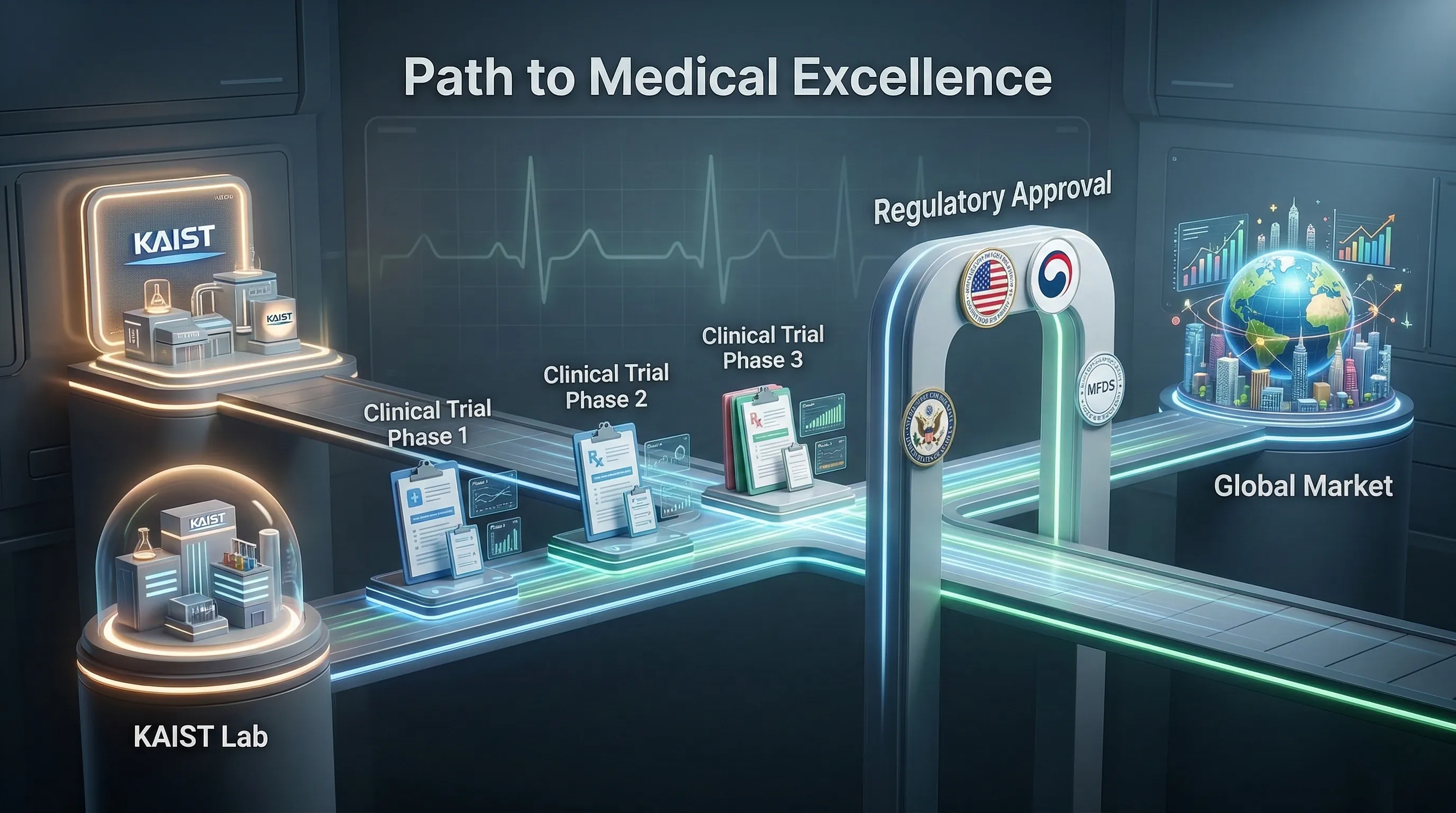
The device must successfully complete multi-phase clinical trials to prove its safety and diagnostic reliability across diverse patient populations.
Simultaneously, securing approvals from regulatory bodies such as the U.S. FDA and South Korea’s MFDS is non-negotiable.
This complex process ensures that the "Electronic Patch" meets the highest standards for clinical-grade performance, distinguishing it from mere consumer wellness gadgets.
🔹 Phase 3: Scaling Production and Ecosystem Integration
The final hurdle involves translating a laboratory prototype into a mass-produced medical solution.
Scaling production requires a resilient supply chain for specialized components and robust quality control to maintain sensor precision at scale.
Beyond manufacturing, the ultimate success hinges on seamless integration into existing healthcare workflows and commercial smartwatch ecosystems.
Establishing commercial partnerships for distribution and ensuring affordability will be the final steps in making this proactive health tool accessible to the global public.
6. The Bottom Line: Impact on Personal Health and Data Security
The KAIST Electronic Patch is more than just a technological milestone; it represents a fundamental shift in our daily relationship with cardiovascular health.
By transitioning from reactive treatment to proactive vigilance, this innovation has the potential to redefine long-term wellness protocols for millions of people.
🔹 A New Standard for Continuous Heart Vigilance
For the average user, the ability to perform early diagnosis in a non-invasive, continuous manner means the end of "waiting for symptoms."
This technology enables personalized lifestyle adjustments and earlier medical interventions, which are critical in managing global heart health concerns.
Healthcare providers also stand to benefit from a reliable stream of diagnostic data, allowing for more precise, data-driven patient management and streamlined treatment pathways.
🔹 The Data Frontier: Privacy in the Age of Diagnostics
As with any device that generates highly sensitive medical data, the "Electronic Patch" brings new responsibilities regarding personal information security.
The integration of on-device AI is a positive sign, potentially allowing for local data processing that minimizes the risk of cloud-based breaches.
However, as the device moves toward clinical adoption, transparency regarding data encryption and privacy protocols will be as important as the sensors themselves.
Future watchpoints for this technology include how it handles the seamless and secure synchronization of health records between users and authorized medical professionals.
🔹 Final Verdict: A Technology to Watch
While the current stage lacks public reviews or detailed performance benchmarks, the scientific foundation from KAIST is undeniably strong.
The real-world success of this patch will depend on three key pillars: clinical validation, regulatory approval, and user trust.
As this innovation progresses from a research announcement to a commercial reality, it will likely become a benchmark for the future of specialized medical wearables.
7. 💡 Tech Talk: Making Sense of the Jargon
- Electronic Patch:
- Imagine a super-thin, flexible sticker that you wear on your skin.
Instead of just being a decoration, it is packed with miniature sensors and processors that "listen" to your body’s internal signals.
It functions like a high-tech, smart band-aid designed to gather vital health data without the need for bulky equipment.
Cardiovascular Disease: - This is a broad term for any medical condition that affects your heart or blood vessels.
You can think of it like issues with your body’s internal plumbing system or the main pump (your heart) not working at 100% efficiency.
Early diagnosis is critical to keeping this entire system running smoothly and preventing major breakdowns.
Multilayer Thermal Sensing: - This is a specialized technology that measures how heat moves through different layers of your skin.
By tracking heat flow at various depths, the patch can calculate blood flow velocity with incredible precision.
It allows the device to "see" into your vessels and detect changes without using invasive needles or expensive hospital scans.
On-Device AI: - This refers to Artificial Intelligence that lives directly on the patch’s small processor, rather than on a distant internet server.
It processes your health data instantly and privately right on your wrist.
This ensures faster heart alerts and keeps your sensitive medical information much safer from external hacks.
📚 Related Posts
TP-Link Deco BE85 Review: The 22Gbps Wi-Fi 7 Mesh System of the Future?
🚀 Key TakeawaysThe TP-Link Deco BE85 redefines home networking as an award-winning "Wi-Fi 7 Mesh of the Year" system, delivering future-proof 22Gbps speeds and superior value compared to high-end competitors.Boasting BE22000 tri-band speeds, MLO, 4K-QAM
tech.dragon-story.com
The 2026 Definitive Guide to Gemini 3 Deep Think: Reshaping the Future of Science
Key Takeaways from Gemini 3 Deep Think's DebutSpecialized AI: Gemini 3 Deep Think is Google DeepMind's new, highly specialized model engineered for complex scientific reasoning and data analysis, distinct from the general-purpose Gemini 3.Causal Inference
tech.dragon-story.com
The OEBM Revolution: How Explainable AI is Redefining Credit Card Fraud Detection in 2026
Today, we're looking at a significant update in the fight against financial crime: the Optimized Explainable Boosting Machine (OEBM).A new research paper, arXiv:2602.06955v1, published on 2026-02-11, details how OEBM is poised to improve Credit Card Fraud
tech.dragon-story.com


