🚀 Key Takeaways
- Qwen3.5 boasts significantly enhanced vision capabilities, having passed all our tests and successfully replaced the previous winner, 235b, leading to extremely happy user sentiment.
- The update introduces improved tool calling, demonstrating many times less failures than the 4-bit GLM model, although some users report it doesn't follow instructions well and describe using tools as a disaster at times.
- While praised for being very good at capturing thoughts and putting them into ideas and helping with coding bugs, users note the model can fall apart in the long run and struggles with hallucinations and identifying specific things.
The highly anticipated Qwen3.5 update is here, bringing with it a suite of enhancements designed to push the boundaries of AI capabilities.
This version is particularly making waves for its significantly enhanced vision capabilities, which have not only passed all rigorous internal tests but have also successfully replaced the benchmark-setting 235b as the new leader.
Beyond visual prowess, Qwen3.5 also introduces notable advancements in tool calling, showcasing many times less failures when compared to the 4-bit GLM.
Users are finding it particularly adept at capturing thoughts, generating creative ideas, and even assisting with debugging complex coding issues.
However, like any evolving technology, the reception to Qwen3.5 is a nuanced one.
While some users are extremely happy with its vision performance, others report challenges, including instances where the model can fall apart in the long run and struggle with precise instruction following.
Join us as we dive deeper into what makes Qwen3.5 stand out, both its triumphs and its current quirks.

1. At a Glance: Key Details
| Feature | Qwen3.5 Status/Impact |
|---|---|
| Vision Capabilities | Significantly enhanced; passed all tests; replaced previous leader '235b'; extremely positive user sentiment. |
| Tool Calling | Improved with many times less failures than 4-bit GLM; however, some users report difficulties and "disaster" in specific contexts. |
| Idea Generation & Coding Assistance | Very good at capturing thoughts and turning them into ideas; helpful with coding bugs. |
| Long-term Performance/Reliability | Users report it can "fall apart in the long run," struggles with instruction following, hallucinations, and identifying specific things. |
| Compatibility Concerns | Some concerns raised about potential issues from version number changes affecting compatibility. |
2. Technical Architecture: Vision Prowess & Tool Evolution
The arrival of Qwen3.5 marks a significant leap in multimodal AI, moving beyond simple text processing into complex scene understanding and functional orchestration.
This version is engineered to bridge the gap between abstract reasoning and tangible execution, though the journey is not without its technical friction.
🔹 Supercharged Multi-modal Performance
Beyond vision, Qwen3.5 introduces a much-needed overhaul of its tool calling mechanism.
The new architecture demonstrates many times fewer failures compared to the older 4-bit GLM model, offering a more reliable foundation for automation.
Developers will find the model particularly adept at capturing complex thoughts and translating them into actionable ideas.
From identifying elusive coding bugs to streamlining multi-step workflows, the improved logic aims to reduce the friction commonly found in AI-driven task orchestration.
🔹 Smarter Logic: The Evolution of Tool Calling
The introduction of robust vision capabilities unlocks the potential for applications that can now interpret and interact with visual information more effectively, from image analysis to complex scene understanding.
This directly translates into a broader range of use cases for Qwen3.5 across various industries.
Improved tool calling enables developers to build more reliable and sophisticated automated workflows, reducing errors and increasing the efficiency of complex multi-step processes.
Users can expect smoother interactions when Qwen3.5 is tasked with orchestrating external tools, leading to more dependable outcomes for intricate tasks.
🔹 The Early Verdict: High Hopes and Hidden Hurdles
While the technical leaps are undeniable, the community's response reflects a nuanced reality.
Early adopters are extremely happy with the vision performance, noting its success in replacing older benchmarks like 235b.
However, a "duality" exists where the model's reliability can fall apart in long-range interactions, leading to inconsistent instruction following.
Some users describe specific tool-use scenarios as a "disaster," noting that the model can still be "funky" when identifying highly specific objects.
This contrast suggests that while the architectural foundation is strong, scenario-specific testing remains crucial for mission-critical deployments.

3. Real-world Impact: From Creative Ideation to Strategic Deployment
Moving from a nascent concept to a well-structured plan is where Qwen3.5 truly shines in a daily professional workflow.
However, the leap to this new version requires a strategic approach to navigate potential compatibility hurdles.
🔹 Productivity Catalyst: Brainstorming and Debugging
For creative professionals, Qwen3.5 acts as a mental bridge, excels at capturing fragmented thoughts and transforming them into coherent project blueprints.
This leads to faster content generation and significantly improved clarity during the initial planning stages of any project.
Developers benefit from its specialized engineering designed to identify and resolve coding bugs with higher speed and accuracy.
By reducing the time spent on tedious debugging, teams can maintain a more fluid and productive development cycle.
🔹 The Migration Roadmap: Navigating Versioning Risks
While the internal upgrades are impressive, the community has raised valid concerns regarding version number changes affecting compatibility.
To avoid "compatibility chaos," a proactive migration strategy is essential for a smooth transition to Qwen3.5.
We recommend a phased deployment approach, starting with rigorous validation in a dedicated non-production environment.
Best practices include a full audit of your existing custom integrations to ensure they align with the new model’s refined response logic.
🔹 Pro-Tip: The "Long-Run" Validation Loop
Given that some users report the model can "fall apart" during extended sessions, scenario-specific testing is your best defense.
Evaluate Qwen3.5 using your most complex instruction sets and long-running processes before committing to a full rollout.
Implement automated monitoring to catch any potential hallucinations or instruction-following failures in real-time.
This systematic validation ensures that you capture all the innovative benefits of Qwen3.5 while mitigating its current operational quirks.
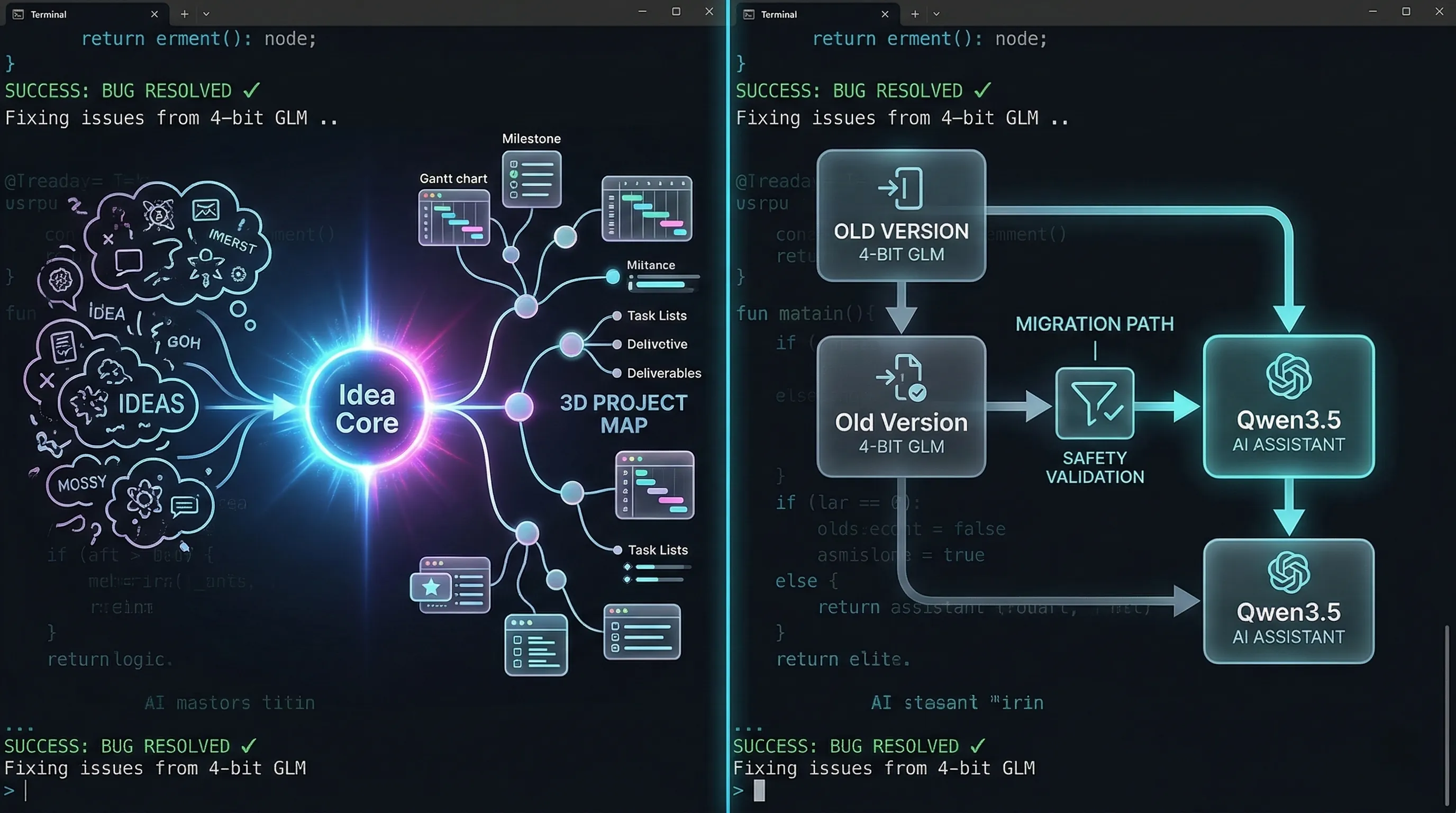
4. The Reality Check: Performance Stability and Critical Limitations
While Qwen3.5 starts with a sprint of brilliance, community feedback reveals that its performance in the "long haul" is a subject of intense debate.
The model exhibits a striking duality, where high-end multimodal capabilities often clash with operational inconsistencies during extended use.
🔹 The Endurance Gap: Why It "Falls Apart" Over Time
A recurring critique from the community is that Qwen3.5 tends to "fall apart in the long run."
While initial interactions are sharp, the model often loses its grip on complex instruction sets as conversations become more extended.
This "marathon fatigue" manifests as a decline in instruction adherence and an increase in factual hallucinations.
For users, this means that while the model is excellent for initial ideation, it requires careful oversight during multi-turn projects to ensure it doesn't drift away from the original goal.
🔹 The Tool-Use Dilemma: From Breakthrough to Disaster
Despite having "many times fewer failures" than its predecessors, the practical application of tool calling remains a point of friction.
Some users describe the experience of integrated tool usage as a "disaster," specifically citing logic breaks during automated sequences.
The model is also reported to be "a little funky" at identifying highly specific objects within its vision window, leading to subtle but critical errors.
These inconsistencies suggest that Qwen3.5 is best suited for discrete, well-defined tasks rather than opaque, long-running automated workflows.
🔹 Strategic Mitigation: Pro-Tips for Peak Performance
To navigate these quirks, we recommend implementing stringent validation checks for all generated content and tool outputs.
For intricate, multi-turn tasks that demand high precision, consider augmenting Qwen3.5 with external logic or specialized sub-models to handle object recognition.
Developers should also maintain a rigorous compatibility monitoring system to pre-empt issues caused by versioning changes.
By treating Qwen3.5 as a powerful but specialized assistant—rather than a "set-and-forget" solution—you can leverage its creative strengths while guarding against its technical limitations.

5. 💡 Tech Talk: Making Sense of the Jargon
- Vision capabilities:
- Imagine your AI assistant finally got its high-definition prescription glasses.
It’s not just "seeing" pixels; it’s like a toddler looking at a dog and not only saying "dog," but also identifying its breed and mood.
For Qwen3.5, this means "eyes" that can interpret complex visual data to answer deep questions or solve intricate visual puzzles. - Tool calling:
- Think of this as giving your AI a heavy-duty toolbox and a phone to call specialists.
When you ask it to "book a flight," it doesn't fly the plane; it knows to trigger the "Booking App" (a tool) with the right data.
However, if the AI gets "tired" (long-run fatigue), it might try to use a hammer to fix a lightbulb, leading to the "disasters" some users reported. - Hallucinations:
- This is what happens when an AI drinks too much digital coffee and starts telling "confident lies."
The model might describe a feature or a fact that simply doesn't exist in the real world.
It’s a creative brain-glitch where the AI chooses imagination over accuracy, requiring users to double-check its work. - Instruction Following:
- This is the AI’s ability to stay on track like a well-trained marathon runner.
Good instruction following means the AI finishes the race exactly how you asked, without wandering off into the woods.
When this "falls apart," the AI starts making its own rules, ignoring your specific constraints or formatting requests.
📚 Related Posts
Galaxy S26 Rumor Deep Dive (Feb 2026): The 8 Biggest Leaks You Need to See
Key Takeaways: Galaxy S26 RumorsDesign Refinement: The Galaxy S26 Ultra is rumored to feature highly symmetrical, sub-1.5mm bezels and 'Gorilla Glass Armor 2' on a Grade 6 titanium frame.Display & Performance Boosts: Expect a new M14 OLED panel with up to
tech.dragon-story.com
Samsung T9 vs T7 Shield vs Crucial X10 Pro: The Ultimate SSD for Gamers and Creators
🚀 Key TakeawaysThe Samsung T9 and Crucial X10 Pro deliver peak performance with their USB 3.2 Gen 2x2 (20Gbps) interface, effectively doubling the transfer speed of the Samsung T7 Shield's USB 3.2 Gen.2 (10Gbps).Both the Samsung T9 and Crucial X10 Pro s
tech.dragon-story.com
Galaxy S26 Dual AI: A Guide to the Multi-Agent Revolution
🚀 Key TakeawaysThe Galaxy S26 introduces "Dual AI" capabilities.It is positioned as ushering in the "multi-agent era."This marks a significant shift in mobile AI capabilities.The future of mobile intelligence has arrived with the Galaxy S26, poised to r
tech.dragon-story.com


