🚀 Key Takeaways
- Google's February AI Blitz unveiled a significant push for more capable and specialized AI, focusing on empowering both advanced problem-solving and creative expression across diverse applications.
- This included the release of Gemini 3.1 Pro, boasting more than double the reasoning performance of its predecessor, and Gemini 3 Deep Think, specifically designed to tackle the complexities of science and engineering where data is often messy.
Additionally, new creative tools like Nano Banana 2 (faster image generation), Lyria 3 (custom music), and Flow (unified image/video creation) were introduced. - Google is extending AI's reach to a broad audience, from developers and enterprises building sophisticated solutions to consumers creating content, while also addressing global societal challenges and fostering digital resilience in a collaborative future, as highlighted by initiatives in India and at the Munich Security Conference.
Google made a significant splash in February, unveiling a comprehensive suite of advancements across its artificial intelligence ecosystem.
This AI Blitz saw major announcements ranging from new, more powerful Gemini models to innovative creative tools and strategic global initiatives.
A key highlight was the AI Impact Summit in New Delhi, India, where CEO Sundar Pichai delivered opening remarks, emphasizing AI's role in solving real-world challenges and fostering new partnerships and investments.
Simultaneously, Google’s President of Global Affairs, Kent Walker, addressed digital resilience at the 62nd Munich Security Conference (MSC), advocating for a collaborative approach to security in the evolving AI era.
These developments collectively underscore Google's commitment to pushing the boundaries of AI, ensuring broad access, and addressing its societal implications, including new partnerships in India and an AI video analysis tool for Team USA.
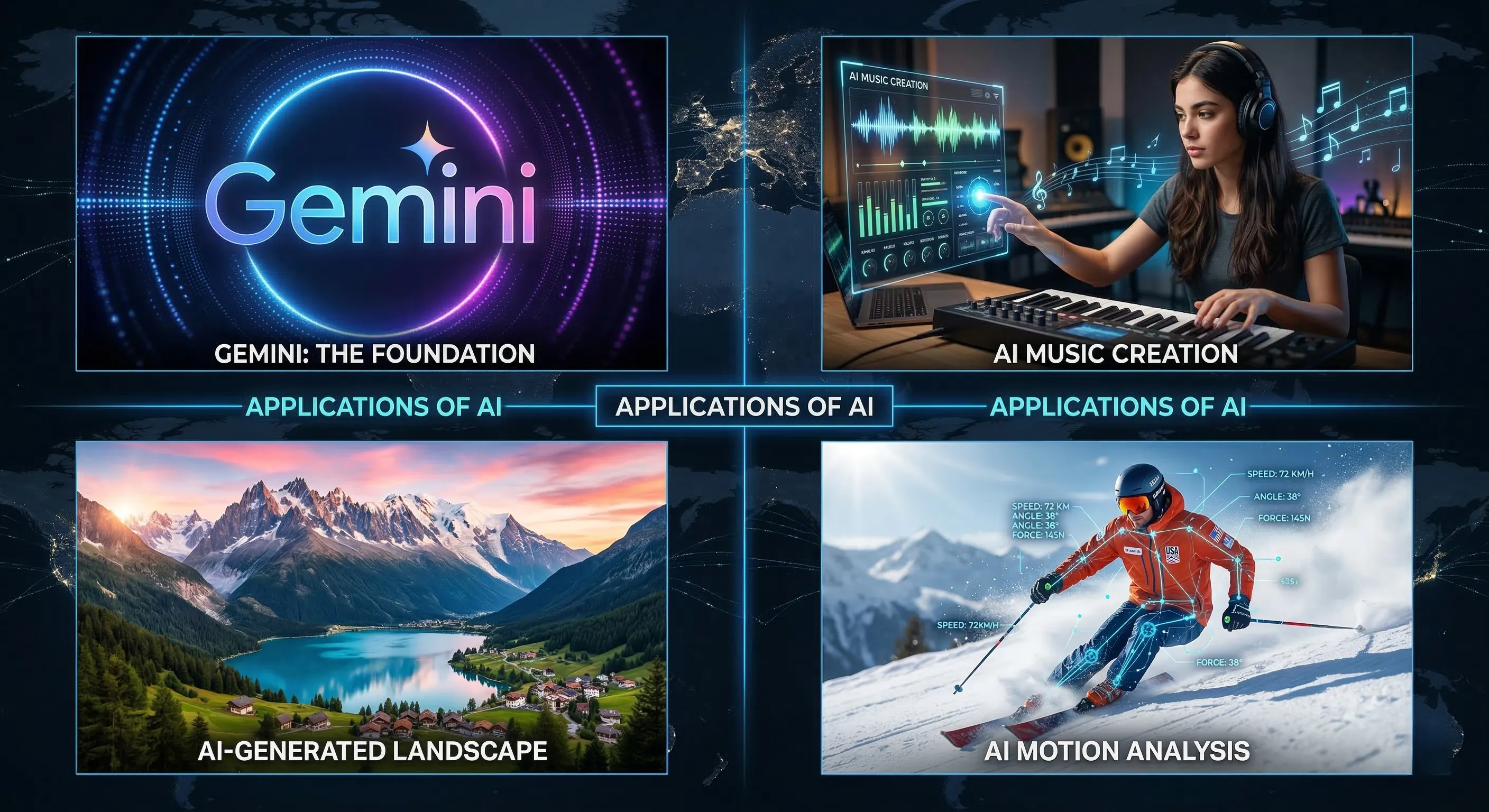
1. At a Glance: Key Details
| Category | Key Development |
|---|---|
| Event Highlight | Google's February AI Blitz unveiling a comprehensive suite of AI advancements. |
| Advanced Gemini Models | Gemini 3.1 Pro (2x reasoning perf), Gemini 3 Deep Think (science/engineering, messy data). |
| New Creative Tools | Nano Banana 2 (faster image gen), Lyria 3 (custom music), Flow (unified image/video creation), ProducerAI (music partner). |
| Global Initiatives | AI Impact Summit in India (partnerships, investments); Munich Security Conference (digital resilience, collaboration). |
| AI for Sports | Advanced AI video analysis for Team USA (Ski & Snowboard) using spatial intelligence. |
| Developer Focus | Nano Banana 2 (price-perf), Gemini 3.1 Pro (complex problem-solving), Gemini 3 Deep Think (early access API for R&D). |
| Responsible AI | Emphasis on ethical deployment, SynthID enhancements for AI-generated content identification. |
2. Google's Grand Plan: AI for Global Impact and Security
🔹 Forging Alliances for Societal AI Advancement
Google's strategic vision for AI deployment emphasizes a robust framework of global cooperation and impact-driven initiatives.
At the AI Impact Summit in India in February, CEO Sundar Pichai underscored AI's potential to address real-world challenges, announcing new national partnerships in India and broader collaborations to accelerate scalable AI solutions in science and education.
Pichai urged global leaders to pursue AI boldly yet responsibly, fostering collective development.
Concurrently, Google President of Global Affairs Kent Walker addressed the 62nd Munich Security Conference, advocating for a collaborative approach to security in the AI era.
Walker highlighted the necessity for partners to collectively build digital resilience without compromising control over their data, acknowledging the evolving nature of strategic competition and threats introduced by new technologies.
This dual focus from top executives illustrates a concerted effort to weave AI into global infrastructure for both societal benefit and enhanced international security.
🔹 Architecting Resilient and Equitable AI Ecosystems
The emphasis on national partnerships and major infrastructure investments in regions like India signals a strategy to democratize AI access and foster localized innovation, moving beyond traditional tech hubs.
This approach promises to empower diverse communities, enabling governments and scientific institutions to leverage AI for pressing societal needs, from climate modeling and agricultural efficiency to public health initiatives and sustainable resource management.
The launch of new Impact Challenges further stimulates innovation, directly addressing critical gaps in scientific discovery and public service delivery.
Kent Walker's focus on data resilience and collaborative security frameworks at the Munich Security Conference is crucial for fostering trust and stability in an increasingly AI-dependent world.
By ensuring nations can build resilience while maintaining sovereignty over their data, Google aims to mitigate geopolitical risks associated with AI adoption and deployment.
Such a strategy could catalyze international standards for AI ethics and security, providing a bedrock for responsible AI governance across borders and industries, including finance, critical infrastructure, and advanced research.
🔹 Navigating the Imperative for Global AI Governance
The consistent messaging from Google's leadership suggests a recognition that the widespread adoption of AI necessitates a proactive stance on governance and international cooperation.
The call for leaders to "work through this moment in AI’s development together" reflects the complex policy challenges inherent in scaling AI ethically and securely.
Experts generally concur that without robust cross-border collaboration on policy and security, the transformative potential of AI could be undermined by fragmentation and adversarial applications.
Community consensus highlights the importance of balancing innovation with safeguarding against misuse, emphasizing the need for transparent frameworks around data handling and AI model deployment.
The commitment to AI skills training alongside infrastructure investment also addresses a critical challenge: ensuring equitable access to the benefits of AI by equipping a global workforce with necessary capabilities.
This high-level strategic push indicates Google's aim to position itself not just as an AI developer, but as a key architect of the global AI ecosystem, navigating both its immense promise and its inherent complexities.

3. The Brains of the Operation: Meet the New Gemini Models
🔹 Architectural Evolution: Gemini 3.1 Pro and Deep Think's Core Strengths
The latest iteration of the Gemini models introduces two distinct advancements: the Gemini 3.1 Pro and Gemini 3 Deep Think.
Gemini 3.1 Pro emerges as a more capable and smarter baseline model, demonstrating more than double the reasoning performance of its predecessor, Gemini 3 Pro.
It is specifically engineered for complex problem-solving, addressing scenarios where straightforward answers are insufficient.
Concurrently, Gemini 3 Deep Think represents a highly specialized model, designed to navigate the intricate demands of science and engineering.
This model excels particularly in environments characterized by messy data and problems lacking clear, black-and-white solutions.
Its development notably involved collaboration with world-class scientists and researchers, ensuring its capabilities are aligned with practical, cutting-edge technical challenges.
🔹 Unlocking New Frontiers: Applied Intelligence Across Industries
The enhanced reasoning capabilities of Gemini 3.1 Pro promise significant impact across diverse professional domains.
In finance, it could revolutionize intricate risk assessments, market trend analysis, and fraud detection by processing vast, interwoven datasets to uncover non-obvious patterns.
Legal professionals could leverage its capacity for complex problem-solving to dissect dense legal documents, synthesize precedents, and develop nuanced arguments beyond simple keyword matching.
For business analysts, its ability to support clear, visual explanations and synthesize data into a single view will streamline strategic reporting and improve decision-making based on aggregated insights.
Meanwhile, Gemini 3 Deep Think stands to accelerate discovery and innovation in core scientific and engineering fields.
In pharmaceutical research, it can analyze disparate experimental results, genomic data, and clinical trials—often characterized by messy data—to identify potential drug candidates or disease mechanisms.
Engineers in aerospace or materials science could deploy Deep Think to model complex system interactions or simulate material properties under varied, imperfect conditions, leading to more robust designs and faster prototyping cycles.
Its design, informed by direct collaboration with scientists, ensures it moves beyond abstract theory to deliver practical, actionable results, facilitating breakthroughs in areas from renewable energy to advanced manufacturing.
🔹 Strategic Specialization: An Evolving AI Landscape
The introduction of Gemini 3.1 Pro and Gemini 3 Deep Think signals a strategic bifurcation in AI model development, prioritizing both enhanced general-purpose intelligence and deep domain specialization.
Analysts observe that the "more than double reasoning performance" of 3.1 Pro positions it as a robust foundation for enterprise applications requiring sophisticated analytical power, available to developers, enterprises, and consumers.
This focus on complex problem-solving underscores a shift towards AI systems that can handle ambiguity and multi-faceted inquiries rather than merely retrieving information.
Conversely, Deep Think's targeted development for science and engineering, along with its ability to handle messy data, addresses a critical unmet need in research and development.
Its direct collaboration with "world-class scientists and researchers" suggests a model meticulously tuned for scientific rigor and real-world applicability, offering early access via the Gemini API for researchers, engineers, and enterprises.
This dual approach highlights an evolving AI landscape where models are increasingly tailored to deliver both broad utility and profound, specialized expertise, optimizing their utility across the technological spectrum.

4. Your AI Co-Creator: A New Suite of Creative Tools
🔹 Accelerating Creative Output with Integrated AI Platforms
Google has unveiled a suite of advanced AI-powered tools designed to streamline and enhance digital content creation.
At the forefront for visual artists is Nano Banana 2, an image generation engine that marries Pro image capabilities with Flash image speed, delivering high-quality visuals at an accelerated pace.
This improved image generation is now integrated into the Gemini app and Google Search, and is also made available to developers, enabling sophisticated visual creation at scale with a compelling price-performance ratio.
For auditory experiences, Lyria 3 facilitates custom music creation directly within the Gemini app.
Users can describe an idea or upload a photo/video, prompting the system to generate unique 30-second tracks complete with custom cover art.
Complementing this, ProducerAI is joining Google Labs as a dedicated music creation partner, specializing in refining lyrics and melodies to transform imaginative concepts into comprehensive songs.
Unifying these creative threads is Flow, an AI-powered workspace dedicated to generating, editing, and animating images and videos.
Flow brings top AI capabilities into a single interface, allowing creators to produce high-fidelity images and instantly leverage them as foundational building blocks for video generation, supported by an updated interface for efficient asset management.
🔹 Empowering Diverse Creative Workflows and Industry Innovation
The introduction of this integrated suite of tools marks a significant step towards democratizing and professionalizing creative production across numerous sectors.
For instance, marketing and advertising agencies can utilize Nano Banana 2 to rapidly prototype diverse visual campaigns, iterating on ad creatives and personalized visuals for segmented audiences with unprecedented speed.
This capability directly translates into faster campaign launches and enhanced A/B testing efficiencies.
In the realm of independent content creation, musicians, podcasters, and YouTubers can leverage Lyria 3 and ProducerAI to generate unique background scores, jingles, and refine lyrical ideas without requiring extensive musical theory or expensive studio access.
This significantly lowers the barrier to entry for high-quality audio production, fostering a new wave of digital artists.
Film and animation studios could integrate Flow into their pre-production pipelines, quickly generating conceptual art, character designs, or environmental assets from simple text prompts, and then seamlessly animating them within the same workspace.
This could compress concept-to-prototype cycles, freeing up human artists for more complex, nuanced tasks.
Furthermore, in educational contexts, educators and students could employ these tools to visualize complex scientific processes or historical events, or to compose thematic music for interactive learning modules, making abstract concepts more engaging and accessible.
The unified nature of Flow also promises to drastically reduce the operational overhead for small businesses and individual creators who often juggle multiple software solutions for different creative tasks.
🔹 Cultivating Responsible Creation and Community Engagement
The strategic integration of these powerful AI tools into accessible platforms like the Gemini app and Google Search reflects a commitment to broadening the base of AI-assisted creators.
This accessibility is poised to foster widespread adoption, allowing both seasoned professionals and casual users to explore new creative avenues.
Expert consensus indicates that tools like Nano Banana 2, with its blend of quality and speed, will become indispensable for rapid ideation and mock-up generation in design-intensive industries.
The emphasis on identifying AI-generated content, highlighted by continuous improvements to tools like SynthID in conjunction with Nano Banana 2, underscores a proactive approach to transparency and ethical considerations in the evolving landscape of synthetic media.
The availability of ProducerAI through Google Labs suggests an iterative development process, inviting community and expert feedback to refine its capabilities in lyric and melody refinement.
User sentiment from early access and demonstrations points to enthusiasm for the unified workspace presented by Flow, particularly for its potential to streamline complex multi-media projects that traditionally require toggling between disparate applications.
The collective impact of these offerings is expected to position AI not just as an automation tool, but as an integral co-creator, augmenting human creativity and unlocking efficiencies previously unattainable for a diverse range of creative endeavors.

5. AI on the Slopes: How Google is Training Olympic Athletes
🔹 Precision Performance: Google's AI-Powered Athletic Insights
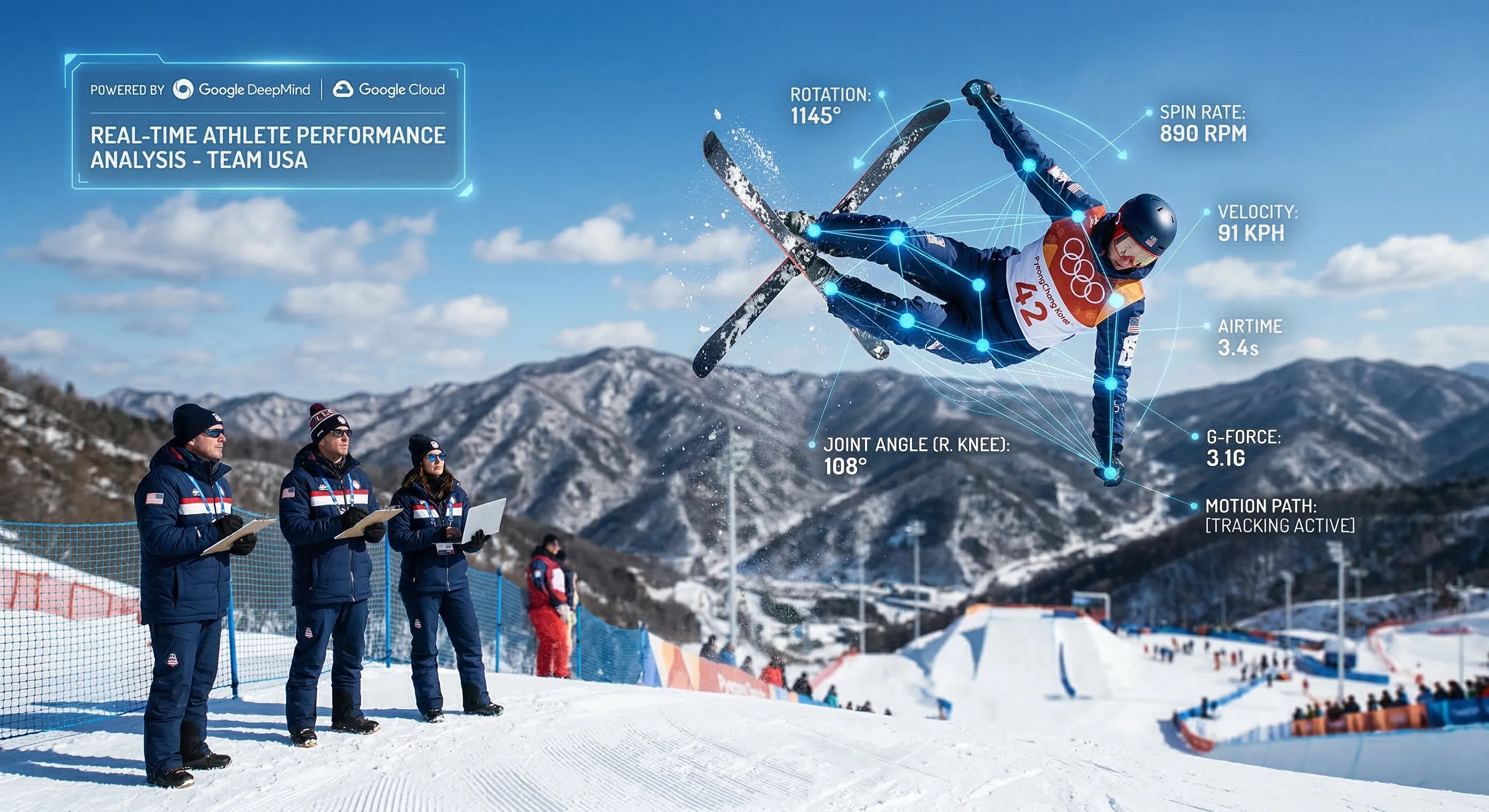
Google Cloud and Google DeepMind have collaborated to develop an advanced AI video analysis tool.
Its core purpose is to assist elite athletes from Team USA and U.S. Ski & Snowboard in meticulously analyzing their tricks.
The technological foundation of this system is Google DeepMind's cutting-edge research into spatial intelligence.
Operating on Google Cloud, the tool is capable of mapping an athlete's motion directly from standard 2D video images.
A notable feature is its ability to accurately track motion even when athletes are wearing bulky winter gear.
This system processes the collected data rapidly, often within minutes.
It delivers near real-time feedback, enabling both athletes and coaches to make immediate adjustments.
This development was specifically rolled out ahead of the Olympic Winter Games, underscoring its relevance for peak competition.
🔹 Elevating Human Potential: Broader Applications of Spatial AI
The immediate benefit for Team USA is a demonstrable edge in training, allowing for granular adjustments that were previously impossible or highly time-consuming.
The capacity for near real-time feedback fundamentally transforms coaching methodologies, moving from retrospective analysis to immediate, iterative improvement cycles.
This technology's core, leveraging spatial intelligence to map motion from 2D video, holds immense potential beyond elite sports.
In healthcare, it could revolutionize physical therapy by providing precise motion analysis for patient rehabilitation, identifying subtle compensatory movements that hinder recovery.
For industrial safety, similar systems could monitor worker ergonomics in manufacturing or construction, preventing injuries by flagging risky movements and suggesting safer techniques.
In fitness and wellness, consumer-grade applications could offer personalized workout feedback, correcting form in real-time without the need for specialized sensors.
The entertainment industry, particularly in animation and game development, could utilize this for more efficient and accurate motion capture, even with simpler camera setups.
This demonstrates a trend where advanced AI moves beyond data aggregation to provide actionable, physical intelligence, accelerating performance and safety across diverse domains.
🔹 The Future of Movement: Expert Perspectives and Ethical Contours
The introduction of such a sophisticated AI tool in elite sports highlights a growing trend: the integration of artificial intelligence directly into human performance optimization.
Experts emphasize the strategic advantage this provides, allowing coaches and athletes to gain insights into kinematics and dynamics that are imperceptible to the human eye.
The ability to function effectively despite challenges like bulky winter gear demonstrates a robust AI application capable of handling real-world complexities.
Discussions within the sports science community often center on the balance between AI-driven precision and maintaining the intuitive artistry of athletic performance.
While the immediate feedback loop is invaluable for technical refinement, there's also a focus on how coaches integrate this data without over-engineering an athlete's natural style.
The deployment of such tools also opens up conversations about data privacy for athletes and the ethical implications of using AI to analyze and potentially predict human movement.
However, the overwhelming consensus points to AI as an indispensable partner in pushing the boundaries of human athletic achievement, offering a new frontier in personalized training and competitive analysis.
6. The Persuasion Engine: Google's Play to Make AI a Household Name
🔹 The Domestic Frontier: Gemini's Grand Entrance
Google strategically launched the 'Gemini New Home Ad' as a national in-game spot during football’s biggest weekend.
The advertisement depicted a mother and son utilizing Gemini to conceptualize and bring their new house to life.
This campaign focused explicitly on imagining how different spaces would look and feel, directly highlighting the amazing things people can do with Gemini.
The ad's effectiveness in conveying this message was recognized by the Kellogg School, which named it the best in-game ad in its annual ranking.
🔹 From Code to Comfort: Shaping AI's Public Persona
This targeted marketing approach is pivotal for shifting public perception of advanced AI from abstract technology to a practical, intuitive tool for personal projects.
For everyday consumers, this translates to effortlessly envisioning home renovations, personalizing digital content, or planning events with AI assistance.
Small businesses could leverage such intuitive tools for rapidly prototyping visual marketing materials or optimizing store layouts, reducing initial creative barriers.
In education, students might use AI to visualize complex historical events or scientific concepts for projects, enhancing comprehension and engagement.
Creative professionals could employ AI for initial ideation and mood boarding, accelerating the preliminary stages of design without requiring deep technical proficiency.
By showcasing AI in a relatable, aspirational context, Google aims to significantly lower the barrier to mainstream adoption, encouraging a broader audience to integrate AI into their daily routines.
🔹 Measuring Resonance: The Ad's Strategic Triumph
The ad's success, as highlighted by the Kellogg School's best in-game ad ranking, underscores its effectiveness in communicating AI's immediate utility to a mass audience.
This strategic move aims to cultivate a perception of AI as a beneficial, approachable assistant rather than a complex technological construct.
Experts suggest that making AI's value proposition clear through relatable, aspirational scenarios is crucial for driving mainstream adoption and normalizing its presence in daily life.
The focus on practical, creative application within a domestic setting is a deliberate move to demystify AI and foster user comfort, paving the way for wider acceptance.
This marketing strategy effectively bypasses technical jargon, connecting directly with the audience's emotional and aspirational needs regarding personal and creative endeavors.

7. Calling All Coders: What's New for Developers in Google's AI Stack
🔹 Core AI Models Open for Development
The recent announcements underline significant advancements now available to developers and enterprises within Google's AI ecosystem.
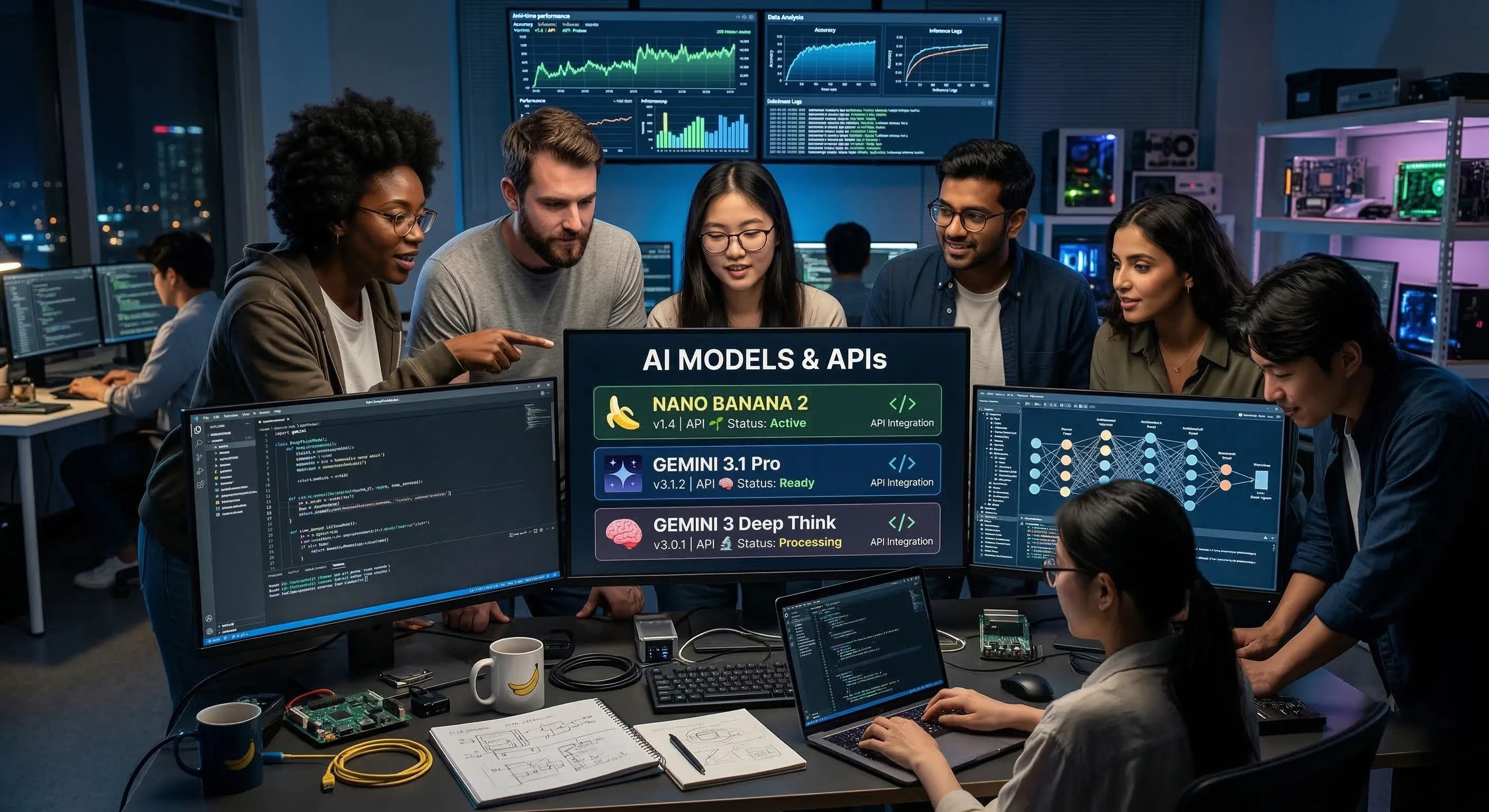
Notably, Nano Banana 2 has been released for developers, specifically engineered to facilitate the deployment of sophisticated visual creation at scale.
This model emphasizes an "amazing price-performance ratio," optimizing resource utilization for high-volume tasks.
Concurrently, Gemini 3.1 Pro, an advanced baseline model, is now accessible for both developers and enterprises.
It boasts more than double the reasoning performance of its predecessor, Gemini 3 Pro.
Gemini 3.1 Pro is precisely designed for complex problem-solving scenarios, offering capabilities such as clear visual explanation, efficient data synthesis into single views, and comprehensive creative project development.
For highly specialized and demanding domains, Gemini 3 Deep Think is providing early access via the Gemini API to researchers, engineers, and enterprises.
This particular model is tailored for the complexities inherent in science and engineering, demonstrating proficiency where data is often "messy" and solutions are not straightforward, with a stated goal to deliver practical, actionable results for technical challenges.
🔹 Strategic Leverage for Scalability and Innovation
The introduction of Nano Banana 2, coupled with its robust price-performance ratio, presents a compelling opportunity for developers across sectors requiring extensive image generation, including but not limited to e-commerce product imagery, dynamic digital marketing campaigns, and game asset creation.
This enables businesses to integrate advanced visual AI solutions economically for scalable content production or custom personalization engines.
Gemini 3.1 Pro's significantly enhanced reasoning capabilities unlock new potential for enterprise applications that demand deep analytical sophistication.
Practical applications could span from automating intricate financial modeling and risk assessment to augmenting diagnostic tools in healthcare through the synthesis of disparate data streams, or developing highly nuanced natural language understanding systems for legal and regulatory compliance.
For the research and development communities, early API access to Gemini 3 Deep Think holds the promise of revolutionizing problem-solving in fields such as biotechnology for accelerating drug discovery, material science for engineering novel compounds, and complex environmental or mechanical simulations.
Its design to navigate "messy data" signifies potential breakthroughs in areas where traditional AI approaches have struggled with real-world variability, thereby expediting scientific progress and yielding tangible, actionable solutions.
🔹 Developer Outlook and Implementation Trajectory
The developer community is actively poised to evaluate the real-world scalability and cost-effectiveness of Nano Banana 2 in production environments, with early benchmarks anticipated to validate its touted "amazing price-performance ratio."
For Gemini 3.1 Pro, critical focus will be placed on its performance against diverse real-world enterprise datasets and its practical applicability in complex, multi-modal reasoning tasks across a spectrum of industries.
Developers and enterprises aiming to push the boundaries in scientific and engineering challenges will closely monitor the API access and specific capabilities of Gemini 3 Deep Think.
The emphasis will be squarely on its demonstrated utility in delivering genuinely "actionable results" within highly specialized technical domains, moving beyond theoretical benchmarks to verifiable impact.
The prevailing sentiment indicates a positive reception for these API-first strategies, which are seen as empowering builders to integrate cutting-edge AI capabilities directly into their bespoke platforms and services.
This approach is expected to foster a new wave of innovation by providing direct, programmatic access to advanced AI models.
8. Building Trust: Google's Approach to Responsible AI
🔹 Anchoring AI Development in Responsibility and Authenticity
Google's leadership has consistently underscored the imperative to develop artificial intelligence responsibly.
CEO Sundar Pichai, addressing the AI Impact Summit in India, explicitly called on leaders to "pursue AI boldly, approach it responsibly, and work through this moment in AI’s development together."
This commitment extends to practical implementations, such as the continued enhancement of tools like SynthID.
Integrated with capabilities from platforms like Nano Banana 2, SynthID is specifically designed to help identify AI-generated content, fostering authenticity in digital media.
Further reinforcing this strategic focus, Google's President of Global Affairs, Kent Walker, highlighted the necessity for a collaborative approach to security at the Munich Security Conference.
Walker emphasized that partners must work together to build digital resilience, ensuring data control is maintained.
🔹 Cultivating Trust in an AI-Driven Future
The emphasis on responsible AI development, as articulated by Sundar Pichai, sets a crucial benchmark for the broader tech industry.
This principled stance can guide the ethical deployment of AI in sensitive sectors like healthcare, ensuring patient data privacy and diagnostic accuracy are prioritized.
The continuous improvement of SynthID offers tangible benefits across multiple domains, from preventing the spread of deepfakes in journalism and political discourse to verifying content originality in creative industries.
For content creators, it provides a mechanism to distinguish human-made art from AI-generated iterations, potentially influencing intellectual property rights and revenue streams.
In legal and financial sectors, the ability to identify AI-generated documents or reports can mitigate risks associated with fraud and misinformation, bolstering audit trails and regulatory compliance.
Kent Walker's call for a collaborative approach to security is vital for strengthening global digital infrastructure against increasingly sophisticated cyber threats.
This collaborative framework would enable cross-industry sharing of threat intelligence, standardizing security protocols, and protecting critical national infrastructures from AI-powered attacks.
For everyday consumers, these combined efforts promise a more trustworthy digital environment, where the provenance of information is clearer and personal data remains protected.
🔹 The Imperative of Transparency and Collective Defense
Industry experts widely acknowledge that Google's proactive stance on responsible AI development is critical for shaping public perception and adoption.
While the intent is clear, the practical execution of "approaching AI responsibly" remains an ongoing challenge, requiring consistent vigilance in areas like algorithmic bias and data privacy.
Tools like SynthID are viewed as essential steps towards maintaining content integrity, but their efficacy will depend on widespread adoption and continuous adaptation against evolving AI generation techniques.
The community consensus often stresses the importance of transparency in AI systems, demanding clear indicators for AI-generated content to prevent manipulation and enhance media literacy.
The appeal for a collaborative approach to security resonates strongly within cybersecurity circles, recognizing that no single entity can effectively combat global threats alone.
However, successful collaboration hinges on establishing trust among diverse stakeholders, including governments, private sector companies, and academia, to share sensitive threat information.
Potential risks include the cat-and-mouse game between AI content generation and detection, where new methods could circumvent existing safeguards.
Ultimately, the success of these initiatives will be measured by their ability to foster genuine trust and resilience in a rapidly evolving AI landscape, balancing innovation with robust ethical guardrails.

9. 💡 Tech Talk: Making Sense of the Jargon
- Gemini Model: Imagine a super-smart brain made by Google. Different Gemini Models are like versions of this brain, each good at different things. Some are great at understanding tricky questions and complex data, while others excel at creating pictures or helping scientists solve difficult problems. They are Google's way of giving computers powerful, human-like thinking abilities.
- Spatial Intelligence: Think of it like a computer having an amazing sense of space and movement, similar to how a coach can watch an athlete and understand their body's exact position and trajectory in 3D, even from a regular 2D video. This AI can "see" how things move and interact in a physical space, allowing it to analyze complex actions, like a skier's trick, with incredible detail and precision.
📚 Related Posts
Mastering Gemini Ultra 2.0: The Complete Developer's Guide to Google's 2026 AI Updates
Key Takeaways: Building with Google's New AI APIsGemini Ultra 2.0 redefines complex reasoning with advanced causal inference and expanded context understanding, setting new benchmarks for AI performance.The updated `google-generativeai` SDK streamlines env
tech.dragon-story.com
Qwen3.5 Update: Enhanced Vision, Tool Troubles, and What You Need to Know
🚀 Key TakeawaysQwen3.5 boasts significantly enhanced vision capabilities, having passed all our tests and successfully replaced the previous winner, 235b, leading to extremely happy user sentiment.The update introduces improved tool calling, demonstrati
tech.dragon-story.com
Korea's 'AI Avengers': KT Leads New Tech Alliance Announced at MWC 2026
🚀 Key TakeawaysSouth Korea has officially launched the 'Korea AI Network Avengers', a powerful national alliance designed to lead the next-generation AI infrastructure.KT has been designated as the first representative chair company, taking the helm of
tech.dragon-story.com


