🚀 Key Takeaways
- Intel’s upcoming Nova Lake CPUs, codenamed Core Ultra 400, are projected for a late 2026/early 2027 launch, aiming to challenge and potentially surpass the best CPUs on the market with features like DDR5-8000 memory support and a powerful Xe3P graphics engine.
- The Core Ultra 400 will demand high-performance hardware, requiring DDR5-8000 memory across all SO-DIMM ports and necessitating significantly upgraded power systems—like the 210W or 240W supply in the specifically engineered ECS Liva P300 mini-PC—to handle its projected 175W Processor Base Power (PBP).
- Despite promising cutting-edge performance, user sentiment reveals concerns about the availability and cost of high-speed DDR5-8000 RAM, which is facing shortages, and ongoing debate regarding the absolute necessity of such high speeds for the iGPU and the continued use of SO-DIMM form factors.
Prepare for a significant leap in computing power as we delve into Intel's highly anticipated Nova Lake processors, officially codenamed Core Ultra 400.
These next-generation CPUs are set to redefine performance, with Intel planning a launch in late 2026 and wider retail availability throughout 2027.
The Core Ultra 400 series aims to challenge and potentially surpass the best CPUs on the market, bringing a new era of processing capabilities to desktop and mobile platforms.
A cornerstone of the Nova Lake architecture is its groundbreaking memory support, featuring mandatory DDR5-8000 across all SO-DIMM memory ports, paired with a powerful Xe3P graphics engine based on the Celestial architecture.
This advanced integration suggests a processor designed for extreme performance, reflected in early projections showing a substantial 175W Processor Base Power (PBP) for flagship models, indicating robust computational capabilities.
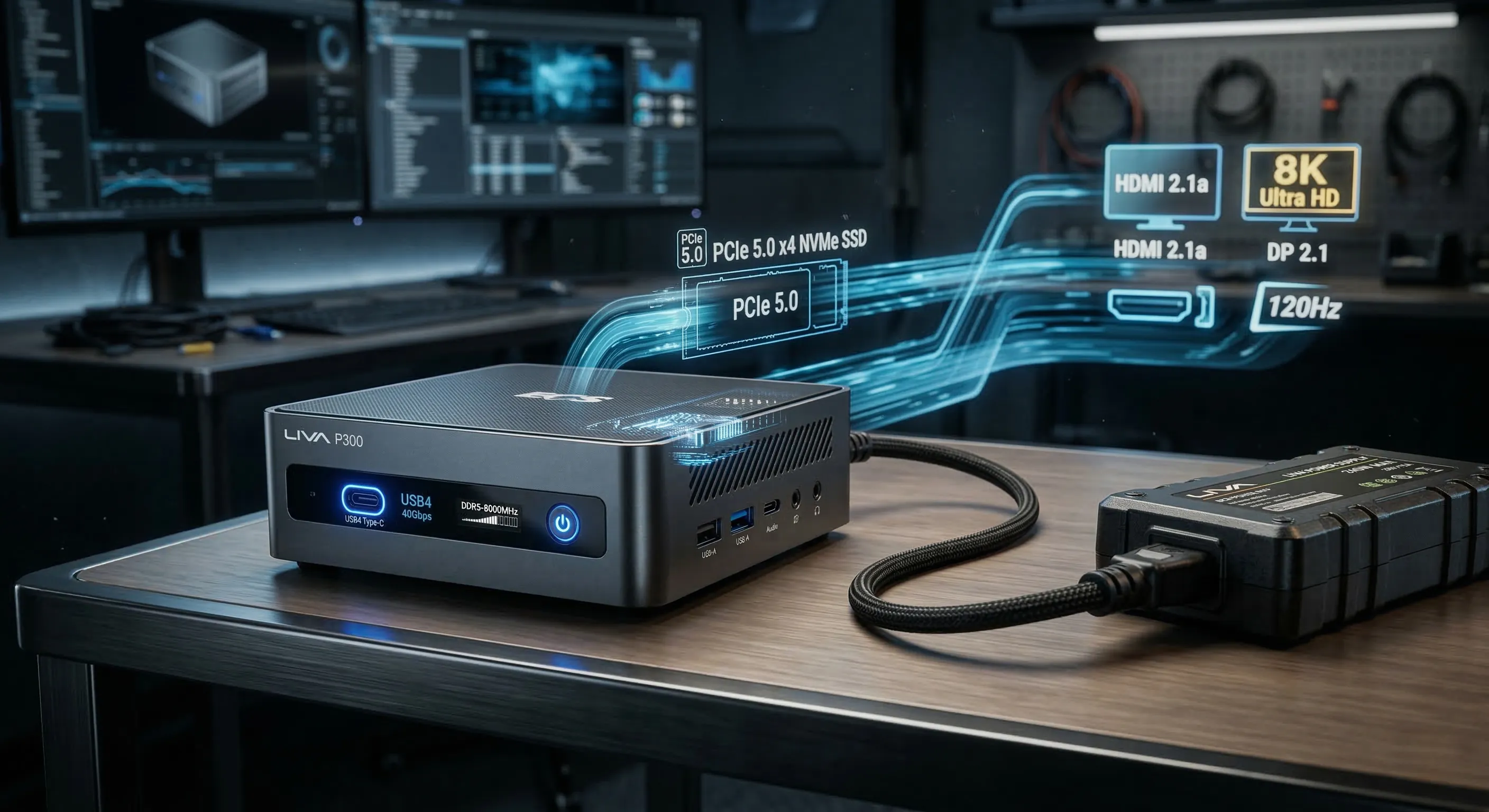
The demand for such robust power is already evident, with devices like the ECS Liva P300 mini-PC being specifically engineered to harness the power of Intel’s upcoming Core Ultra 400 processors.
This redesigned model features an upgraded power supply, jumping from 120W to 210W or 240W, explicitly to accommodate Nova Lake's substantial requirements and its B960 chipset.
The Liva P300 also stands out by accommodating a discrete graphics card in a horizontal orientation within its compact 3.5-liter volume, offering 2 x M.2 2280 PCIe 5.0 x4 storage and a rich array of I/O ports, including USB4 Type-C and multiple HDMI/DP 2.1 outputs.
While anticipation builds, user sentiment highlights discussions around DDR5-8000 RAM availability and pricing, given the current AI-created memory shortage, alongside debates about the necessity of such high-speed memory for the integrated GPU and the continued use of SO-DIMM memory.
Despite these considerations, the late 2026/early 2027 launch timing is seen by some as potentially beneficial, allowing for market adjustments and increased competitiveness.
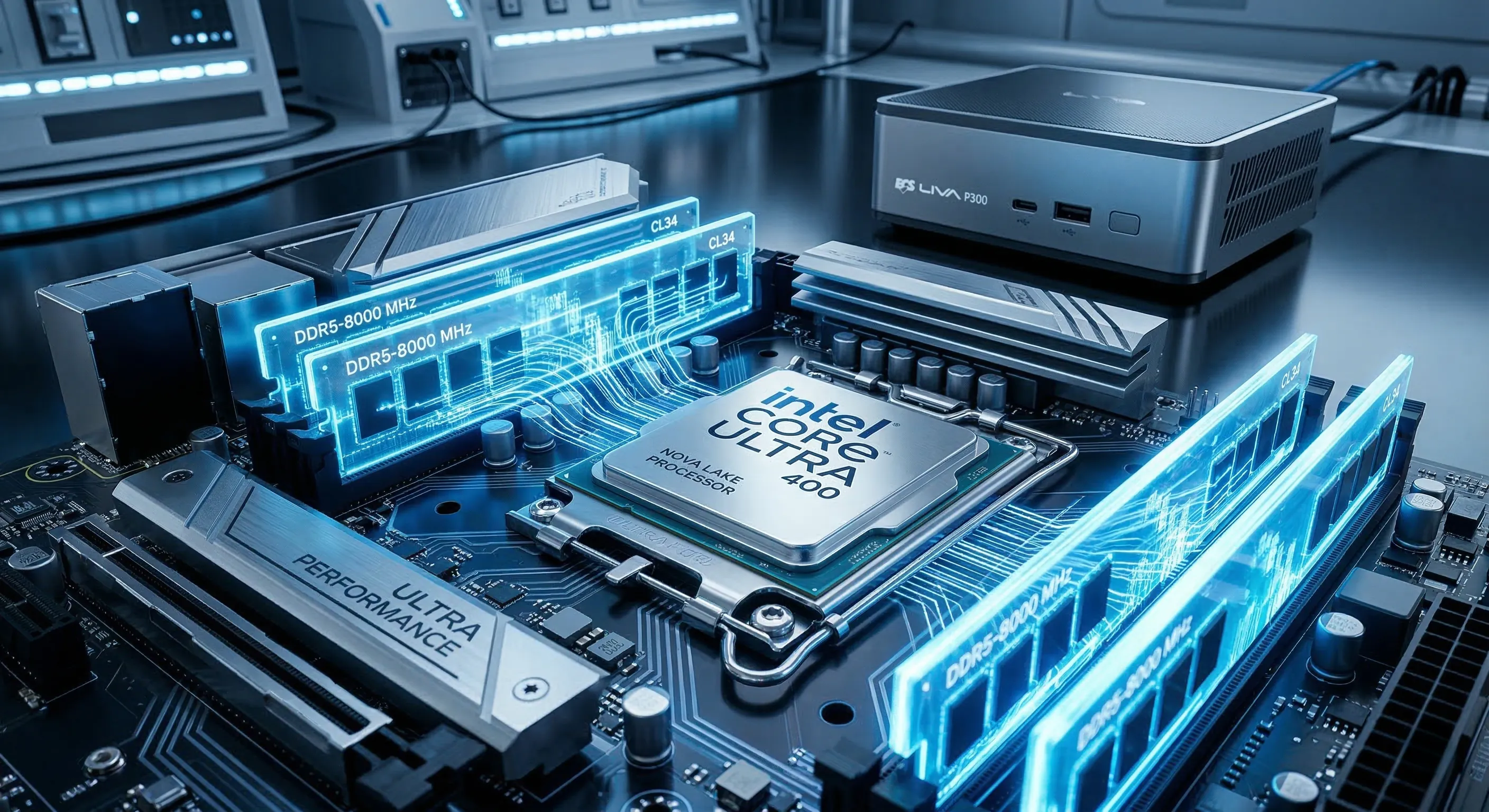
1. At a Glance: Key Details
| Feature | Detail |
|---|---|
| Processor Name / Codename | Intel Core Ultra 400 (Nova Lake) |
| Projected Launch | Late 2026 / Early 2027 |
| Mandatory Memory Support | DDR5-8000 across all SO-DIMM ports |
| Flagship PBP (Processor Base Power) | 175W (early projection) |
| Integrated Graphics Engine | Xe3P (based on Celestial architecture) |
| Key Engineering Demands (e.g., ECS Liva P300) | Upgraded PSU (210W/240W), PCIe 5.0 x4 storage, USB4 Type-C, HDMI/DP 2.1 outputs, B960 chipset |
| Anticipated Challenges | DDR5-8000 RAM availability & cost (due to AI shortage), necessity of high speed for iGPU, SO-DIMM form factor debate |
2. Intel's Next Gambit: Meet 'Core Ultra 400' Nova Lake
🔹 The 'Core Ultra 400' Unveiling: Intel's New Horizon
Intel's forthcoming processor generation, codenamed Core Ultra 400, is officially on the roadmap.
This upcoming line represents a significant strategic move, with Intel explicitly stating its ambition to challenge and potentially surpass the best CPUs currently available on the market.
The planned launch for these processors is set for late 2026, with a broader retail availability anticipated throughout 2027.
🔹 Reshaping Computing: Industry-Wide Implications
The ambitious performance targets for Core Ultra 400 signal a potential shift in high-performance computing capabilities across various sectors.
For scientific research and complex data analysis, a processor that aims to surpass current top-tier offerings could accelerate discovery and modeling.
In the financial industry, enhanced processing power could lead to more sophisticated algorithmic trading and faster real-time market simulations.
Software development and AI training initiatives could benefit from significantly reduced compilation times and quicker model iterations.
Even for everyday consumers, this performance leap could translate into seamlessly responsive systems for demanding applications, from advanced gaming to high-resolution content creation.
The extended development timeline suggests a thorough approach to architectural refinement, aiming to deliver substantial advancements in core computing efficiency.
🔹 Strategic Timing and Future Scrutiny
The projected launch in late 2026 and retail rollout in 2027 positions Core Ultra 400 as a long-term strategic play by Intel.
This timeline allows the company extensive opportunity for comprehensive optimization and the integration of next-generation architectural innovations.
Industry analysts will be closely scrutinizing future official disclosures for deeper insights into the underlying technologies that Intel plans to leverage to achieve these stated performance goals.
The competitive landscape, which is expected to evolve considerably by 2027, will undoubtedly play a crucial role in the market reception and ultimate success of this new processor line.
3. Power and Pixels: Deconstructing Nova Lake's Performance DNA
🔹 The 175W Imperative and Xe3P's Promise
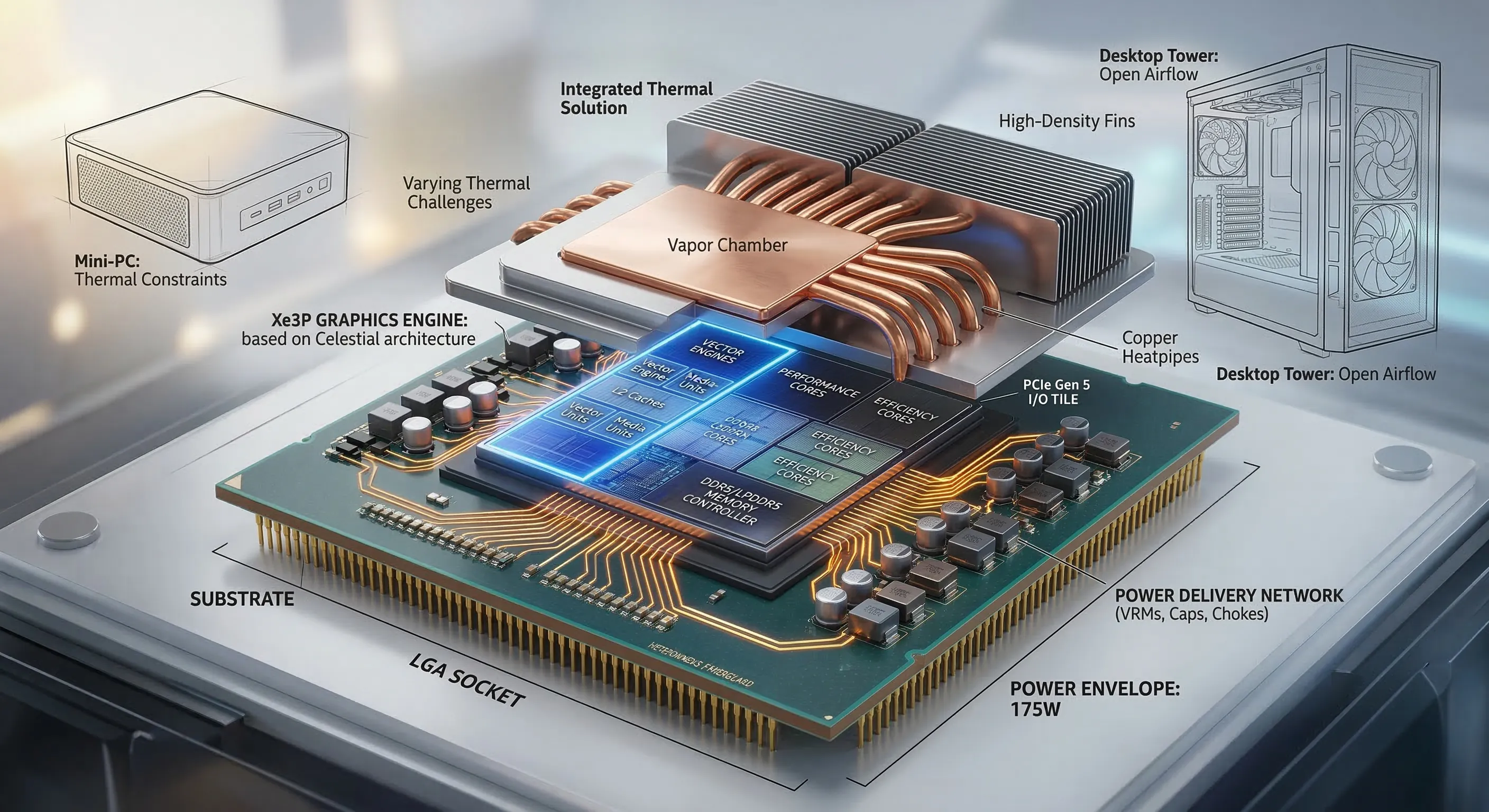
The flagship Nova Lake processor is projected with a significant Processor Base Power (PBP) of 175W (early projections).
This figure typically indicates the thermal design point and the power required under base operating frequencies, signaling a design geared for substantial computational capability.
Accompanying this power profile is the new Xe3P graphics engine, which is explicitly stated to be based on the advanced Celestial architecture.
The integration of this next-generation graphics core suggests a substantial uplift in visual processing capabilities compared to previous generations of integrated graphics.
🔹 Performance Horizons for Compact Computing
The projected 175W PBP for Nova Lake's flagship SKU implies a processor engineered for demanding computational loads.
This substantial power budget points to higher core counts, aggressive clock speeds, or a combination designed to deliver peak performance in productivity, content creation, and even certain professional applications like CAD or scientific simulations.
For traditional desktop systems, this power envelope is manageable with established cooling solutions, promising robust multi-threaded and single-threaded performance vital for modern software.
In the realm of mini-PCs, a 175W PBP represents a significant leap, suggesting a new class of compact workstations or high-performance consumer devices previously constrained by thermal and power limitations.
The Xe3P graphics engine, built on the Celestial architecture, is poised to redefine the capabilities of integrated GPUs.
This sophisticated graphics engine is expected to deliver a significant boost in 3D rendering performance, enabling smoother gameplay in modern titles at moderate settings and higher frame rates in esports.
Beyond gaming, the advanced architecture could substantially accelerate professional workloads such as video encoding, 3D model previews, and even specific AI inference tasks, making the integrated solution a viable option for entry-level creative professionals and developers.
For mini-PCs, the Xe3P engine means compact systems can deliver a compelling visual and computational experience without the need for a discrete graphics card, expanding their utility across diverse use cases from home entertainment to specialized industrial applications and educational tools.
🔹 Navigating the Thermal and Power Landscape
While the 175W PBP signals impressive raw compute power, it simultaneously introduces considerable challenges, especially for mini-PC form factors.
System designers will need to implement highly efficient and potentially innovative cooling solutions to manage the thermal output within confined spaces, impacting overall system volume and acoustic profiles.
The increased power draw also necessitates robust power delivery systems, ensuring stable and consistent current for sustained high performance, which can add complexity and cost to motherboards.
For mainstream desktops, the higher PBP will reinforce the need for capable CPU coolers, whether air or liquid-based, to unlock the processor's full potential without thermal throttling during peak workloads.
The promise of the Xe3P graphics engine based on Celestial architecture elevates the baseline performance expectation for all Nova Lake systems.
However, maximizing its potential will depend on balanced system design, ensuring adequate power delivery not only to the CPU cores but also to the integrated graphics, as both will contend for the overall 175W budget.
Experts will closely analyze the power allocation strategies within the System-on-Chip (SoC) to understand how the PBP is distributed under various loads, which will be critical for assessing real-world performance in mixed workloads.
This architectural shift encourages a re-evaluation of system design priorities, with a stronger emphasis on integrated performance metrics rather than relying solely on discrete components for graphical prowess, potentially democratizing access to higher-end capabilities.
4. The DDR5-8000 Mandate: Nova Lake's High-Speed Memory Gamble
🔹 The DDR5-8000 Specification Threshold
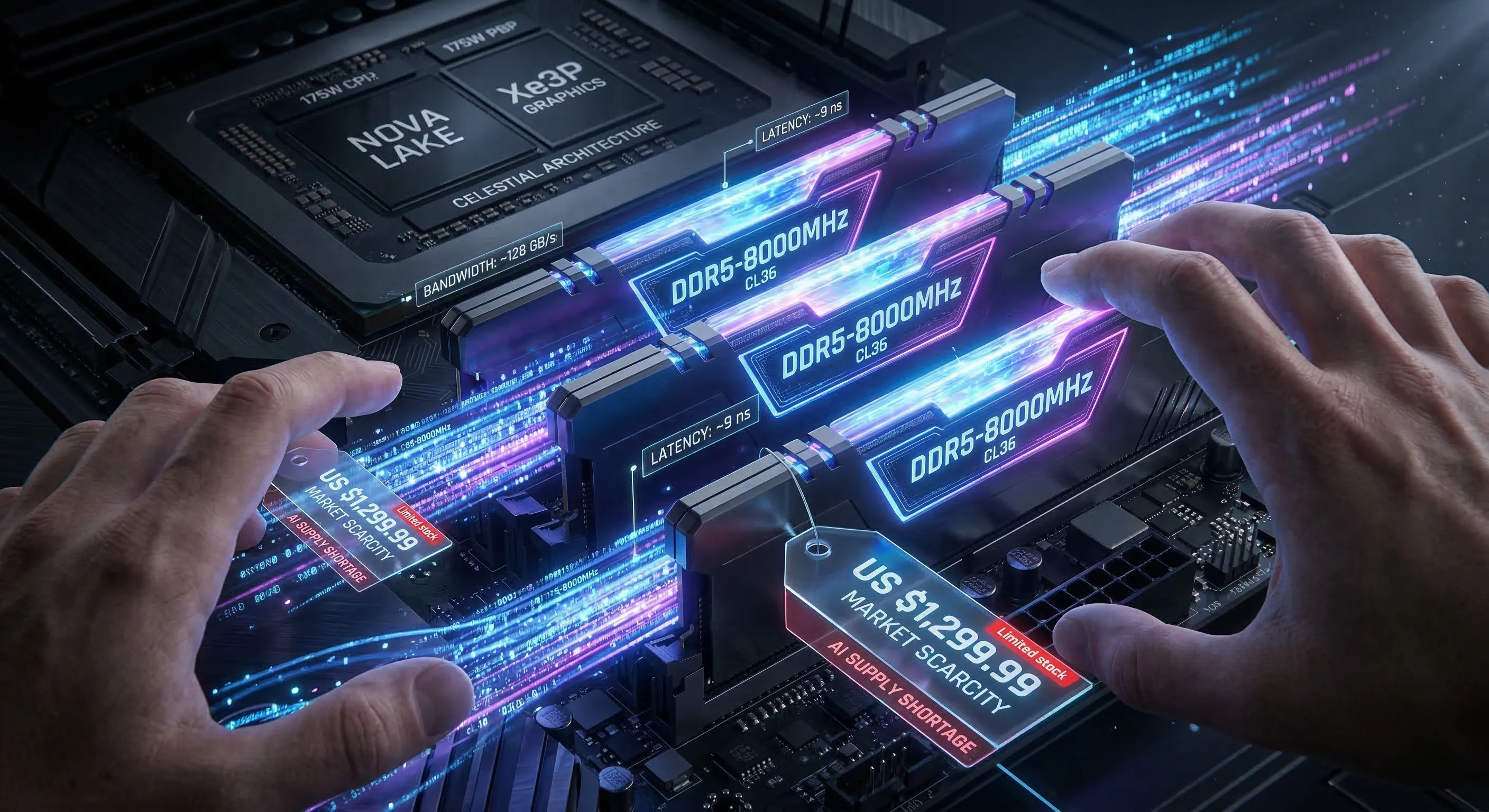
Intel's forthcoming Nova Lake CPU is officially detailed with Memory_Support: 'DDR5-8000' across all SO-DIMM memory ports.
This high-speed memory specification establishes a demanding baseline for the next generation of computing platforms.
The integration of DDR5-8000 sets a clear performance target, emphasizing data throughput and low latency as critical architectural pillars for the new processor.
🔹 Performance Frontiers and Economic Headwinds
The adoption of DDR5-8000 memory offers significant potential to push the boundaries of data-intensive applications.
For professionals in fields such as scientific computing and advanced data analytics, this high-speed standard could translate into markedly faster processing of complex simulations and large datasets.
Content creators engaging in 4K/8K video editing or intricate 3D rendering projects stand to benefit from reduced rendering times and smoother workflow experiences.
Even in everyday consumer scenarios, enhanced memory bandwidth can contribute to more responsive systems, particularly during demanding multitasking or the execution of resource-heavy applications.
However, the pursuit of such high performance intersects with considerable market challenges.
A significant concern is that an AI-created memory shortage has sent DDR5 pricing through the roof, creating a substantial economic hurdle for consumers and system integrators alike.
This market condition directly impacts the accessibility and cost-effectiveness of building or upgrading systems utilizing DDR5-8000 memory.
🔹 Community Consensus: Requirement or Roadblock?
The technical community remains divided on whether DDR5-8000 is merely supported or fundamentally required for optimal functionality.
The Memory_Requirement_Debate is encapsulated by user comments such as TerryLaze's assertion: 'It doesn't support it, it outright requires it for the iGPU.'
This sentiment is echoed by Thunder64, who stated: 'Bunk. It requires it or it gets renamed "Intel Graphics".'
These perspectives underscore a critical discussion regarding the architectural dependencies within Nova Lake.
Beyond the technical necessity, a pressing RAM_Availability_Concern has been voiced, with user Faiakes directly questioning: 'And will there be any such RAM available for us to buy?'
This highlights not only the potential for high costs due to the current memory shortage but also the practical challenge of securing these specialized, high-speed modules on the open market.
The confluence of a perceived mandatory requirement, escalating prices, and limited availability creates a complex outlook for Nova Lake's market adoption.
5. Community Pulse: Skepticism, Hype, and Hardware Debates
🔹 Navigating Market Realities and Hardware Choices
Community sentiment surrounding upcoming hardware often presents a nuanced picture, blending skepticism with anticipation.
A prevalent sentiment reflects a general market fatigue, with some users, like Neilbob, stating, "In the current market, I can't see ANYTHING getting ignited."
This highlights a cautious approach among enthusiasts given current economic factors and potentially incremental past upgrades.
Concurrently, the longer lead time for future processors has been met with a degree of positive reception.
Gururu's reaction, "I'm kind of happy Nova won't come out until 2027. IF AMD and Intel both announce at CES its going to be crazy," suggests that a staggered release schedule could alleviate market saturation and allow for more focused attention on new announcements.
A significant point of discussion revolves around memory choices, specifically the continued use of SO-DIMM.
JayT204500 questions this, asking, "And Intel will still be using SODIMM memory for this new CPU. How much longer do we have to wait for CAMM2 memory?"
This indicates a community desire for evolution in memory form factors, particularly concerning potential benefits of newer standards like CAMM2.
An underlying technical consideration that influences these debates is the observation that high-speed memory yields diminishing returns, a factor that could temper expectations for extreme performance boosts solely from faster RAM.
🔹 Ripple Effects: Market Dynamics and Design Paradigms
The interplay of market skepticism and strategic launch timing has broader implications across the technology ecosystem.
For hardware manufacturers, a cautious consumer base might necessitate clearer value propositions and innovative feature sets, pushing for more impactful generational leaps rather than incremental gains.
The 2027 launch window provides an extended development cycle, potentially allowing for more robust software optimizations and expanded ecosystem support, which could benefit industries reliant on stable, high-performance computing, such as scientific research, advanced simulation, and financial modeling.
Furthermore, the debate surrounding SO-DIMM versus CAMM2 memory form factors directly impacts future device design.
Should CAMM2 gain traction, it could enable thinner, more compact devices with higher memory capacities and improved thermal performance, transforming everything from ultra-portable workstations for creative professionals to embedded systems in smart infrastructure and medical diagnostics.
The phenomenon of high-speed memory yielding diminishing returns suggests that while raw speed is important, developers and system architects may increasingly prioritize other factors like memory efficiency, latency, and overall system balance, leading to more optimized applications in data analytics, AI inference, and specialized content creation.
🔹 The User Perspective: Balancing Realism and Readiness
Overall, the community pulse reflects a pragmatic outlook on upcoming hardware.
The general market environment fosters a 'wait and see' approach, as articulated by Neilbob's skepticism regarding immediate market ignition.
This caution is balanced by a strategic appreciation for the longer development runway, as highlighted by Gururu, suggesting that anticipation for a more polished 2027 launch is a positive.
However, underlying hardware decisions continue to fuel debate.
The persistent use of SO-DIMM, as voiced by JayT204500, points to a user base eager for advancements in compact memory solutions like CAMM2, which promise better integration and potentially superior performance characteristics in space-constrained designs.
Moreover, the recognized challenge of high-speed memory yielding diminishing returns serves as an important expert observation, reminding both manufacturers and consumers that performance gains are not always linear with specification bumps.
This collective sentiment underscores a desire for meaningful innovation that translates into tangible user benefits, rather than simply higher numbers.

6. First Blood: How the ECS Liva P300 Reveals Nova Lake's True Demands
🔹 Unpacking Nova Lake's Foundation: Power and Connectivity Blueprint
The ECS Liva P300 mini-PC, specifically engineered for Intel Nova Lake-S processors, provides a concrete initial glimpse into the platform's underlying requirements.
A paramount indicator is its dramatically upscaled power supply, advancing from 120W to a substantial 210W or 240W.
This significant wattage increase within a compact 3.5-liter volume chassis strongly suggests Nova Lake's demand for robust and sustained power delivery.
Concurrently, the Liva P300 showcases extensive future-proofing through its memory configuration, supporting 2 x SO-DIMMs of DDR5-8000.
Storage capabilities are equally cutting-edge, featuring 2 x M.2 2280 PCIe 5.0 x4 slots.
Connectivity options highlight modern bandwidth needs, including a front USB4 Type-C port and rear HDMI/DP 2.1 outputs for high-resolution displays.
All these components are orchestrated via a contemporary B960 chipset, affirming a platform designed for peak performance and high-bandwidth operations.
🔹 Redefining Performance Footprints Across Industries
The formidable specifications demonstrated by the ECS Liva P300 directly translate into significant performance benefits across a multitude of computing scenarios and industries.
In data-intensive sectors like financial modeling and scientific research, the integration of PCIe 5.0 x4 storage will dramatically accelerate large dataset processing and retrieval, thereby reducing critical workload completion times.
For professionals in healthcare diagnostics and professional content creation, the capability to drive multiple HDMI/DP 2.1 displays at high resolutions, coupled with the rapid data transfer speeds offered by USB4 Type-C, will streamline complex workflows and enhance real-time collaboration.
The robust DDR5-8000 memory support ensures that the Nova Lake platform, as indicated by the P300, is equipped to handle intricate simulations and multi-threaded applications without performance bottlenecks.
Even for demanding tasks performed by everyday consumers, this enhanced connectivity and sustained performance imply a smoother, more responsive user experience for advanced software and multimedia applications.
🔹 The Precursor's Message: Demands and Design Choices
The strategic design choices embedded within the ECS Liva P300 function as a critical early blueprint, forecasting the broader requirements of the Nova Lake ecosystem.
The dramatic escalation in power supply capacity is a clear signal that system builders and end-users should anticipate a platform capable of considerable computational output, which will, by extension, necessitate robust thermal management solutions across various form factors.
This shift suggests a paradigm where maximizing the processor's potential will inherently demand careful attention to both power delivery and cooling infrastructure, even within compact mini-PC designs.
The comprehensive inclusion of cutting-edge I/O such as USB4 Type-C and PCIe 5.0 indicates an industry expectation for advanced peripheral adoption and high-bandwidth applications to become standard operating procedure.
For both system integrators and end-users, the Liva P300 unequivocally underscores that Nova Lake is positioned to be a high-performance, albeit power-demanding, contender, necessitating a thoughtful re-evaluation of existing hardware infrastructures and future upgrade strategies.
7. The Road to 2027: Can Intel Navigate Power, Price, and Patience?
🔹 Power Dynamics and Market Volatility
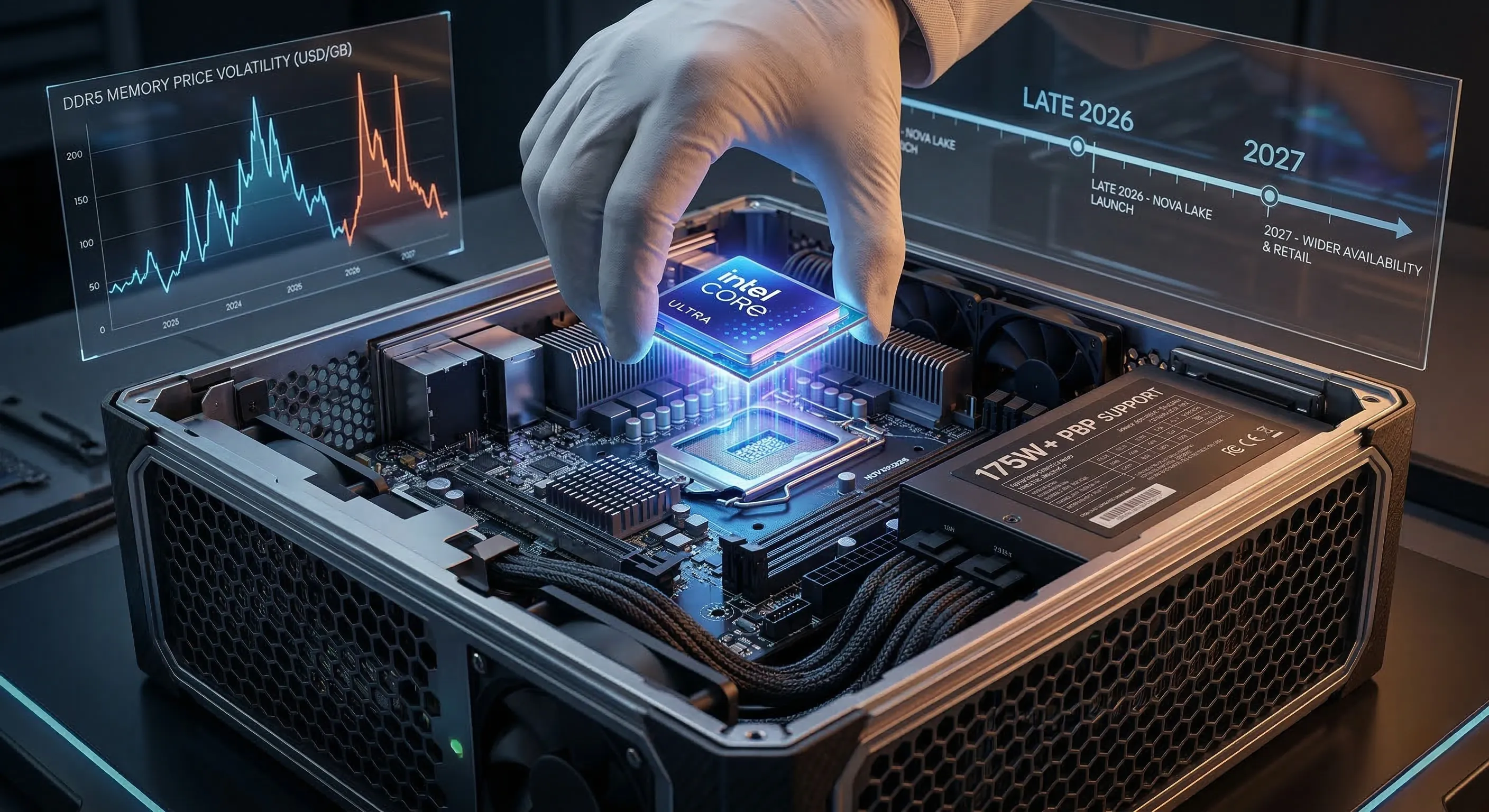
Early projections indicate Intel's flagship Nova Lake CPUs could feature a Processor Base Power (PBP) of 175W.
This substantial power requirement is further emphasized by the ECS Liva P300 mini-PC, a system specifically engineered for Nova Lake-S, which has seen its internal power supply unit upgraded significantly to 210W or 240W.
This upgrade directly correlates with the anticipated energy demands of the new processors.
Concurrently, the high-speed memory market faces considerable volatility.
Reports suggest an AI-created memory shortage has sent DDR5 memory pricing through the roof, posing a potential issue for system integration and end-user accessibility.
🔹 Industry Ripple Effects and Cost Considerations
The amplified power draw for Nova Lake processors could necessitate more robust and efficient thermal management solutions across various system form factors.
This may influence designs for high-performance desktops, compact workstations, and even enterprise servers where computational density is key.
For industries reliant on intensive processing, such as data science, digital content creation, and scientific research, the need for enhanced power delivery and cooling infrastructure will become a critical procurement consideration.
The inflated cost of high-speed DDR5 memory, driven by the significant AI demand, is projected to translate into higher overall system costs.
This financial impact could affect budgeting for enthusiast PC builders, enterprise IT departments, and research institutions, potentially leading to delayed upgrade cycles or a re-evaluation of hardware investment strategies across diverse sectors, including medical imaging and financial analytics.
🔹 Navigating Anticipation and Market Realities
With Nova Lake's launch timeline extending into late 2026 and 2027, market sentiment regarding new hardware introductions over such a protracted period often exhibits skepticism.
Intel faces the complex challenge of effectively managing these higher power consumption figures, ensuring that any performance gains definitively justify the increased energy overhead and stringent thermal design requirements.
Another critical hurdle lies in navigating the volatile high-speed memory market, where ongoing pricing and availability issues directly impact the total cost and accessibility of Nova Lake-based systems for both consumers and businesses.
Crucially, maintaining broad consumer and enterprise interest, enthusiasm, and patience over this extended development and launch cycle will be paramount to the platform's eventual commercial success.
8. 💡 Tech Talk: Making Sense of the Jargon
- DDR5-8000: Imagine your computer's memory (RAM) as a super-fast highway for data. DDR5-8000 means this highway is incredibly wide and has cars (data) speeding at 8000 million cycles per second! It's like upgrading from a small country road to a massive, autobahn-like superhighway, allowing your computer to fetch and process information much, much faster, especially for demanding tasks and integrated graphics.
- Processor Base Power (PBP): Think of your CPU (the computer's brain) as a hungry athlete. The Processor Base Power (PBP) is like the minimum amount of energy (food) that athlete needs to perform its basic, continuous workout without boosting. A 175W PBP means this particular athlete needs a lot of consistent energy to operate, which tells you it's a very powerful processor but also needs a strong power supply to keep it running smoothly.
📚 Related Posts
GPT-5.3-Codex: The Unofficial Deep Dive for Developers (Feb 2026)
Key Takeaways from GPT-5.3-Codex Update:Multi-File Context is a Game Changer (and Cheaper): GPT-5.3-Codex can now reference up to 15 project files, significantly reducing prompt context and improving code coherence. Context tokens are billed at a 50% lower
tech.dragon-story.com
OpenAI Frontier: The Definitive 2026 Deep Dive on the GPT-4 Successor
Key Takeaways from OpenAI Frontier (Feb 2026 Update)OpenAI Frontier is a significant architectural shift with stateful memory and enhanced multi-modal capabilities, accessed via a new `v2` API endpoint.It delivers marked improvements in complex reasoning a
tech.dragon-story.com


