- NVIDIA has cut RTX 5060 Ti production by 40% for Q1/Q2 2026, citing "strategic realignment" and prioritizing enterprise AI.
- This decision is largely driven by high demand for NVIDIA's AI GPUs (Blackwell II, Hopper H200) and a potential strategy to upsell consumers to higher-tier cards.
- The immediate impact includes instantaneous stock evaporation, 25-40% price inflation on secondary markets, and significant scarcity from AIB partners.
- For buyers, the AMD Radeon RX 8700 XT becomes a primary alternative, or consider the RTX 5070 if committed to NVIDIA. Avoid paying more than MSRP for the 5060 Ti.
- The community reaction is largely negative, fueled by frustration and accusations of an "artificial shortage." Expect a prolonged period of scarcity and increased scalper activity.
The NVIDIA GeForce RTX 5060 Ti, a highly anticipated graphics card for mainstream gamers and creators, is facing an unexpected production cut that has immediate and significant market implications.
On January 15, 2026, NVIDIA announced a substantial 40% reduction in its global production volume for the RTX 5060 Ti, effective for the first two quarters of the year.
This move directly impacts the availability and pricing of the RTX 5060 Ti, shaking up the consumer GPU market and forcing potential buyers to reassess their upgrade strategies.
Understanding NVIDIA's stated rationale, the hidden factors at play, and how to navigate the upcoming scarcity is crucial for anyone looking to build or upgrade a PC in the coming months.
The Official Announcement & NVIDIA's Stated Rationale

NVIDIA released a surprise press statement on January 15, 2026, through its investor relations portal.
The announcement detailed a "strategic realignment" of its consumer GPU production schedule.
The core of this realignment is a 40% reduction in the global production volume of the GeForce RTX 5060 Ti.
This reduction is in effect immediately for Q1 and Q2 2026.
NVIDIA's official statement, attributed to CFO Colette Kress, mentioned the need to "rebalance channel inventory and better align production with evolving global demand patterns across our diverse product stacks."
The company also vaguely indicated prioritizing manufacturing capacity for "high-demand enterprise and AI solutions."
They assured gamers that the broader RTX 50-series lineup remains a key focus.
No specific component shortage was officially blamed.
You can review the full details on their investor relations page: NVIDIA Q1 2026 Production Update.
Unpacking the 'Why': Hidden Factors & Industry Speculation
While NVIDIA's public statement was carefully worded, industry analysts and insiders point to several unstated factors.
These factors likely influenced the decision to cut RTX 5060 Ti production.
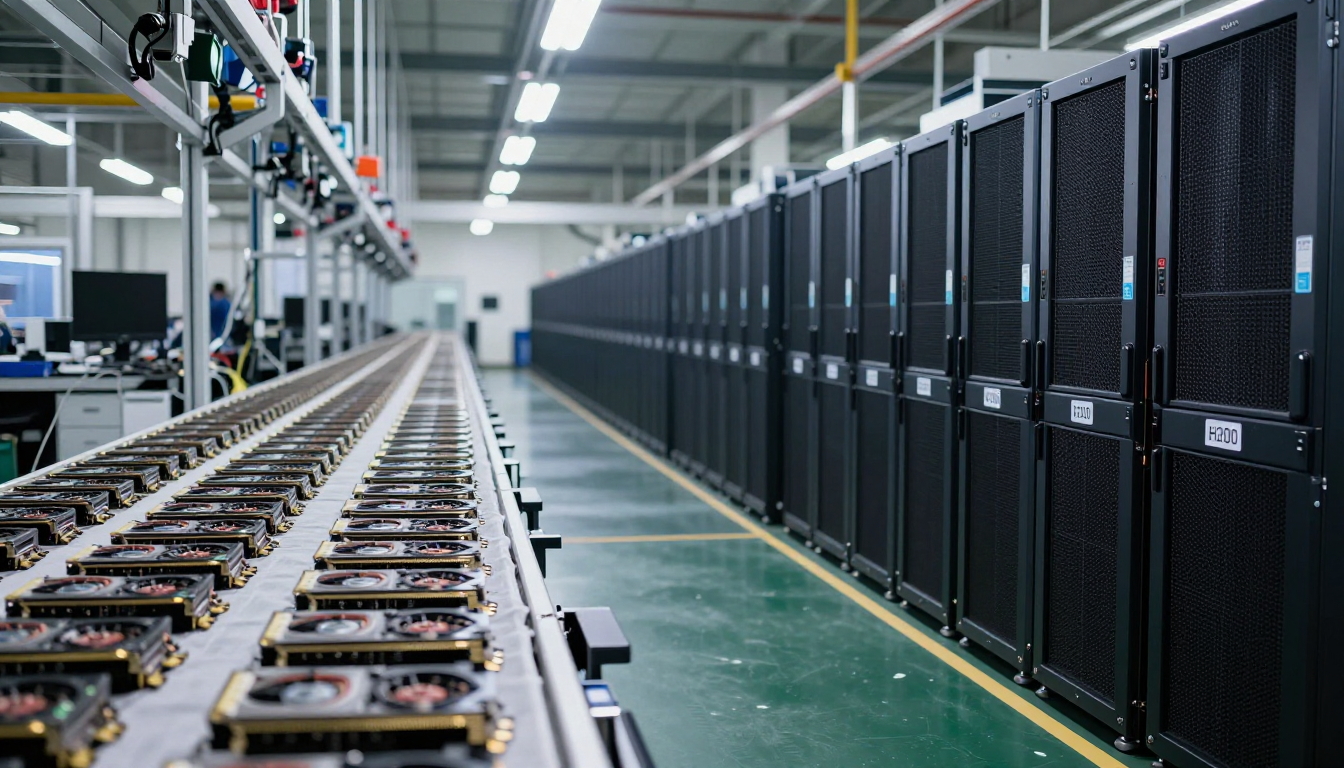
- Prioritizing AI GPUs:
The primary driver is believed to be the immense demand for NVIDIA's next-gen Blackwell II (B200) and Hopper H200 AI accelerators.
These enterprise-grade GPUs offer significantly higher profit margins than consumer cards.
It is speculated that NVIDIA is reallocating TSMC 3nm wafer capacity from the GB203 die (which powers the RTX 5070 and RTX 5060 Ti) to its high-margin AI products. - Strategic Upselling:
By artificially limiting the supply of the RTX 5060 Ti, which is often seen as the market's price-to-performance sweet spot, NVIDIA might be encouraging consumers to purchase the more expensive and potentially more available RTX 5070.
This strategy could increase the average selling price (ASP) of their consumer GPU line. - GDDR7 Memory Allocation:
A less probable, but circulating rumor, suggests that high-speed GDDR7 memory modules are being prioritized for the higher-end RTX 5090 and 5080 cards.
This prioritization could create a bottleneck for mid-range cards like the 5060 Ti.
Immediate Impact on RTX 5060 Ti Availability & Pricing
The market reacted almost immediately to NVIDIA's announcement.
Within 48 hours, the effects became clear.
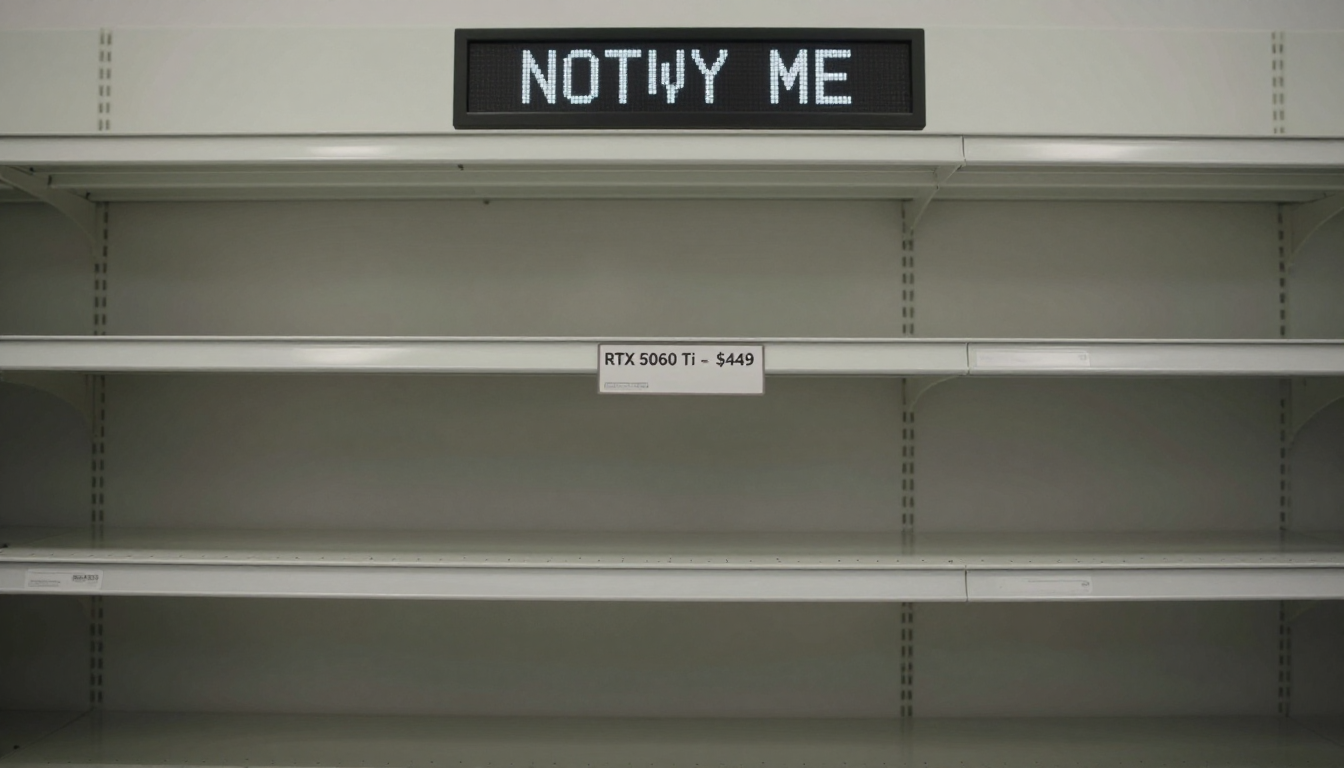
- Retail Availability:
Major online retailers, including Newegg, Amazon, and Best Buy, saw their RTX 5060 Ti stock vanish.
Product pages now commonly display "Out of Stock" or "Notify Me" messages. - Price Inflation:
The few remaining units available from third-party sellers experienced swift price increases of 25-40% over the $449 MSRP.
Some listings approached or exceeded the $600 mark. - AIB Partner Scarcity:
Add-in-board (AIB) partners such as ASUS, MSI, and Gigabyte have reportedly had their Q1 chip allocations significantly reduced.
This means even their custom-cooled RTX 5060 Ti models will be exceedingly rare.
Wider Market Repercussions: The Ripple Effect on GPU Prices
This production cut for the RTX 5060 Ti is not an isolated event.
It has sent ripple effects across the entire GPU market, shifting dynamics for several other cards.
| Market Segment | State Before Announcement (Dec 2025) | State After Announcement (Jan 2026) |
| NVIDIA RTX 5060 Ti | Widely available, stable at $449 MSRP. | Instant scarcity, prices inflated to $550-$650 on secondary markets. |
| NVIDIA RTX 5070 | Available, stable at $599 MSRP. | Increased demand, prices holding firm or slightly increasing. |
| NVIDIA RTX 4060 Ti | Declining prices (~$349), clearance mode. | Demand renewed, prices stabilizing or rising back toward $379. |
| AMD Radeon RX 8700 XT | Competing at $479, viewed as a strong alternative. | Now seen as the primary choice in the segment, stock levels are strained. |
Strategies for Gamers & Creators: Navigating the Shortage
If you are planning an upgrade, navigating this altered GPU market requires a new approach.
Here are some strategies to consider.

- Consider the AMD Alternative:
The AMD Radeon RX 8700 XT offers comparable rasterization performance.
It is now the most logical alternative at its price point.
It is wise to check its ray tracing performance and feature set (like FSR 3.1) to ensure it meets your specific needs. - Step Up or Step Down:
If you are committed to an NVIDIA GPU, your best options involve adjusting your budget.
You could stretch for the RTX 5070, which provides a significant performance uplift.
Alternatively, consider a previous-generation card like an RTX 4070 or 4060 Ti, especially if you can find one at a discount. - Use Stock Trackers:
Setting up alerts on services like NowInStock or following inventory tracking accounts on platforms like X (formerly Twitter) and Discord can be very helpful.
Be prepared to purchase immediately when stock appears at MSRP, as it will likely disappear fast. - Wait It Out:
If your current GPU is still performing adequately, the most prudent move might be to wait 3-6 months.
This allows time to see if the production situation improves or if NVIDIA releases a refresh, such as a potential RTX 5060 SUPER.
Community Reactions & Consumer Sentiment
The PC gaming and hardware enthusiast communities have responded to this news with widespread negativity.
Discussions on platforms like Reddit (r/NVIDIA, r/PCMasterRace) and YouTube highlight several key themes.

- Frustration & Distrust:
Many users believe this is an artificial shortage designed to maximize profit.
This sentiment draws parallels to past anti-consumer practices in the industry. - "Paper Launch" Accusations:
The term "paper launch" is trending.
Users are accusing NVIDIA of announcing a product without the genuine intention or capacity to meet market demand. - Meme Culture:
Memes featuring NVIDIA CEO Jensen Huang prioritizing AI clients over gamers have become widely circulated and viral. - Community Support:
Threads dedicated to sharing stock alert links and offering advice to newcomers on fair pricing and alternative options have become highly active and helpful.
The Reseller & Scalper Landscape: A Forecast
The 40% production cut for the RTX 5060 Ti is a clear signal for scalpers to increase their activity.
We anticipate several developments in the reseller market.
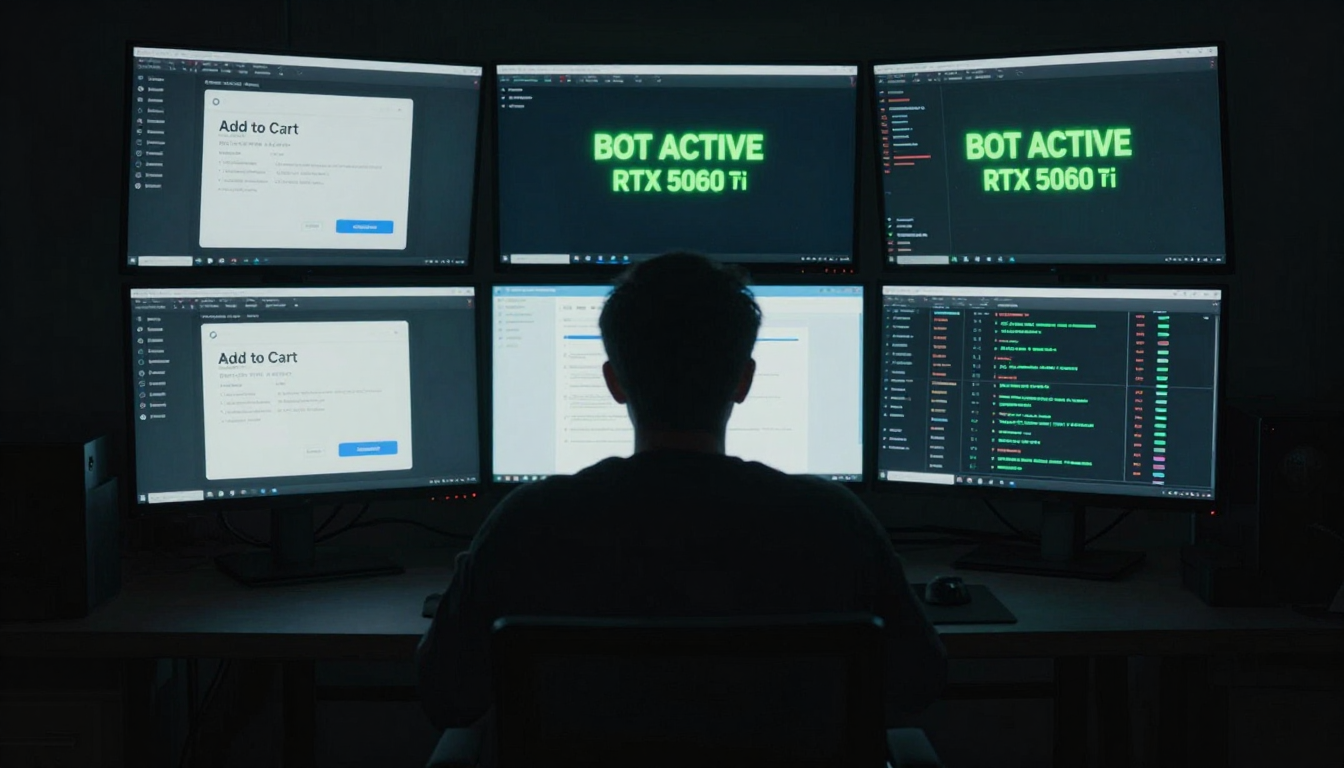
- Increased Bot Activity:
Scalping groups will undoubtedly heavily target any online restocks with automated purchasing bots. - Platform Proliferation:
Expect to see a significant increase in inflated RTX 5060 Ti listings dominating platforms such as eBay, StockX, and Facebook Marketplace. - Price Gouging:
Scalper prices will likely stabilize in a range of 40-60% above the MSRP, potentially reaching $630-$720, as long as the scarcity persists.
Consumer Protection Tip:
It is generally advisable to avoid paying more than 20% over MSRP.
Always check a reseller's history and use payment services that offer buyer protection, such as PayPal Goods & Services.
If a deal appears too good to be true, it almost certainly is.
NVIDIA's Strategic Play: Long-Term Vision or Short-Term Adjustment?
This decision to cut RTX 5060 Ti production is almost certainly a calculated component of NVIDIA's broader, long-term strategy.
By making this move, NVIDIA achieves several important goals.
- Maximizes Wafer Profitability:
Every 3nm wafer reallocated from a consumer RTX card to an enterprise AI accelerator likely increases NVIDIA's net profit from that wafer by a significant margin.
The profit difference between consumer and AI GPUs is substantial. - Market Segmentation:
This move effectively reinforces the RTX 5070 as the new default entry point for serious enthusiasts in the mid-range segment.
It essentially raises the price floor for NVIDIA's current-generation gaming GPUs. - Competitive Pressure:
The production cut puts pressure on AMD to meet the surge in demand for its competing cards.
This could potentially strain AMD's own supply chain.
This situation is less about a short-term fix and more about an adaptation to a new market reality.
In this reality, AI, rather than gaming, is the primary driver of NVIDIA's substantial growth and strategic decisions.
Performance Value Reassessment: Is the 5060 Ti Still Worth It?
The value proposition of the RTX 5060 Ti has been entirely altered by these market changes.
- At MSRP ($449):
At its original price point, the 5060 Ti offered excellent value.
It delivered best-in-class 1440p performance, coupled with strong ray tracing capabilities and DLSS 3.5 features. - At Inflated Prices ($600+):
At current inflated prices, the RTX 5060 Ti represents a terrible value.
For a similar amount, a gamer could purchase an RTX 5070, which typically offers about 20-25% more raw performance.
The AMD RX 8700 XT also becomes significantly more appealing, often providing similar or better rasterization performance for potentially $150 less.
Verdict: Do not buy the RTX 5060 Ti for more than its MSRP.
Its performance does not justify a price that encroaches on the next tier of GPUs.
Historical Parallels: Lessons from Past GPU Shortages
This current event bears a striking resemblance to the "Great GPU Shortage of 2020-2022."
That shortage was primarily driven by the cryptocurrency mining boom and widespread COVID-19 supply chain disruptions.
Several key lessons from that era apply directly to the current situation.
- Shortages Have Long Tails:
The effects of such a significant production cut will likely be felt for at least two fiscal quarters, if not longer.
Do not expect a quick resolution to the scarcity. - Patience is a Virtue:
Gamers who patiently waited out the 30-series shortage were eventually rewarded with GPUs at or even below MSRP.
The same patient approach will likely prove beneficial here. - The Second-Hand Market is Key:
The market for used 30-series and 40-series cards will become a viable and important option for many builders operating on a tighter budget.
This segment of the market could offer significant value.


