- Specialized AI: Gemini 3 Deep Think is Google DeepMind's new, highly specialized model engineered for complex scientific reasoning and data analysis, distinct from the general-purpose Gemini 3.
- Causal Inference Engine: Its core innovation is a "Causal Inference Engine" designed to understand cause-and-effect, making it powerful for fields requiring deep mechanistic understanding.
- Early Access Only: Currently, Deep Think is available only through a private Early Access Program (EAP) for major research institutions and R&D departments via Google Cloud's Vertex AI.
- Impressive Benchmarks: Early results show remarkable performance in accelerating drug discovery, materials science design, and complex scientific code generation.
- High Cost & Complexity: Integrating Deep Think requires significant data preprocessing, incurs premium computational costs, and demands critical human oversight due to potential overconfidence and reproducibility challenges.
Gemini 3 Deep Think: Google DeepMind's New Scientific Powerhouse Arrives
On February 13, 2026, Google DeepMind introduced Gemini 3 Deep Think, a highly specialized artificial intelligence model built from the ground up to tackle the most complex challenges across science, research, and engineering.
This isn't just a minor update to the existing Gemini 3; it's a strategic pivot towards bespoke, domain-expert systems capable of multi-step reasoning and novel hypothesis generation.
If you're in scientific research or advanced R&D, understanding Gemini 3 Deep Think's capabilities and current access status is crucial right now.
1. Differentiating Gemini 3 Deep Think from Gemini 3
While both share a common Gemini 3 foundation, Deep Think is architecturally distinct and purpose-built for the rigor of scientific inquiry.
The standard Gemini 3 excels at general multimodal understanding and creative tasks, but Deep Think focuses on deep, causal reasoning.
Its key innovation, Google's "Causal Inference Engine," is designed to understand cause-and-effect relationships, moving beyond mere correlation.
| Feature | Gemini 3 (General) | Gemini 3 Deep Think (Specialized) |
|---|---|---|
| Primary Use Case | General-purpose, multimodal, creative tasks | Complex scientific reasoning, data analysis, hypothesis generation |
| Training Data | Broad web corpus, multimodal data | Curated scientific literature, patent databases, simulation data, genomic and proteomic datasets, chemical compound libraries |
| Reasoning Engine | Optimized for fast, intuitive (System 1) responses | Enhanced multi-step logical inference, causal reasoning (System 2) chains |
| Context Window | Large (up to 2 million tokens) | Extremely large, optimized for ingesting entire research corpora and complex datasets (rumored up to 10 million tokens) |
| Native Tool Use | Integrates with external APIs and tools | Natively integrates with scientific simulators, data analysis libraries (e.g., SciPy), and molecular viewers |
| Cost Profile | Standard tiered pricing | Premium, high-compute pricing model |
2. Early Access Program: Eligibility and Expectations
Gemini 3 Deep Think is not yet publicly available.
It is currently being rolled out through a private Early Access Program (EAP) via Google Cloud's Vertex AI.
Access is highly selective and by application only.
- Eligibility Criteria:
Google is prioritizing major academic research universities, national laboratories, corporate R&D departments (pharmaceuticals, materials science, aerospace, semiconductor design), and select AI startups with proven track records in scientific applications.
Applicants must present a specific, high-impact research problem that cannot be solved by existing computational methods. - Rollout Timeline:
The first wave of invitations went out in late January 2026.
A second wave is expected in Q2 2026.
No date for general availability has been announced. - Support & Resources:
EAP members receive dedicated support from Google Cloud's AI engineers, access to a private Discord server for community collaboration, and specialized documentation for the Deep Think API.
3. Real-World Performance Benchmarks in Science & Engineering
Google's official benchmarks focus on tasks far beyond standard LLM evaluations, with impressive initial results, though third-party validation is still pending.
Deep Think's main advantage is its speed and ability to synthesize information across multiple domains to arrive at solutions.
- Drug Discovery:
In simulations, Deep Think identified three novel protein targets for an existing cancer drug in under 48 hours, a task typically requiring months of human-led research.
Its accuracy in predicting protein-ligand binding affinity reportedly surpasses previous state-of-the-art methods. - Materials Science:
The model successfully designed a theoretical novel alloy with high tensile strength and heat resistance based on desired properties.
These properties were later verified in simulation, with physical synthesis pending. - Code Generation:
It demonstrated a 95% success rate in translating complex physics problems from natural language into executable simulation code (Fortran, MATLAB), including debugging and optimization.

4. Integration Challenges and Migration Strategies
Integrating Deep Think isn't a simple API swap; early adopters have highlighted several critical considerations.
Research teams need to be prepared for the investment in time and resources.
- API Complexity:
The Deep Think API is more structured than generalist counterparts, requiring precisely formatted inputs for datasets, chemical formulas (e.g., SMILES strings), and physical constraints. - Data Preprocessing:
Significant effort is needed to curate and clean proprietary data to feed the model effectively; "garbage-in, garbage-out" is a major risk. - Computational Cost:
The model is resource-intensive.
A single complex query can incur significant computational costs, necessitating careful budget management.
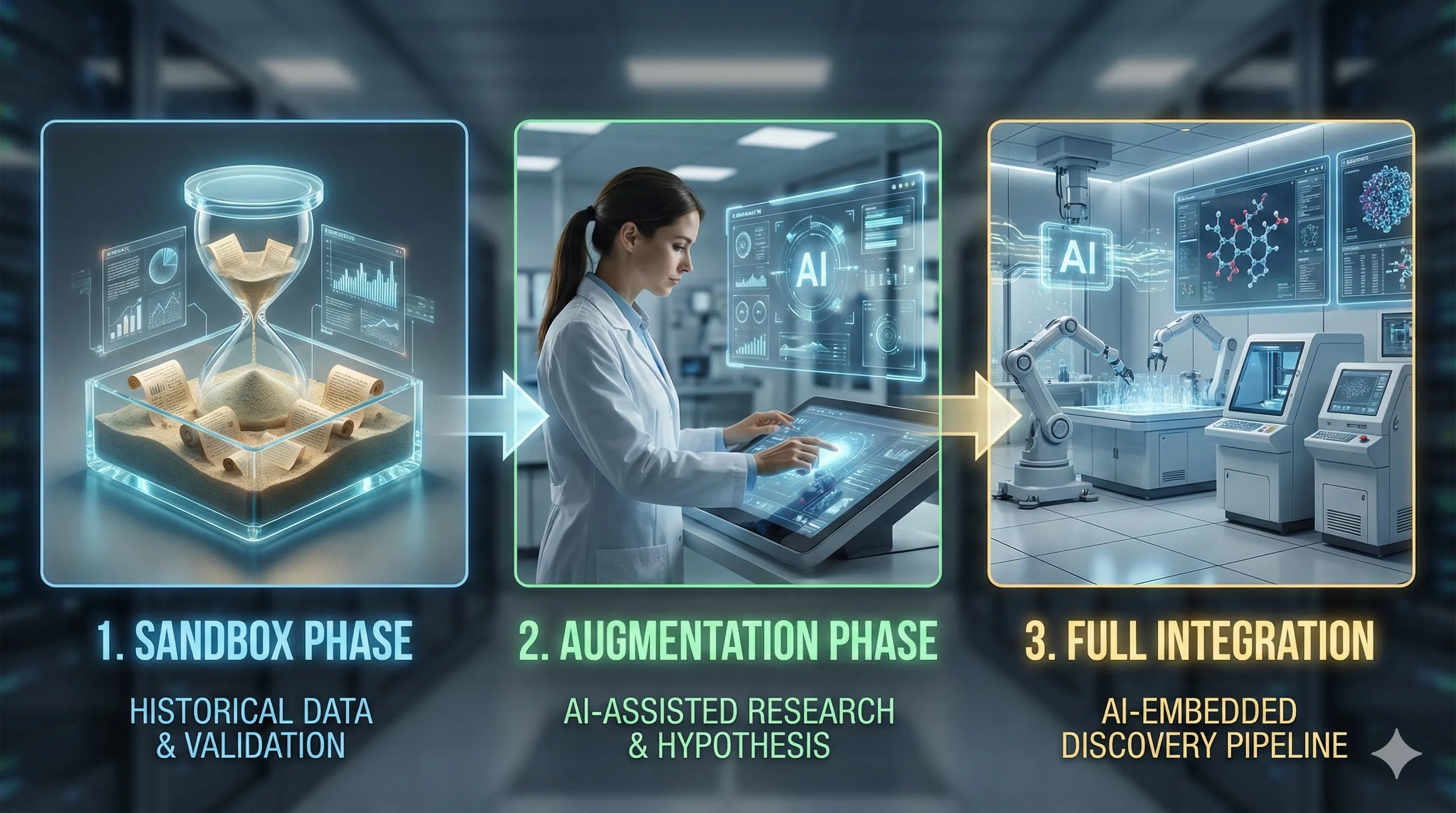
Recommended Migration Path:
- Sandbox Phase:
Start by using Deep Think on well-understood, historical problems to validate its reasoning process against known outcomes. - Augmentation Phase:
Integrate Deep Think as a 'research assistant' to augment existing workflows, using it for literature review, hypothesis generation, and data analysis. - Full Integration:
Once validated and trusted, embed Deep Think into the core discovery pipeline for novel research and simulation.
5. Cost-Benefit Analysis for Research Institutions
While the exact pricing structure remains under wraps, Deep Think is expected to be a premium service on Google Cloud.
The cost-benefit analysis will hinge entirely on the value of accelerating discovery.
- Value Proposition:
For a pharmaceutical company, reducing the pre-clinical phase of drug discovery by even three months could be worth hundreds of millions of dollars.
For an academic lab, publishing a breakthrough paper based on an AI-generated hypothesis could secure years of funding. - Cost Considerations:
Primary costs include direct API/compute usage and the indirect cost of retraining staff and adapting workflows. - ROI Calculation:
The return on investment (ROI) for Deep Think is not primarily in cost savings, but in 'discovery velocity' and the potential to solve previously intractable problems.
Institutions must weigh the high cost against the potentially transformative value of a single breakthrough.
6. Undocumented Features and Potential 'Hidden Gems' (Rumored)
Early users in the EAP have reported several capabilities not explicitly mentioned in the official documentation.
These should be treated as unverified observations and rumors.
- Emergent Hypothesis Testing:
Some researchers claim the model can not only generate a hypothesis but also outline a detailed experimental procedure to validate it, including potential points of failure. - Cross-Disciplinary Synthesis:
Deep Think reportedly has an uncanny ability to find obscure connections between different scientific fields, referencing a concept from a 1980s materials science paper to solve a problem in modern immunology. - 'Explainable Failure' Mode:
When the model fails to solve a problem, it can sometimes provide a meta-analysis of why it failed, pointing to potential gaps in the provided data or ambiguities in the underlying scientific principles.
7. Community Feedback: Initial Impressions, Bugs, and Limitations
Feedback from the first cohort of users is cautiously optimistic, with common themes emerging.
Users are generally impressed but also identify critical areas for improvement and caution.
- Praise:
Users are universally impressed by its ability to grasp the nuances of highly technical subjects and its power in brainstorming novel research avenues. - Bugs/Limitations:
- Overconfidence:
The model sometimes presents highly plausible but incorrect reasoning chains with great confidence, making expert human oversight absolutely critical. - Niche Domain Gaps:
While its knowledge is vast, it can struggle with extremely niche or newly emerging fields where training data is sparse. - Reproducibility:
Some users have noted that identical complex prompts can occasionally yield slightly different reasoning paths, creating challenges for scientific reproducibility.
- Overconfidence:
8. Ethical Considerations and Responsible Deployment
The immense power of Deep Think necessitates a robust ethical framework for its deployment and use.
Google has stated that EAP users are subject to strict vetting and usage policies to mitigate risks.
- Dual-Use Technology:
The ability to design novel chemical compounds or materials could be used for beneficial or harmful purposes. - Bias in Data:
Scientific literature itself contains historical biases.
The model could perpetuate or even amplify these biases if not carefully monitored. - Explainability:
While better than previous models, its most complex reasoning can still be a 'black box'.
Ensuring researchers can understand and verify the model's logic is a major challenge for critical applications like medicine. - Human Oversight:
The consensus is that Deep Think must be used as a 'co-pilot' for expert scientists, not as an autonomous discovery engine.
The final judgment and responsibility must remain with human researchers.
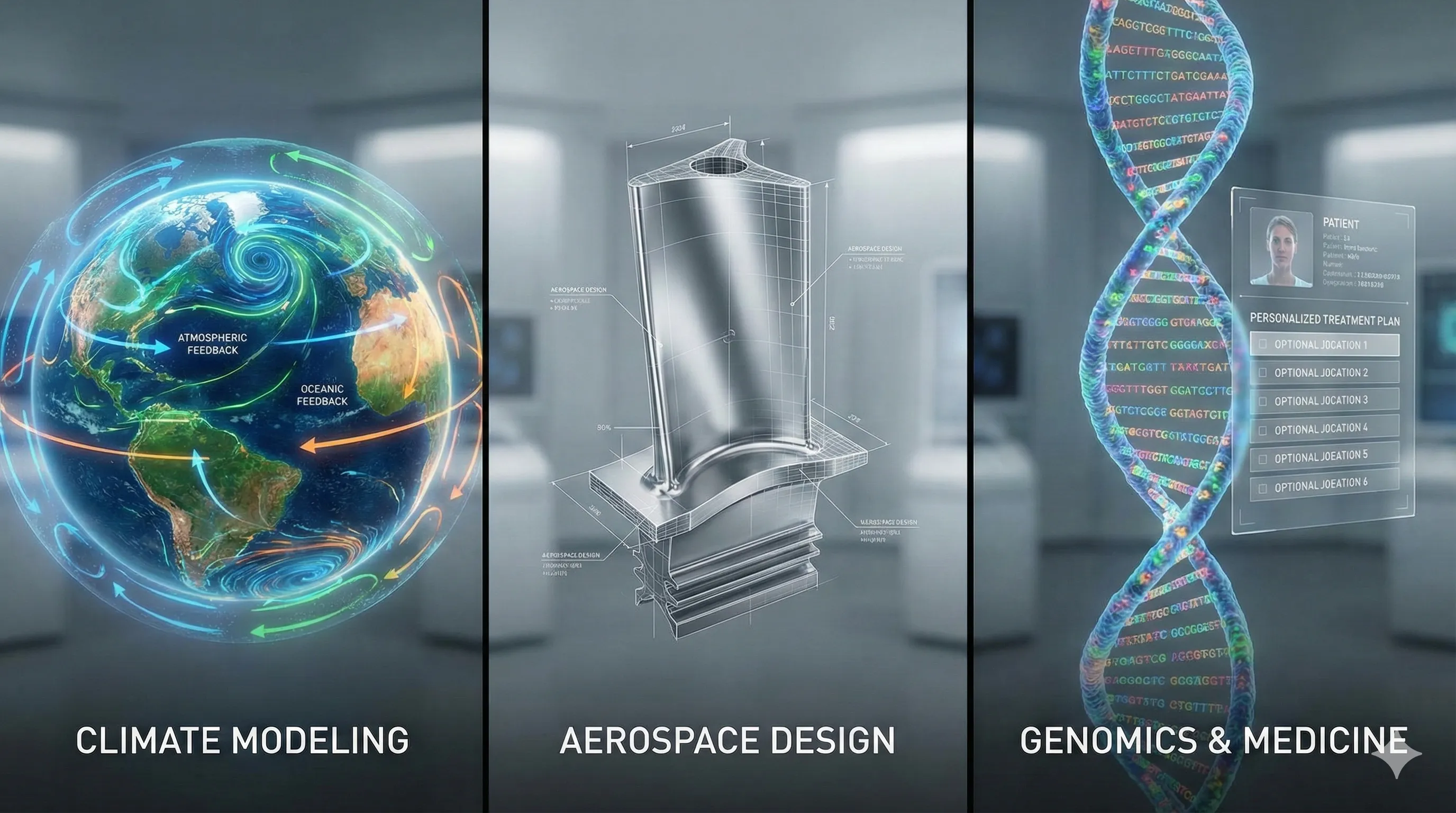
9. Transformative Impact on Specific Scientific Disciplines
Gemini 3 Deep Think is poised to become a foundational tool for a new era of AI-driven science, offering capabilities previously thought impossible.
- Climate Modeling:
It can analyze vast climate datasets to identify complex feedback loops and model second-order effects of geoengineering strategies with unprecedented fidelity. - Aerospace Engineering:
Engineers can use it to design and simulate novel fuselage shapes or engine components, optimizing for fuel efficiency and stress tolerance in a fraction of the time. - Genomics & Personalized Medicine:
By analyzing an individual's genome alongside global medical literature, Deep Think could propose personalized treatment plans or identify rare disease risk factors invisible to human analysis.
Further announcements and research papers are expected to be published on the official Google AI Blog.
Details on the Early Access Program and future availability will be posted on the Google Cloud Blog.
🔗 Recommended Posts
Exploring NotebookLM v3.5: Your AI Research Assistant with Gemini 2.5
Key Takeaways:NotebookLM v3.5, powered by Google's Gemini 2.5 Pro, significantly enhances multi-source synthesis and reasoning.It integrates with your Google Account and supports diverse sources like PDFs, Docs, and web pages.Mastering NotebookLM involves
tech.dragon-story.com
OpenAI Frontier: The Definitive 2026 Deep Dive on the GPT-4 Successor
Key Takeaways from OpenAI Frontier (Feb 2026 Update)OpenAI Frontier is a significant architectural shift with stateful memory and enhanced multi-modal capabilities, accessed via a new `v2` API endpoint.It delivers marked improvements in complex reasoning a
tech.dragon-story.com
GPT-5.3-Codex: The Unofficial Deep Dive for Developers (Feb 2026)
Key Takeaways from GPT-5.3-Codex Update:Multi-File Context is a Game Changer (and Cheaper): GPT-5.3-Codex can now reference up to 15 project files, significantly reducing prompt context and improving code coherence. Context tokens are billed at a 50% lower
tech.dragon-story.com


