- Chinese development teams consistently launch AI products and localized versions faster than their Western counterparts, driven by cultural, structural, and regulatory factors.
- This rapid deployment, often following a 'minimum viable product' approach, can lead to initial trade-offs in quality, security, and UI/UX compared to Western tools.
- The accelerated pace has intensified global debates over intellectual property, data privacy, and the implementation of ethical AI guardrails.
- Western AI companies are responding by accelerating open-source initiatives, increasing government and consortium investments, and focusing on enterprise trust and compliance.
- Aggressive pricing and rapid feature commoditization from Chinese tools are reshaping AI market economics, pushing Western players to innovate at higher value tiers.
- Beyond direct replication, China's rapid iteration fosters unique, market-specific innovations, such as AI assistants for rural communities and specialized live-streaming sales tools.
China's AI Velocity: A New Dynamic in Global Tech Competition
The global AI landscape is experiencing a significant shift as Chinese development teams demonstrate remarkable deployment velocity, launching new AI tools and localized versions of Western models at an unprecedented pace.
This trend, highlighted by discussions across tech communities, reveals a critical dynamic where the speed of Chinese AI deployment often outpaces the original creators.
Understanding this phenomenon requires moving beyond simple observations to analyze the underlying factors, the resulting trade-offs in quality and intellectual property, and the strategic adjustments now facing Western AI players in early 2026.
The Undocumented Speed Advantage in China's AI Development
The narrative that China's speed in AI deployment is merely due to leveraging open-source models is an oversimplification.
A deeper look reveals a complex interplay of cultural, structural, and regulatory factors that provide a distinct advantage.
'996' Work Culture and Agile Teams:
Many tech startups in China still operate under the '996' work ethic (9 am to 9 pm, 6 days a week).
While controversial, this provides a raw advantage in man-hours, enabling small, hyper-focused teams to operate with a 'wartime' mentality.
This approach often strips away layers of management and process common in larger Western corporations.
Pragmatic Regulation:
China's regulatory environment for AI has historically prioritized national technological advancement and market application.
Especially in non-sensitive commercial sectors, this allows for faster data collection, model training on localized datasets, and deployment without the lengthy review cycles often seen in the EU or the US.
Primary Focus on Market Fit (最小可行性产品 - MVP):
The guiding principle for many Chinese teams is rapid iteration based on immediate user feedback.
The goal is to launch a 'minimum viable product' quickly, monetize it, and then improve it in real-time.
This contrasts with the Western big-tech approach, which often involves longer, closed-beta cycles aiming for a highly polished 'Version 1.0' launch.

Quality vs. Speed: A Performance Reality Check
The debate over whether faster is always better reveals stark trade-offs in user experience between Chinese speed and Western polish.
Initial Quality & Bugs:
Rapidly shipped Chinese tools frequently launch with more bugs, localization errors (especially in English versions), and a less intuitive UI/UX.
The emphasis is on delivering core functionality quickly.
Western alternatives, which may take an additional 6-12 months to launch, typically offer a more stable and polished initial experience.
Security Posture:
This represents a major divergence.
The 'move fast and break things' approach can inadvertently introduce significant security vulnerabilities.
Data privacy standards in these fast-moving tools are often opaque and may not comply with international regulations like GDPR or CCPA, posing a risk for global users.
Slower Western development cycles typically integrate more robust security audits and compliance checks.
Long-Term Maintainability:
While rapid iteration is powerful, it can sometimes accumulate 'technical debt,' complicating long-term maintenance and scalability.
However, the most successful of these fast-moving companies have demonstrated an ability to refactor and harden their systems effectively *after* achieving market dominance.

Development Lifecycle Approaches (Early 2026)
| Development Stage | Typical Western 'Big Tech' Approach | Typical Chinese 'Shenzhen Speed' Approach |
|---|---|---|
| Core Idea | Months of internal research, papers, and ethical review. | Rapid adaptation of an existing open-source model or SOTA paper. |
| Alpha/Beta Testing | Closed, invite-only for 6-18 months. Focus on stability & polish. | Open, public beta within weeks. Focus on feature requests & bug reports from a live user base. |
| Public Release (v1.0) | Major marketing event. Product is feature-rich and stable. | 'Official' launch is often a formality; the product has been publicly usable for months. |
| Monetization | Freemium model with high-cost enterprise tiers, established *at* launch. | Aggressive, low-cost subscription models introduced early in beta to gauge price sensitivity. |
| Feature Updates | Quarterly or bi-annual major updates. | Daily or weekly minor updates based directly on user feedback. |
Global Controversy: Intellectual Property, Ethics, and AI Tooling
The speed of AI adaptation has ignited fierce debate over intellectual property (IP) and ethics, issues that remain highly contentious in global AI governance as of 2026.
Intellectual Property:
Many Chinese AI applications are 'wrappers' or heavily 'inspired' by Western closed-source APIs, often replicating UI and functionality closely.
While using open-source models like Llama 3 or Mistral is legitimate, the line blurs when proprietary architectures and datasets from companies like OpenAI or Anthropic are reverse-engineered, or their outputs are used for training competing models, a practice typically against terms of service.
Data Privacy:
The use of data for model training continues to be a flashpoint.
While Chinese regulations are strengthening, their primary focus is often on protecting Chinese citizens' data within China.
The standards applied to global user data collected by these fast-shipping apps are frequently unclear, raising significant alarms for international users and corporations.
Ethical Guardrails:
Foundational models from Western labs usually incorporate extensive, though imperfect, ethical guardrails to prevent misuse.
Rapidly adapted versions may strip away these guardrails or fail to implement them robustly.
This can happen either to save time or to enable functionalities that Western companies would deem too risky, such as unfiltered content generation or advanced surveillance tools.

Western AI's Strategic Adaptation Challenge
Western AI companies face a strategic dilemma: their established development models are being outmaneuvered in terms of speed-to-market.
Talent Retention:
The allure of launching a product in three months versus three years is a powerful motivator for developers.
Some Western developers are increasingly drawn to the fast-paced environment of new startups, both in China and in globally distributed teams adopting similar agile methodologies.
Investment Shifts:
Venture capitalists are now evaluating the 'slow and steady,' R&D-heavy approach against a 'fast and profitable' application-layer strategy.
While deep-tech investment continues, a notable portion of capital, particularly in late 2025, has flowed towards companies that can demonstrate rapid user acquisition and revenue generation, an area where Chinese teams currently excel.
Competitive Strategy:
Western companies are being compelled to choose between accelerating their own release cycles (which carries risks to quality and brand reputation) or ceding the initial market grab to faster competitors and hoping to win back users later with a superior product.

Redefining AI Tool Economics: The Price and Value Shift
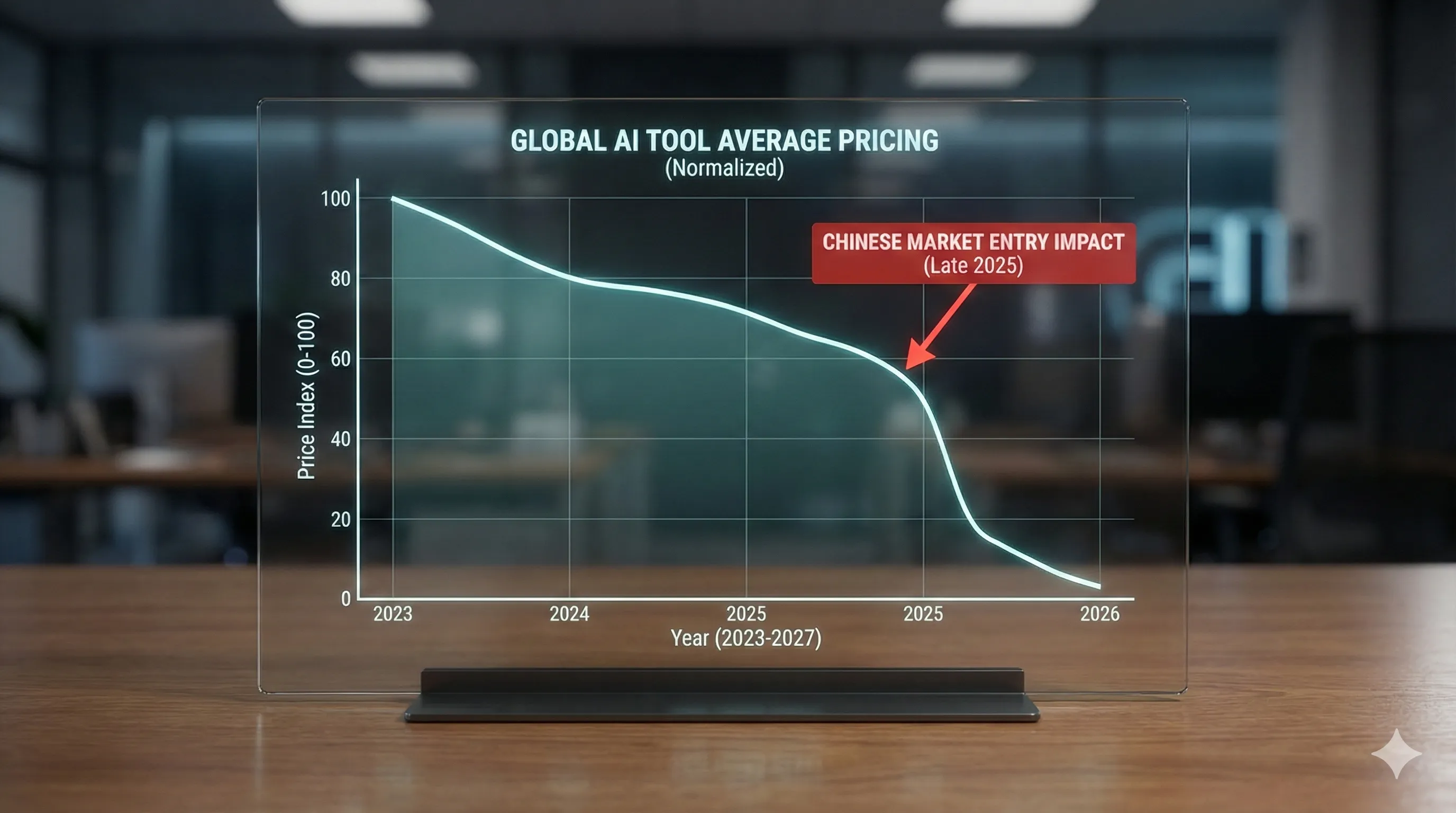
The influx of low-cost alternatives from Chinese developers is causing a significant commoditization shockwave across the AI tool market.
Aggressive Pricing:
Chinese-developed AI tools frequently launch with prices 50-80% lower than their Western counterparts, or they offer more generous free tiers.
This places immense pressure on the subscription models of established players.
Commoditization of Core Features:
Functions that were considered premium features in 2024, such as advanced data analysis in chatbots or basic video generation, are now often standard, free features in many new tools.
This forces Western companies to innovate faster at the high end to justify their price points.
Shifting Perceived Value:
Users are becoming accustomed to rapid feature releases and low costs, potentially devaluing the extensive R&D, safety measures, and infrastructure costs that are typically priced into Western tools.
Case Studies: Chinese AI Tool Accelerations (2025-2026)
These fictional case studies illustrate the rapid adaptation and deployment strategies observed in Chinese AI development.
Case Study 1: 'AgentCanvas'
- Western Innovation (Late 2024):
A US-based AI lab, 'Nexus Research', releases a groundbreaking open-source framework for building autonomous AI agents that interact with desktop environments.
The framework is powerful but requires significant coding expertise. - Chinese Acceleration (Q2 2025):
A Shanghai startup, 'Lingmo Tech', launches 'AgentCanvas', a no-code, web-based platform built on the Nexus framework.
It allows non-technical users to build and deploy desktop agents via a drag-and-drop interface.
Within three months, AgentCanvas amasses over 500,000 users, primarily small businesses in Asia automating workflows, while the original framework is still mostly used by academic researchers.

Case Study 2: 'Polyglot-Voice'
- Western Innovation (Mid-2025):
A leading Western company releases a state-of-the-art voice translation model with incredibly low latency, available via a pricey, metered API and supporting 10 major languages. - Chinese Acceleration (Q4 2025):
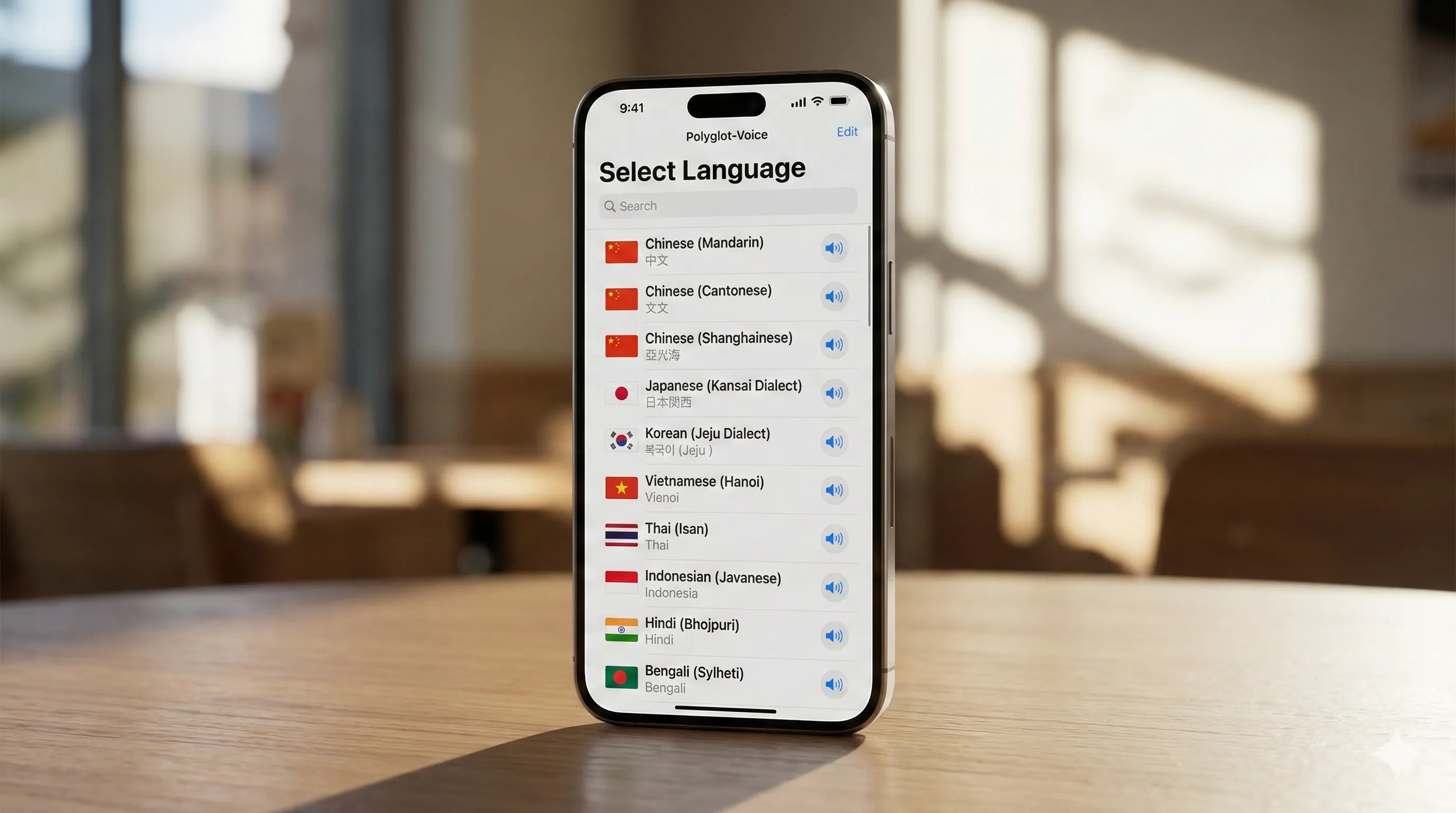
A team from Beijing releases a downloadable desktop app and a mobile app called 'Polyglot-Voice'.
It allegedly uses a distilled version of the Western model, offering near-identical performance for a flat $5 monthly subscription.
Crucially, they add support for over 30 languages, including multiple Chinese dialects and other Asian languages, capturing a massive market segment ignored by the initial Western release.
Western Countermeasures and Strategic Responses
Faced with this challenge, the Western AI ecosystem is actively adapting.
Several key response strategies have emerged over the past year.
Accelerated Open-Source Releases:
Companies like Meta and Mistral AI continue to push the boundaries on open-source model releases.
This is partly a strategy to commoditize the base layer, competing against closed models and enabling a broader community, including Western startups, to build and ship faster.
Government & Consortium Investment:
Governments in the US and EU have ramped up funding for national AI initiatives and public-private consortiums.
The focus is on creating secure, reliable, and ethically aligned foundational models that can serve as trusted alternatives.
Focus on Enterprise & Trust:
Many Western AI giants are doubling down on the enterprise market, where security, compliance, reliability, and robust data governance are paramount, often more so than cutting-edge features or low cost.
They are marketing 'trust' as their key differentiator.

User Experience: Localization, Features, and Market Fit
The user experience often reflects two distinct design philosophies.
Localization Quality:
While initial English translations in some Chinese apps can be rough, the localization for Asian markets is often superb.
These tools integrate seamlessly with local platforms like WeChat, Douyin, and Alipay, providing a user experience that Western apps frequently struggle to replicate.
Feature Sets:
Chinese apps are frequently loaded with features, sometimes to the point of being cluttered.
They often bundle multiple tools, such as image generation, document editing, and chatbot capabilities, into a 'super-app' model, which appeals to users seeking an all-in-one solution.
Market-Specific Innovations:
The tools often include features tailored specifically for their primary user base.
Examples include advanced e-commerce integrations, live-streaming assistance tools, or content generation formatted for specific local social media platforms.

Niche Innovations: Chinese 'Hidden Gems' from Rapid Adaptation
Beyond simple clones, the rapid adaptation cycle in China is producing genuinely novel applications that are often overlooked by the West.
AI-Powered 'Cun-Lao' (Village Elders):
A notable trend in 2025 was the development of community-specific AI assistants for rural areas.
These tools are trained on local dialects, agricultural data, and government policies, assisting elderly residents with technology, providing farming advice, and connecting them to essential services.
This represents a niche with immense social impact that was not on any Western company's roadmap.
Live-Streaming Sales Agents:
Several tools have emerged that can generate real-time, context-aware sales scripts for e-commerce live-streamers.
These AI agents also analyze audience sentiment from comments and suggest product promotions on the fly.
This hyper-specific toolset is a direct result of adapting generative AI to one of China's most dominant economic activities.
These 'hidden gems' demonstrate that the 'shipping speed' is not just about copying; it reflects a rapid, iterative process of identifying and dominating profitable niches that are culturally or economically specific to the domestic market.