Key Takeaways: Navigating the 'Shenzhen Speed' in AI
- Rapid Productization: Chinese teams are quickly converting Western AI research into polished, user-facing products, often before the original researchers secure funding.
- Nuanced Performance: While Western research excels in raw model performance, Chinese applications prioritize optimized inference, intuitive UX/UI, and rapid feature integration for consumer-grade hardware.
- IP & Ethics Debate: The rapid replication raises questions about intellectual property, attribution, and the future of open-source research.
- Market Disruption: This shift compresses product development timelines, makes VCs more cautious, and commoditizes AI capabilities, forcing Western companies to build moats beyond core algorithms.
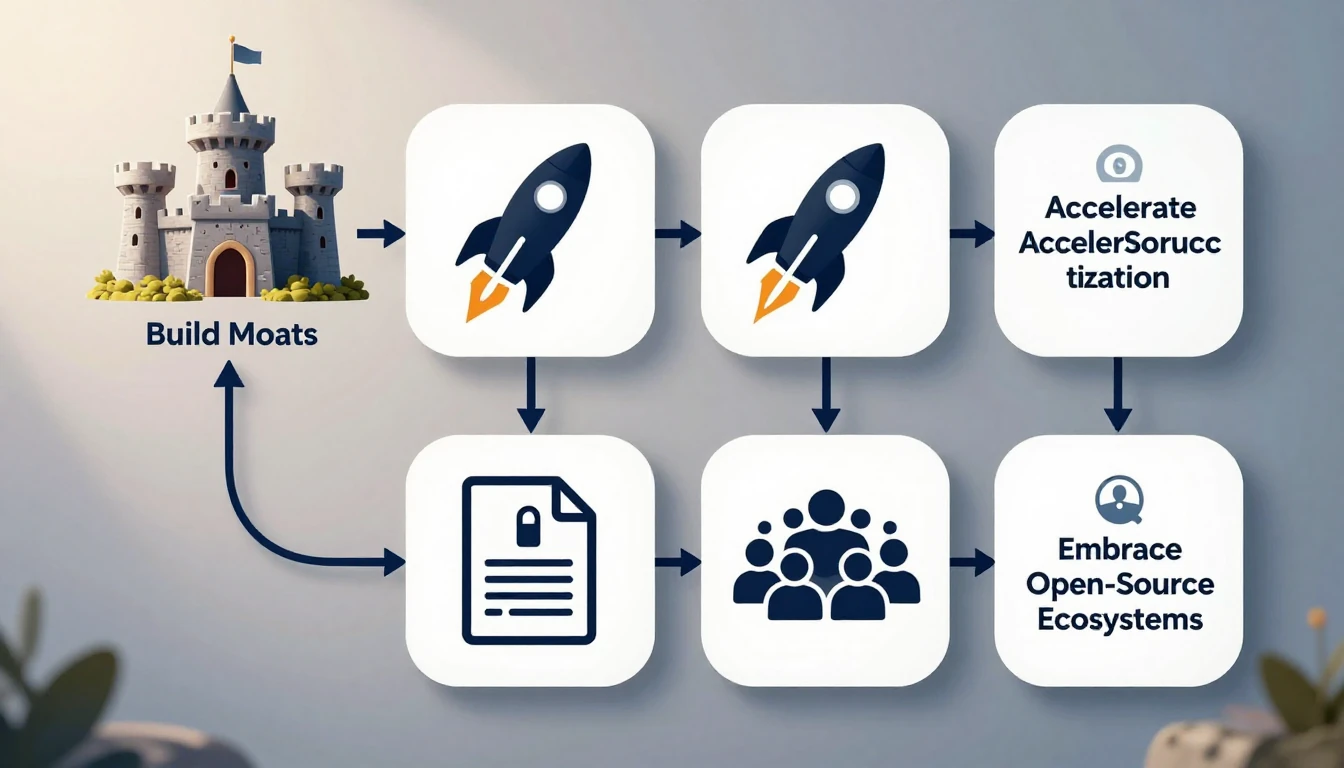
- Western Adaptation: Strategies for Western entities include accelerating in-house productization, building proprietary data sets, fostering true open-source communities, and a 'product-first, paper-later' publication approach.
The 'Shenzhen Speed': How Rapid Productization is Reshaping the Global AI Landscape
The global AI landscape in early 2026 is seeing an unprecedented acceleration in product development, particularly driven by Chinese development teams. If you've been observing the industry, you'll notice that groundbreaking Western research and models are now being rapidly productized into polished, consumer-facing applications from China. This phenomenon, often dubbed the 'Shenzhen Speed' of AI, has become a hot topic, sparking debates about innovation, competition, and the future of technology.
Performance Reality Check: Western Innovation vs. Chinese Execution Speed
When we look at the core differences, a clear trade-off emerges.
Western research prototypes, often originating from labs like FAIR, Google DeepMind, or Stanford, typically demonstrate superior raw performance on highly specialized benchmarks.
These represent the absolute cutting edge of AI model architecture and capability, but they are frequently just prototypes—complex codebases with minimal documentation, often requiring high-end hardware like H100/B200 clusters to run effectively.
In contrast, their Chinese counterparts, while potentially 5-10% less performant in raw model quality, arrive as complete products.
They ship with intuitive user interfaces, robust mobile applications, comprehensive APIs, and are heavily optimized for efficient inference on consumer-grade hardware.
Consider a new Western video generation model that might show a stunning, curated 10-second clip taking hours to render for a demo.
A Chinese app, based on similar research, will generate a 'good enough' 5-second clip in under 30 seconds for a user on their smartphone.
Here's a snapshot comparing a hypothetical 2025 AI model release to illustrate this dynamic:
| Feature | Western Research Demo ('Project Arcane', MIT) | Chinese Commercial App ('MirageFlow', by Nullspace) |
|---|---|---|
| Release Date | Research on arXiv: Dec 2025 | Public Beta Launch: Jan 2026 |
| Accessibility | GitHub repo (research code only) | Web UI, iOS/Android App, Freemium API |
| Core Model Quality | 9.7/10 (Internal Benchmark) | 9.1/10 (Noticeable but minor artifacting) |
| Inference Speed | 45s per generation (NVIDIA B200) | 8s per generation (Optimized for RTX 5070) |
| Features | Core text-to-3D-scene generation | Text-to-3D, texture import, style transfer, social sharing |
| Cost | Free (if you have the hardware) | Freemium ($19.99/month Pro Tier) |
| IP Status | Open Research (Apache 2.0 with non-commercial use) | Proprietary Commercial Product |

IP & Ethics: Navigating the Grey Areas of Rapid AI Replication
This rapid productization often operates within the grey areas of intellectual property.
Most foundational research is openly published on platforms like arXiv, and many models are released under permissive open-source licenses, such as Llama 3-class models.
Chinese teams typically aren't engaging in direct code theft.
Instead, they demonstrate mastery in rapid implementation, building upon publicly available research papers and open-source weights.
The ethical debate around this is intense.
Many Western researchers argue that this approach disincentivizes the open sharing of knowledge, which has been a primary driver of AI progress for the past decade.
If every new paper is immediately productized by others, labs might become more secretive, potentially slowing down the entire field's advancement.
Conversely, others contend that this is precisely the intended function of open source and public research—to be built upon and extended.
The main point of contention often lies in the commercial aspect and the perceived lack of attribution or contribution back to the original research ecosystem.

Market Dynamics Shift: Impact on Global AI Competition
The accelerated productization by Chinese teams is fundamentally reshaping the global AI market landscape.
- Compressed Timelines:
The window available to establish a competitive moat based purely on technology has drastically shrunk from years to mere months. - VC Hesitation:
Western venture capitalists are becoming more cautious about funding startups whose primary advantage is a novel algorithm, anticipating that it could be replicated and commercialized by others before they achieve product-market fit. - Value Chain Bifurcation:
A distinct dynamic is emerging.
Western labs increasingly focus on capital-intensive foundational model research, acting as the 'picks and shovels' providers.
Eastern companies, meanwhile, excel at building user-facing applications on top of these foundations, operating like the 'gold rush miners.' - Higher Barriers to Entry:
Ironically, despite technology becoming more accessible, the barrier to market entry is rising because speed-to-market is now a critical competitive factor.
Western Response Strategies: Adapting to Accelerated Productization
For Western companies and research labs, adapting to this new reality is crucial for survival and growth.
A multi-pronged strategic approach is necessary.
- Build Moats Beyond the Model:
Focus on creating value where replication is inherently difficult.
This includes developing proprietary data sets, fostering strong community engagement, ensuring deep platform integrations, providing enterprise-grade security, and offering exceptional customer support. - Accelerate In-House Productization:
Adopt more agile, product-focused R&D cycles.
Integrate product managers and UX designers directly into research teams from the initial stages of development. - Strategic Publication:
Consider a 'product-first, paper-later' approach.
Delay publishing key research findings until an in-house product has secured a significant market head start. - Embrace True Open-Source Ecosystems:
Instead of simply releasing code, actively build and nurture vibrant open-source communities, similar to platforms like GitHub or Hugging Face.
These communities can often out-innovate and out-collaborate closed, fast-following competitors.
Undocumented Advantages: What Chinese Teams Add Beyond Replication
It's a common misconception to view these products as mere clones.
Chinese teams frequently add substantial value beyond just replicating core technology.
- Superior UX/UI:
They often possess a deeper understanding of mobile-first design principles and effective user engagement loops.
This leads to products that are often more intuitive, enjoyable, and 'addictive' for users. - Hyper-Localization:
Achieving seamless integration with dominant local ecosystems, such as WeChat, Douyin, and Taobao, creates significant value that is inherently challenging for Western companies to replicate. - Novel Feature Blending:
These teams excel at combining multiple AI capabilities—like text, image, and voice generation—into a single, cohesive user experience.
This integrated functionality often goes beyond what the original research initially envisioned. - Aggressive Optimization:
They demonstrate deep expertise in techniques like model quantization, pruning, and efficient inference.
This allows them to run complex models cheaply and at a massive scale, delivering high performance with fewer resources.

Community Controversy: Reddit's Debate on AI Shipping Speed
The recent Reddit discussion on r/artificial really highlighted the divided sentiments within the community regarding this rapid productization.
One user, a startup founder, commented:
"It's demoralizing. We spent 8 months and $500k in pre-seed funding to build a product around a new diffusion technique. A team from Hangzhou shipped a better version with an Android app in 6 weeks. Our VCs are getting cold feet. How are we supposed to compete?"
A contrasting view argued:
"This is the free market. Western companies are slow, bloated, and spend more time on ethics statements than shipping code. If research is published openly, you can't complain when someone builds on it faster than you. This competition is good for consumers."
A researcher pointed out the technical nuance:
"People are missing the point. They aren't 'stealing' anything. They are reading the paper, understanding the architecture, and implementing it. Their engineering execution is just light-years ahead. We should be asking why our own tech companies can't move this fast."
This debate clearly highlights the core tension between the collaborative ideals of open research and the often brutal realities of capitalist competition.

Price/Value Shift: How Rapid Shipping Affects AI Tool Economics
The immediate economic impact of this trend is the rapid commoditization of AI capabilities.
When a free or low-cost, high-quality alternative to a newly developed technology emerges within weeks, it becomes incredibly difficult for Western startups to command a premium for their offerings.
This puts immense downward pressure on SaaS pricing across the board.
The perceived value in the AI market is fundamentally shifting.
It's moving away from the underlying AI model itself and towards the holistic product experience.
This includes seamless workflow integrations, the intuitiveness of the user interface, the strength of the community, and the overall reliability of the service.
Companies can no longer simply sell 'access to AI'; they must now sell a comprehensive 'solution to a problem' that happens to be powered by AI.
Migration Pain Points for Western Developers: Navigating the New Pace
For Western developers and AI-focused startups, this new industry reality introduces several significant challenges and pain points.
- Innovation Risk:
The risk that your core innovation will be replicated by competitors before you can establish a sustainable business around it is now higher than ever.
This forces a faster, more aggressive market entry strategy. - Talent Mismatch:
Many Western teams are structured primarily for deep, long-term research, rather than for lightning-fast product engineering and iterative development cycles.
This often requires a re-evaluation of team composition and organizational structure. - Psychological Burnout:
The relentless pressure from global competitors who appear to operate on a 24/7 development cycle can lead to significant team burnout and, at times, strategic paralysis due to the overwhelming pace. - Platform Uncertainty:
Choosing which foundational model or platform to build upon becomes inherently riskier.
The underlying technology can potentially be duplicated and offered at a lower cost elsewhere, impacting your long-term viability.
Future Outlook: Long-Term Impact on the Global AI Innovation Ecosystem
Looking ahead, this trend is likely to drive several long-term shifts across the global AI innovation ecosystem.
- A More Guarded Research Community:
We can anticipate a decline in the traditional 'publish or perish' mentality within corporate AI labs.
This will likely be replaced by a more secretive, product-driven approach to research.
While beneficial for specific companies, this shift could potentially slow the overall pace of truly fundamental breakthroughs in the wider academic community. - The Rise of Application-Layer Superpowers:
While the US may continue its leadership in foundational model development (e.g., future iterations like GPT-5/6, Gemini 2/3), China is well-positioned to become the undisputed leader in the AI application layer.
They are mastering the art of transforming raw technological capabilities into accessible, mass-market products. - Increased Focus on Full-Stack Ecosystems:
Major technology companies such as Apple, Google, and Microsoft will likely double down on building tightly integrated hardware, software, and AI stacks.
This comprehensive ecosystem control represents one of the few remaining defensible competitive moats in a rapidly commoditizing AI landscape.
The global AI ecosystem is undeniably being reshaped.
The era of leisurely transitions from lab to market is effectively over.
Speed of execution and a keen product sense are now as critically important as the initial technological breakthrough itself.
The Western AI community's ability to adapt to this accelerated velocity will play a decisive role in determining its leadership position in the coming decade.


