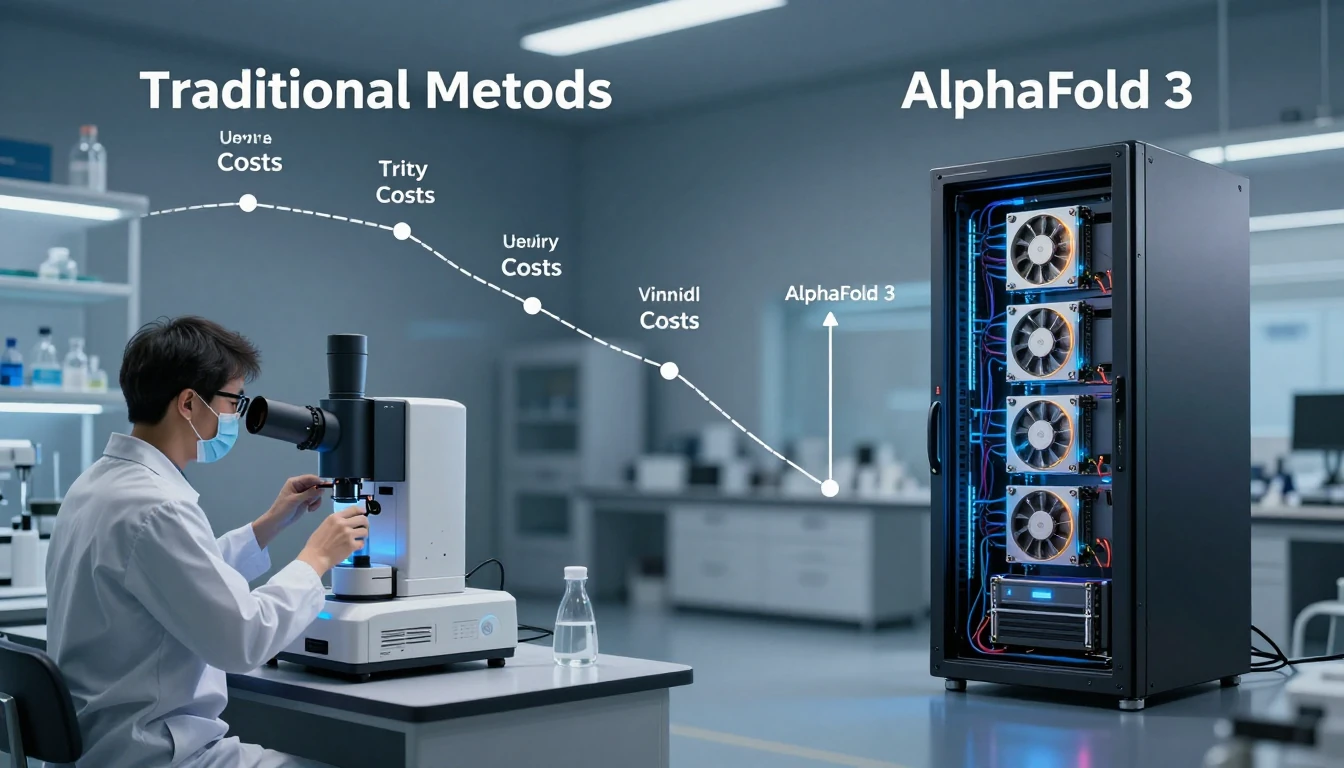
- AlphaFold 3 Transforms Conservation: The latest AlphaFold 3 prediction model dramatically accelerates protein structure determination, moving conservation genomics beyond slow, expensive traditional methods.
- Setting Up Your Workbench: Efficient AI-driven genomics requires robust GPU hardware (local or cloud), a Linux environment, Docker, and essential open-source tools like DeepVariant and Mol*.
- End-to-End Workflow: From raw sequencing data, through genome assembly and annotation, AlphaFold predicts 3D protein structures, which are then analyzed for functional insights critical for conservation.
- Addressing Challenges: Overcoming issues like fragmented genomes, computational bottlenecks, and low confidence scores often involves high-quality sequencing, cloud resources, and careful interpretation of results.
- Future Vision: Initiatives like the 'Biodiversity Protein Bank' aim to create a global, open-access resource of predicted protein structures, guiding breeding programs and informing species management while adhering to crucial ethical guidelines.
AI's Transformative Role in Conservation Genomics: Beyond Traditional Methods
The landscape of genetic conservation is rapidly evolving, with AI-powered solutions like AlphaFold 3 now offering unprecedented capabilities to safeguard vulnerable species.
Understanding an organism's genetics is crucial for informed conservation decisions, yet comprehending the functional implications of genes, largely driven by the proteins they encode, has historically been a significant bottleneck.
Legacy biochemical methods for determining protein structure were powerful but carried substantial limitations that made large-scale application impossible.
Historically, techniques such as X-ray Crystallography demanded lengthy crystallization processes, often failing for many proteins.
Cryogenic Electron Microscopy (Cryo-EM), while groundbreaking, came with multi-million dollar equipment costs and intense computational needs.
NMR Spectroscopy was limited to smaller proteins and proved to be a complex, time-consuming endeavor.
These methods were inherently unscalable and financially prohibitive for the immense task of analyzing thousands of crucial proteins across numerous endangered species.
The release and continuous advancement of DeepMind's AlphaFold, particularly AlphaFold 3 in mid-2024, have fundamentally changed this situation.
By leveraging training on a vast public repository of known protein structures, AlphaFold can now predict a protein's 3D structure from its amino acid sequence with remarkable accuracy, often rivaling experimentally determined structures.
This innovation allows conservationists to shift from merely identifying genes to understanding how those genes function to build resilient animals—a previously unanswerable question at scale.
Traditional vs. AI-Powered Protein Structure Prediction
Here's a comparison highlighting the paradigm shift brought by AI:
| Feature | Traditional Methods (X-ray, Cryo-EM) | AI Prediction (AlphaFold 3) |
|---|---|---|
| Time | Months to Years per protein | Minutes to Hours per protein |
| Cost | ~$100,000+ per structure (equipment, consumables, personnel) | Primarily computational cost (GPU hours), effectively near-zero for public servers |
| Scalability | Extremely low; impossible to apply across entire genomes at scale. | Extremely high; can predict structures for an entire proteome. |
| Success Rate | Low; depends heavily on the protein's biochemical properties. | High; works for a vast range of proteins, including difficult-to-crystallize ones. |
| Data Input | Purified physical protein sample | Amino acid sequence (text string) |
Setting Up Your AI Genomics Workbench: Prerequisites and Open-Source Tools for 2026
To successfully initiate AI-driven protein prediction, you need a carefully configured computational environment.
Here's a practical guide for researchers in early 2026.
Hardware Prerequisites
Running AlphaFold 3 efficiently requires substantial GPU power.
- Local Machine/Cluster:
A minimum of one high-VRAM GPU is essential.
Recommended cards include NVIDIA's A100, H100, or their 2025/2026 'Blackwell' architecture successors.
A system boasting at least 24GB of VRAM, 128GB of RAM, and fast SSD storage (for the massive genetic databases) serves as a solid starting point. - Cloud Computing:
For many institutions, cloud platforms offer the most viable solution.
Google Cloud (with TPUs), AWS (with P4/P5 instances), and Azure provide on-demand access to the necessary hardware, circumventing significant upfront investment.

Software Environment
A modern and robust software environment is key.
- Operating System:
A modern Linux distribution, such as Ubuntu 24.04 LTS, is the standard choice. - Containerization:
Tools like Docker or Apptainer (formerly Singularity) are indispensable for managing AlphaFold's intricate dependencies.
Official AlphaFold Docker images streamline the setup process considerably. - Package Management:
Utilize Conda/Mamba for efficient management of bioinformatics tools and Python environments. - Core Software:
- Python: Version 3.11 or newer.
- JupyterLab/Jupyter Notebook: For interactive analysis and effective visualization of your results.
Data Sources & Databases
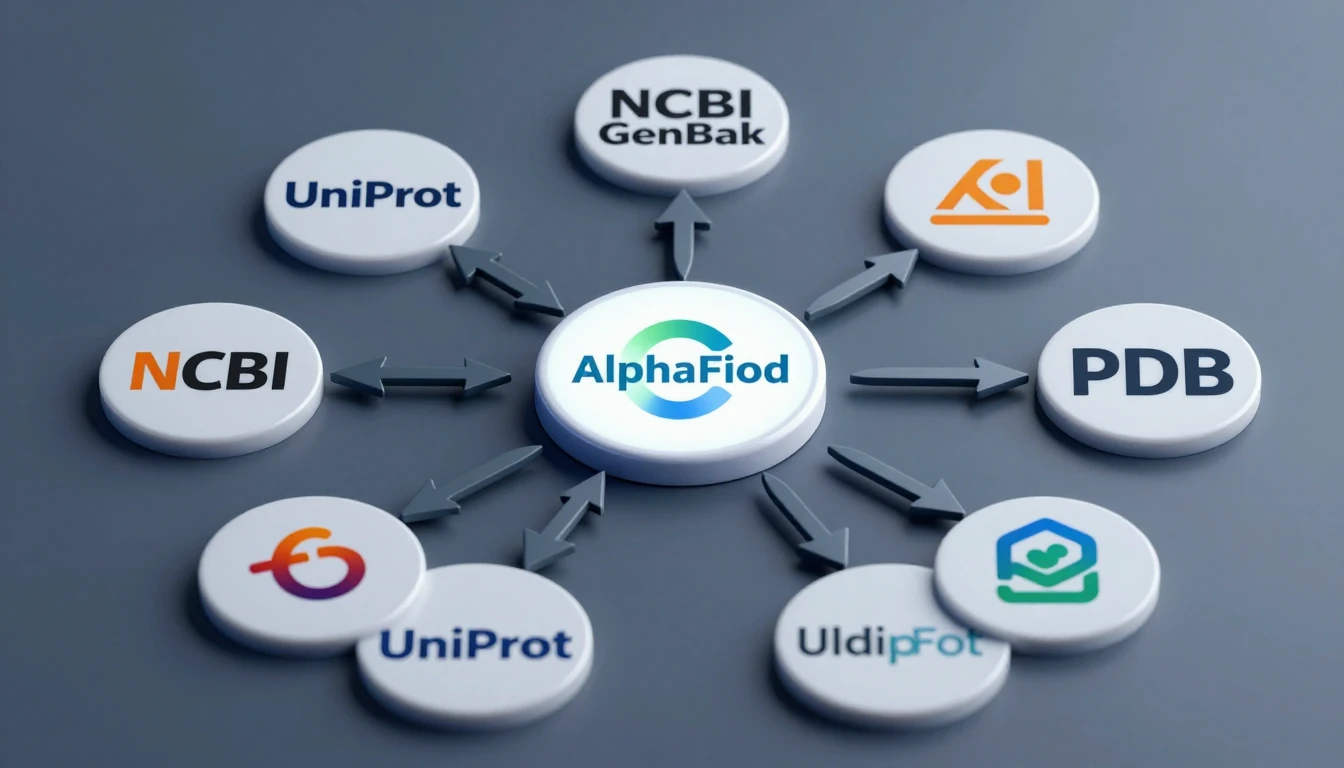
AlphaFold relies on massive databases for its Multiple Sequence Alignment (MSA) step.
- Protein Sequence Repositories:
- UniProt (UniRef90, UniRef30):
This is a comprehensive catalog of protein sequence and functional information.
You can find more details at the official UniProt site. - NCBI GenBank:
The primary public repository for all genomic sequences.
Access it via the official NCBI GenBank site.
- UniProt (UniRef90, UniRef30):
- Structural Template Databases:
- Protein Data Bank (PDB):
The global archive of experimentally determined 3D structures, which AlphaFold uses for templates.
Visit the official PDB site for more information.
- Protein Data Bank (PDB):
Essential Open-Source Tools
Several key open-source tools will complete your workbench.
- AlphaFold 3:
The core prediction engine itself.
It's available via an official GitHub repository from DeepMind or Isomorphic Labs. - DeepVariant:
A Google-developed AI tool that ensures highly accurate variant calling from raw sequencing data, providing a clean genomic baseline.
Check its official GitHub source. - GATK (Genome Analysis Toolkit):
The recognized industry-standard suite for robust variant discovery in high-throughput sequencing data.
Learn more at the official GATK site. - Mol* Viewer:
A modern, web-based molecular viewer for effectively analyzing your predicted 3D structures (PDB files).
Explore it at the official Mol* Viewer site.
From Raw Genome to Functional Insight: An End-to-End AlphaFold Workflow
Here’s a simplified, step-by-step workflow detailing how you can predict a protein's structure starting from a raw genome sequence.
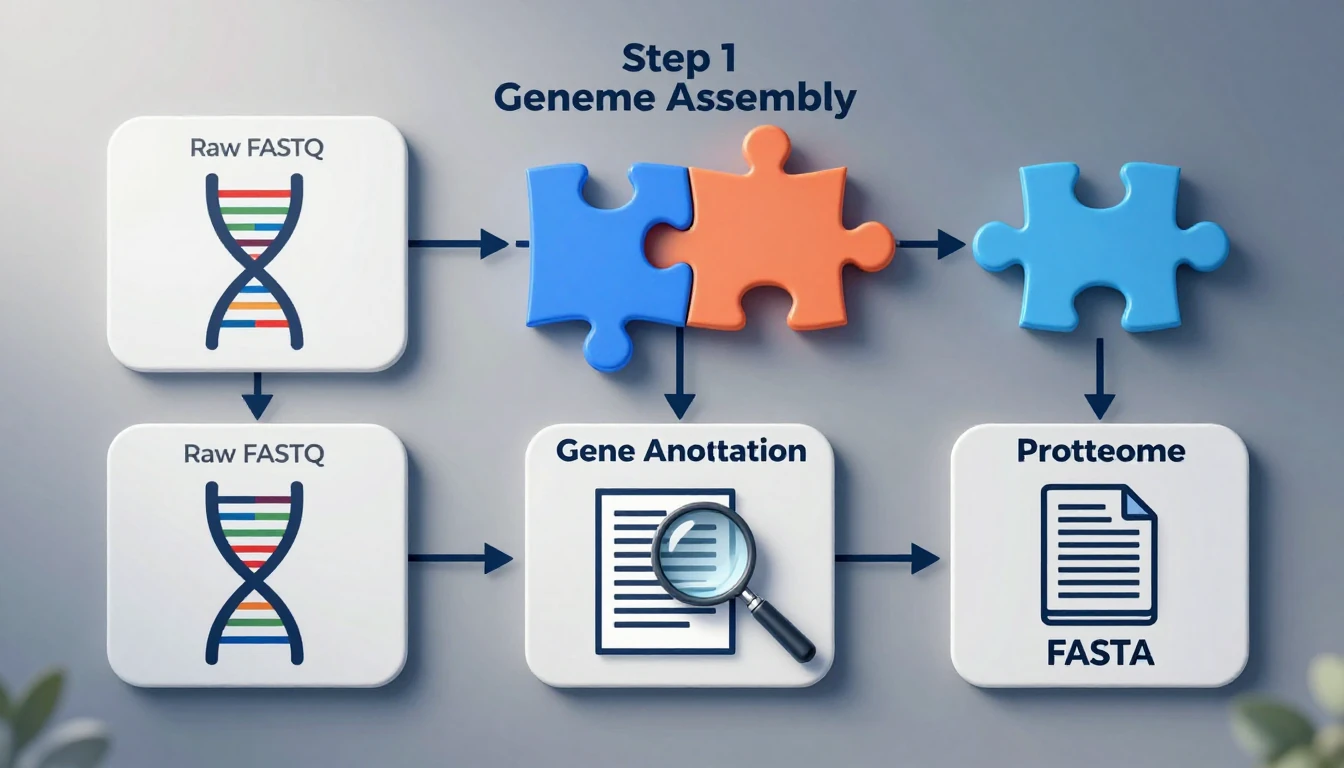
Step 1: Genome Assembly and Annotation
This initial step transforms raw data into a usable genetic blueprint.
- Input:
Raw sequencing reads, typically in FASTQ files, obtained from an endangered species. - Process:
Assemble these reads into a contiguous genome sequence (a FASTA file).
Subsequently, utilize gene annotation tools, such as BRAKER or Augustus, to accurately identify protein-coding genes within the assembled genome. - Output:
A file containing the predicted amino acid sequences for all proteins present in the organism, effectively its 'proteome'.
Step 2: Prepare Input for AlphaFold
Once you have the proteome, you can select specific targets.
- Select Target:
Choose a protein of particular interest, for instance, a crucial immune system protein like TLR4 (Toll-like receptor 4). - Format:
Save the amino acid sequence of your chosen protein into a simple FASTA file (e.g., `tlr4.fasta`).
Step 3: Run AlphaFold Prediction
Using the official AlphaFold Docker container significantly simplifies this prediction process.
The command structure, as of early 2026, typically looks like this:
# Example command as of early 2026
# Assumes you have downloaded the required databases to /path/to/databases

docker run --gpus all -it --rm \
    -v /path/to/input:/input \
    -v /path/to/output:/output \
    -v /path/to/databases:/data \
    deepmind/alphafold:3.0 \
    --fasta_paths=/input/tlr4.fasta \
    --output_dir=/output \
    --data_dir=/data \
    --model_preset=monomer_ptm \
    --max_template_date=2026-02-01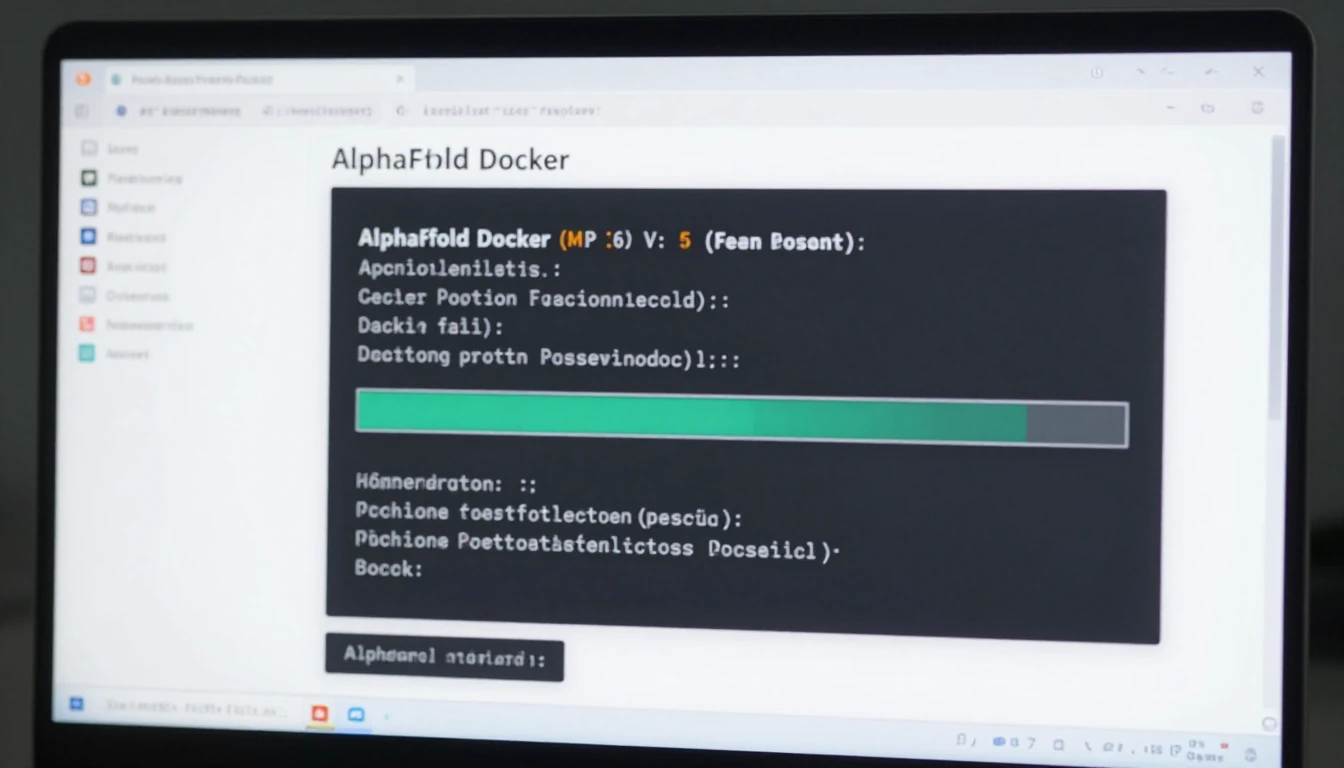
Step 4: Interpret the Results
AlphaFold generates several output files, but a few are particularly important for your analysis.
- `.pdb` file:
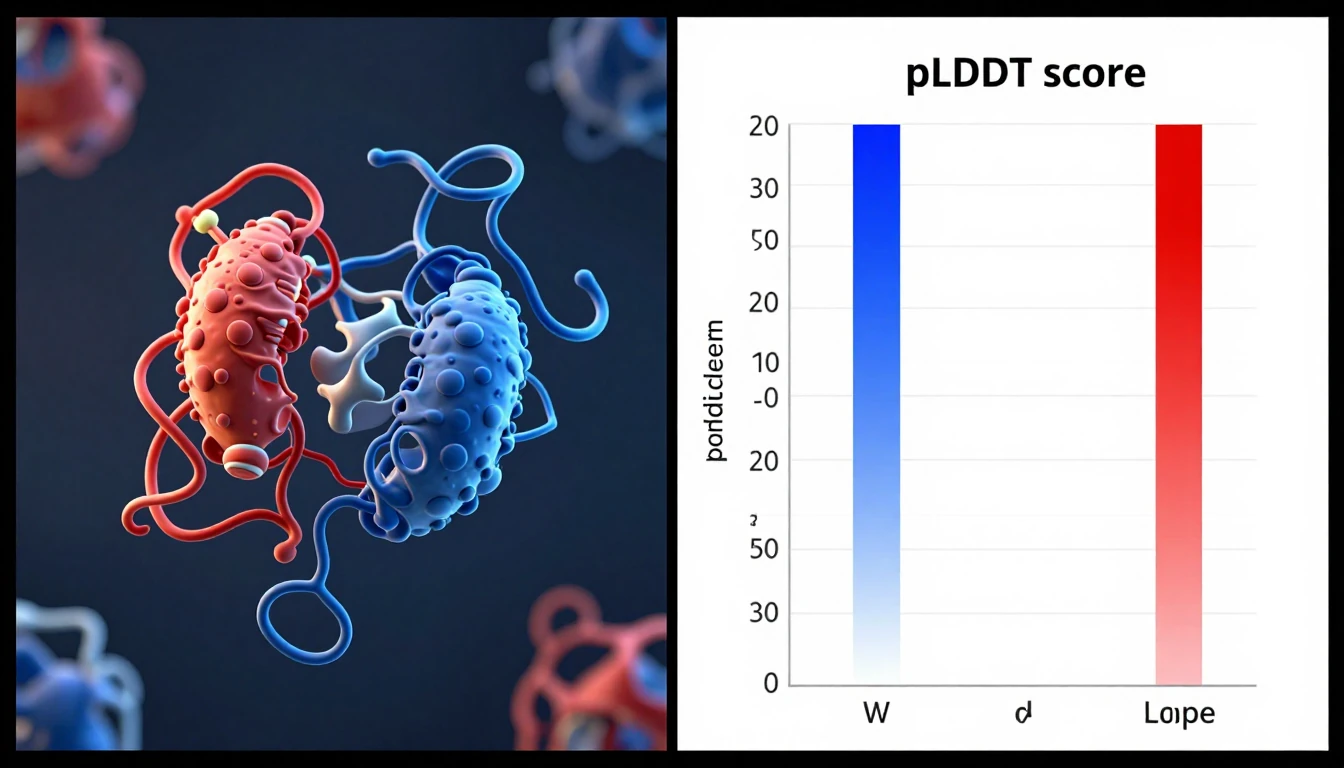
This file contains the predicted 3D structure, which can be visualized using software like PyMOL or Mol*. - `pLDDT` score:
A per-residue confidence score (ranging from 0-100) is embedded within the PDB file's B-factor column.
This score is vital for accurate interpretation.
- > 90 (Very High): Indicates very high accuracy, often comparable to experimentally determined structures.
- 70-90 (Confident): The overall backbone prediction is likely correct and reliable.
- 50-70 (Low): Use these predictions with caution, as uncertainty is high.
- < 50 (Very Low): Such predictions should generally be treated as unreliable, often corresponding to intrinsically disordered regions of the protein.
Step 5: Derive Functional Insight
Analyzing the predicted 3D structure is where biological meaning truly emerges.
Researchers can pinpoint active sites, identify binding pockets for drugs or other molecules, and observe interfaces critical for protein-protein interactions.
For an immune protein, this analysis could reveal precisely how it recognizes pathogens, providing crucial information to develop strategies for bolstering disease resistance in endangered species.
Common Challenges in AI Protein Prediction: Debugging Low Confidence and Data Gaps
While undeniably powerful, the process of AI protein prediction comes with its own set of challenges, particularly when working with non-model organisms.
- Incomplete/Fragmented Genomes:
Low-quality genome assemblies can lead to truncated or incorrect protein sequences, resulting in failed or inaccurate predictions.
- Solution: Prioritize investing in high-quality, long-read sequencing technologies, such as PacBio or Oxford Nanopore, to significantly improve genome assembly quality.
- Computational Bottlenecks:
The database search, specifically the Multiple Sequence Alignment (MSA) creation, is often the most time-consuming step in the prediction pipeline.
- Solution: Leverage pre-computed databases or utilize cloud-based services for faster processing.
For very large-scale projects, dedicated hardware becomes an unavoidable necessity.
- Solution: Leverage pre-computed databases or utilize cloud-based services for faster processing.
- Interpreting Low Confidence (pLDDT) Scores:
A low pLDDT score doesn't always signal a prediction failure.
It can indicate that a particular region of the protein is intrinsically disordered—meaning it lacks a fixed 3D structure in isolation.
This is often a biologically significant finding.
- Solution: Correlate low-confidence regions with protein function predictors to distinguish between genuine disorder and mere prediction error.
- Data Gaps for Novel Species:
If an endangered species is evolutionarily distant from well-studied organisms, AlphaFold's MSA step might find very few homologous sequences.
This scarcity can lead to reduced prediction accuracy.
- Solution: While AlphaFold 3 has demonstrated improved performance with shallow MSAs, this remains a frontier.
Supplementing with more sensitive homology search tools can sometimes provide additional help.
- Solution: While AlphaFold 3 has demonstrated improved performance with shallow MSAs, this remains a frontier.

Integrating Predicted Protein Data into Modern Conservation Management Systems
Generating valuable data is only part of the solution; it must be effectively integrated and made actionable for conservation managers.
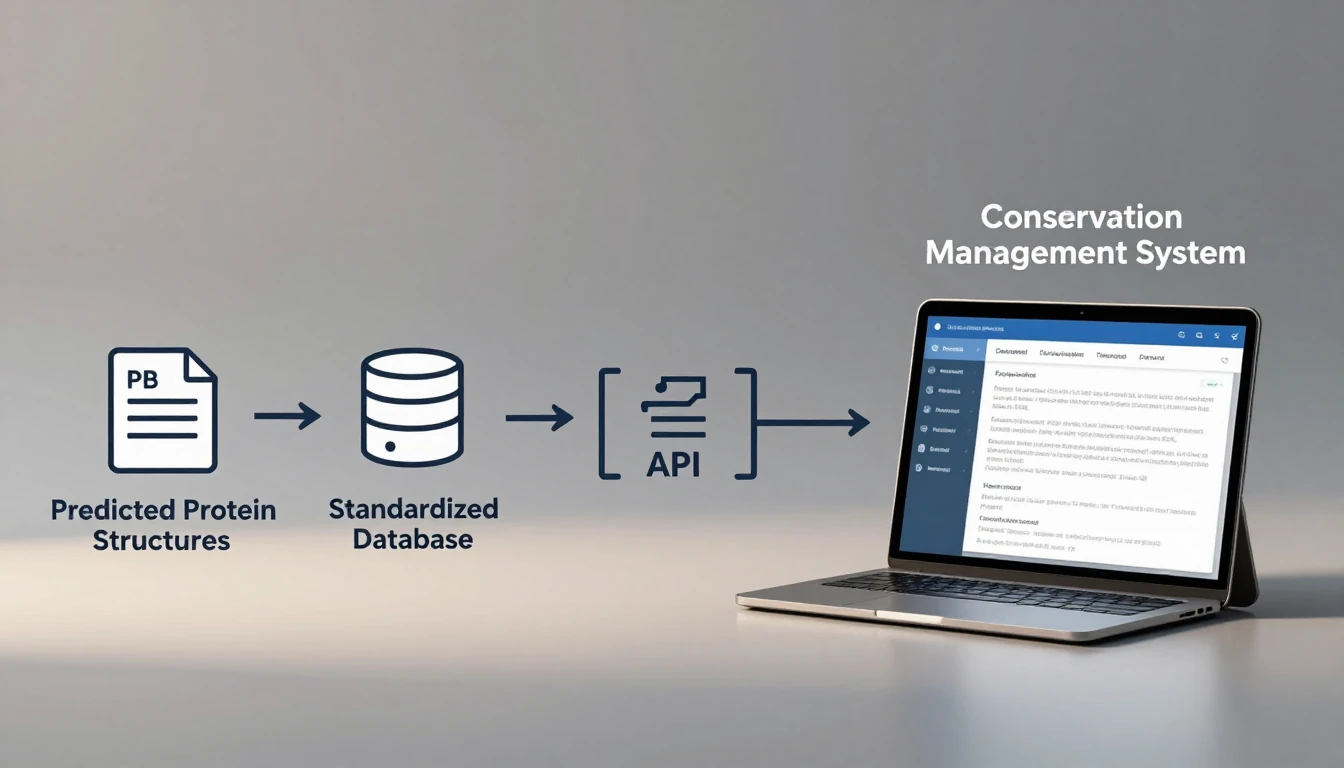
- Standardized Data Formats:
It is crucial that predicted structures (PDB files), their corresponding confidence scores (JSON/TSV), and associated gene information are stored in standardized, easily interoperable formats. - Database Integration:
This structural data can significantly enrich existing biodiversity databases.
For instance, linking a species' record in ZIMS (Zoological Information Management System) to a specialized database containing its key predicted protein structures. - API Access:
Establishing a simple Application Programming Interface (API) allows wildlife management software to query the protein structure database programmatically.
Imagine a veterinarian instantly pulling up the structure of a specific drug-metabolizing enzyme for an animal to accurately predict its response to medication. - Informing Breeding Programs:
By identifying the structural variants of proteins related to fertility or immunity, managers of captive breeding programs can make more informed decisions.
This enables them to pair individuals strategically to maximize the genetic fitness and diversity of offspring, moving far beyond simplistic pedigree charts.
Case Study: Rescuing the Northern White Rhinoceros with AI-Driven Genetic Insights
The Northern White Rhinoceros (NWR) is, tragically, functionally extinct, with only two living females remaining.
Conservation efforts to save this species, notably led by consortia like the BioRescue Project, heavily rely on assisted reproductive technologies utilizing cells from deceased individuals.
AI is rapidly becoming central to this critical mission.
- The Challenge:
Creating viable embryos necessitates a deep understanding of the genetic basis of NWR fertility and immune resilience to ensure any resulting offspring are healthy and robust. - AI Application:
- Genome Sequencing:
High-quality genomes from multiple NWR individuals have been meticulously sequenced. - Protein Prediction:
Researchers are actively employing AlphaFold to predict the structures of thousands of NWR proteins.
Special attention is given to those involved in reproduction (e.g., sperm-egg recognition proteins, hormonal receptors) and immune response. - Variant Analysis:
By comparing the predicted NWR protein structures to those of the closely related but healthy Southern White Rhinoceros, scientists can pinpoint key structural differences caused by genetic variants.
This helps to identify potentially deleterious mutations that might compromise embryo viability. - Guiding Intervention:
These structural insights are invaluable for guiding the selection of specific cell lines used for creating gametes, prioritizing those exhibiting the healthiest protein variants.
This AI-driven functional analysis provides a layer of crucial information that was previously unattainable.
- Genome Sequencing:

The 'Biodiversity Protein Bank': Architecting a Global AI-Powered Genetic Resource
Inspired by the tremendous success of initiatives like the Vertebrate Genomes Project (VGP), a compelling vision is emerging for a global, open-access 'Biodiversity Protein Bank.'
The Vision:
This would be a comprehensive database containing high-quality predicted structures for the entire proteome of thousands of endangered and keystone species.
Such a resource would serve as a foundational pillar for global conservation efforts.
Technical Roadmap:
Building this ambitious resource requires robust infrastructure and collaborative governance.
- Data Ingestion Pipeline:
An automated workflow is envisioned to pull new genome assemblies from NCBI, perform gene annotation, and then process them through a scalable AlphaFold pipeline on cloud infrastructure. - Core Infrastructure:
- Storage:
Petabyte-scale object storage, such as AWS S3 or Google Cloud Storage, for housing the vast collection of structure files. - Database:
A high-performance database, like PostgreSQL, to store essential metadata, confidence scores, and annotations, with extensions for advanced 3D structural queries. - Compute:
A large, dedicated cluster of GPUs/TPUs, efficiently managed by a workflow scheduler like Nextflow.
- Storage:
- Access & Collaboration:
- Web Portal:
A user-friendly front end that allows searching by species, gene name, or protein function, complete with an integrated Mol* viewer for interactive exploration. - Public API:
A REST API to facilitate programmatic access for researchers and seamless integration with other bioinformatics platforms. - Federated Governance:
A collaborative model involving leading research institutions, international conservation organizations, and national governments to ensure effective data contribution and stewardship.
- Web Portal:
This initiative would fundamentally democratize access to functional genomic information, empowering researchers worldwide to significantly contribute to conservation.

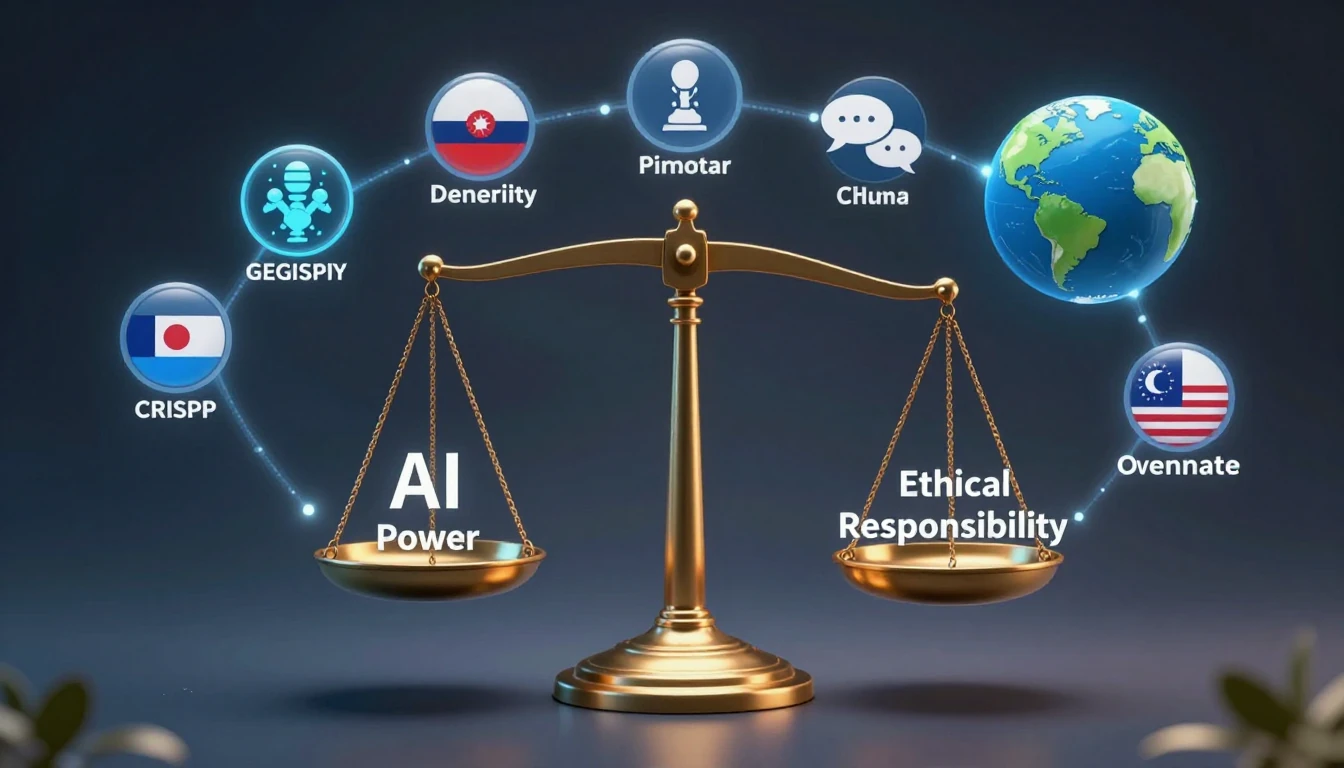
Ethical Frameworks and Future Frontiers: Navigating the Responsibilities of AI in Conservation
The immense power of AI in genomics brings with it profound ethical responsibilities that we must carefully navigate.
- Genetic Intervention and De-extinction:
The newfound ability to accurately predict the functional impact of genes makes targeted genetic engineering (e.g., via CRISPR) far more feasible.
This capability raises complex questions about "playing God" and the potential for unforeseen ecological impacts from re-introducing or significantly altering species. - Data Sovereignty:
The genetic information of a species endemic to a particular country is a form of national heritage.
Any global databases must strictly adhere to the principles of the Nagoya Protocol, ensuring the fair and equitable sharing of benefits derived from the use of these genetic resources. - Algorithmic Bias:
AI models are inherently trained on existing data, and most experimental structures are predominantly from a few well-studied model organisms.
Consequently, the accuracy of predictions for evolutionarily distant or unique species may be lower.
We must remain vigilant in characterizing and actively mitigating this inherent bias. - AI-Assisted Evolution:
In the long term, these powerful tools could potentially be used to guide the evolution of species, helping them better withstand the challenges of climate change or emerging diseases.
This represents a monumental intervention in natural processes, necessitating a comprehensive global public dialogue to establish clear ethical guardrails before such technologies are ever deployed.