- Claude Max v3.1 connects securely to major health platforms, allowing you to centralize and analyze deep longitudinal health data like sleep, workouts, and HRV.
- Crafting specific, natural language prompts enables Claude Max to identify personalized correlations between your various health metrics, moving beyond basic app dashboards.
- You can troubleshoot data inconsistencies by manually refreshing sources or refining your prompts with more context for accurate interpretations.
- For advanced users, Claude Max offers API access to automate insights, integrating personalized analytics into custom dashboards like Google Sheets or Notion.
- Always prioritize data privacy and remember that AI is a tool for analysis, not a medical professional; use insights to guide experiments and consult doctors for health advice.
Your Personal Data Scientist: Biohacking with Claude Max v3.1
Welcome to a new approach to personalized health optimization.
With the release of Claude Max v3.1 (Helios), biohackers have a powerful tool for deep data analysis.
This guide will walk you through leveraging Claude Max to interpret complex sleep and workout data, moving beyond pre-set app dashboards to generate truly personalized, actionable insights.
Setting Up Your Claude Max Biohacking Environment
Connecting your personal health data is the first essential step.
Claude Max uses a secure, token-based system to ensure you have granular control over data access.

Step-by-Step UI Path:
- Navigate to Settings:
Log into your Claude Max account and click on your profile icon in the top-right corner.
Select `Settings` from the dropdown menu. - Open Data Integrations:
In the left-hand sidebar, click on `Data Integrations`. - Connect a New Source:
Click the `+ Connect New Source` button.
You will see a list of categories.
Select `Health & Fitness`. - Select Your Platform:
Choose your data source from the list (e.g., `Oura Cloud`, `Apple HealthKit`, `Garmin Connect`). - Authenticate:
You will be redirected to the source platform's secure login page (OAuth2).
Log in with your credentials. - Grant Permissions:
A permissions screen will appear.
It is crucial to grant read-only access to the specific data points you want Claude to analyze (e.g., `Sleep Stages`, `Heart Rate`, `Workouts`, `HRV`).
I generally recommend against granting write access for any application unless absolutely necessary. - Confirm Connection:
Once you approve, you will be redirected back to Claude Max.
The new data source will appear under `Connected Sources` with a green 'Active' status.
Your environment is now ready.
Claude will begin a one-time historical data sync, which may take several minutes to a few hours depending on the volume of your data.
Your First Sleep & Workout Data Query
Let's start with a basic query to understand the fundamentals.
The goal here is to analyze a single night of sleep in the context of the previous day's workout.
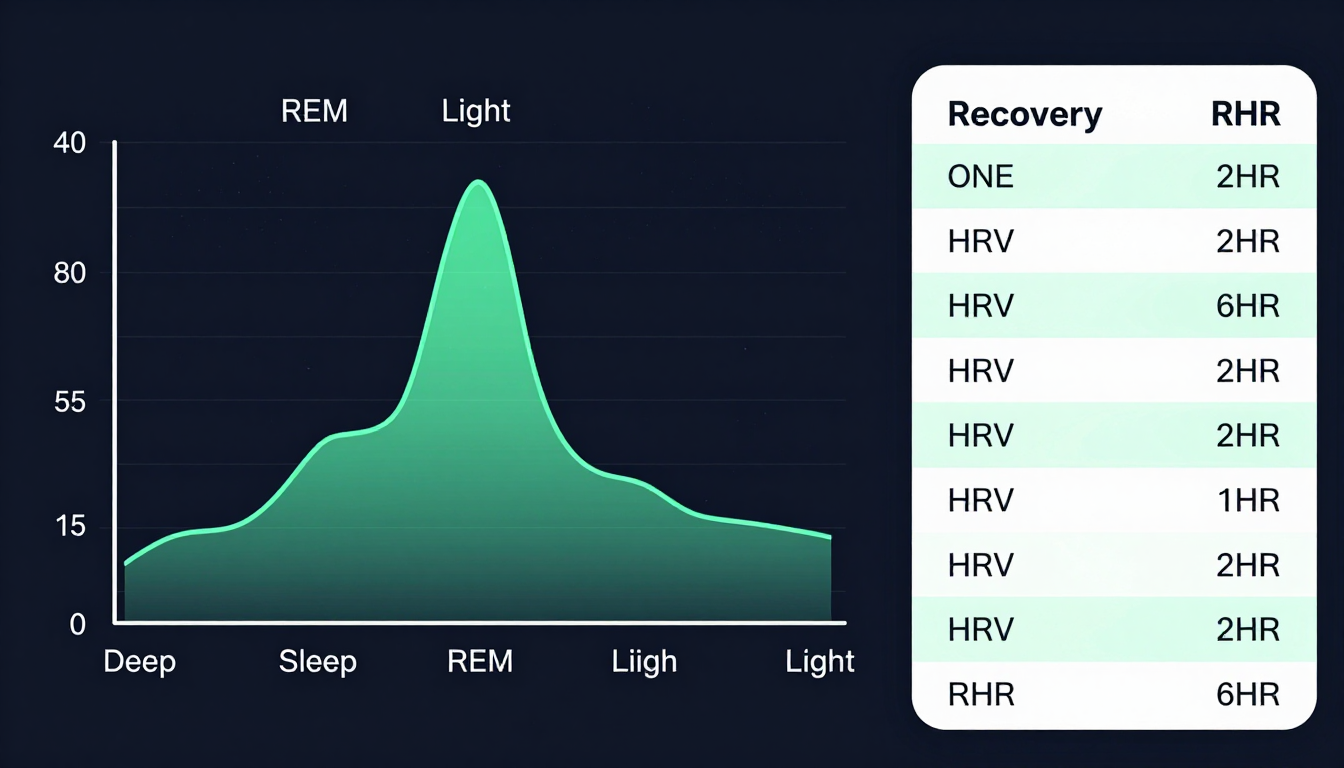
Step-by-Step Guide:
- Open a New Chat: Start a new conversation with Claude Max.
- Craft Your Prompt: Be specific with dates and data types.
Use a clear, natural language prompt.
Analyze my sleep data from last night (2026-01-14) and my workout from yesterday afternoon (2026-01-14). My workout was a 'Heavy Strength Training' session logged in my Garmin data. Provide a summary of my sleep quality, key recovery metrics (like HRV and RHR), and explain how the workout may have impacted my sleep. - Run the Query: Send the prompt to Claude Max.
Understanding the Output:
Claude Max will typically respond in a structured format:
- Natural Language Summary:
A top-level paragraph explaining the findings in simple terms (e.g., "After your heavy strength session, your deep sleep was 25% higher than your 7-day average, indicating your body prioritized physical repair. However, your HRV was slightly suppressed, suggesting lingering physiological stress."). - Key Metrics Table: A table with specific data points.
| Metric | Value | 7-Day Average | Insight |
| Total Sleep | 7h 45m | 7h 30m | +15m vs. avg |
| Deep Sleep | 1h 55m (24.7%) | 1h 30m (20%) | Elevated, likely for muscle repair |
| REM Sleep | 1h 40m (21.5%) | 1h 50m (24.4%) | Slightly reduced |
| Resting HR | 48 bpm | 46 bpm | Slightly elevated, indicating fatigue |
| HRV (ms) | 52 ms | 60 ms | Suppressed, sign of nervous system stress |
- Actionable Suggestion:
A concluding sentence suggesting a course of action (e.g., "Consider focusing on active recovery or a lighter workout today to allow your nervous system to fully recover.").
Identifying Workout Recovery Needs from Sleep Patterns
This is an area where Claude Max offers more depth than standard dashboards.
You can ask it to find correlations over time between training stress and sleep quality.

Practical Application Prompt:
Analyze my workout and sleep data for the last 60 days.

Cross-reference days where my Garmin 'Training Load' exceeded 150 with the subsequent night's sleep data.

Specifically, identify trends between these high-intensity days and changes in my nightly average HRV, deep sleep percentage, and resting heart rate. Are there patterns that predict poor recovery?
Interpreting the Insight:
Claude might respond:
"I have identified 8 instances in the past 60 days where your Training Load exceeded 150.
In 7 of these 8 instances (87.5%), your average HRV on the following morning dropped by an average of 12% below your baseline.
Furthermore, on nights following workouts logged after 6 PM with a Training Load over 150, your deep sleep onset was delayed by an average of 45 minutes."
This is a powerful, actionable insight.
It suggests that late-night, high-intensity workouts are disproportionately harming your recovery, giving you a specific variable to change.
Customizing Prompts for Deeper Biohacking Insights
Advanced users can craft multi-layered prompts to uncover subtle patterns.
The key is to provide context, define the datasets, and ask a precise question.
Advanced Prompt Structure:
[CONTEXT] I am a 40-year-old female focused on improving body composition. I am testing a ketogenic diet and want to see how my training timing impacts sleep-driven recovery.

[DATASET 1] All workout data from my Oura Ring for the past 90 days.
[DATASET 2] All sleep data, including sleep stages and HRV, for the same 90-day period.
[DATASET 3] My manually logged journal entries containing the tag '#keto'.

[QUESTION] Correlate my morning fasted workouts (workouts logged before 9 AM) with the subsequent night's REM sleep percentage. Compare this to the REM sleep percentage on nights following evening workouts (workouts logged after 5 PM).

Is there a statistically significant difference in my REM sleep based on workout timing while I am following a ketogenic diet (referenced by my #keto tags)?
This level of detail allows Claude Max to function as a personal data scientist, controlling for variables (like diet) and isolating the specific relationship you want to investigate.
Troubleshooting Data Inconsistencies and Misinterpretations
Even powerful AI can face issues with messy real-world data.
Here’s how to address common problems.
- Problem: Missing Data / Sync Errors
- Symptom: Claude reports it cannot find data for a specific day that you know exists.
- Solution: Manually force a data refresh.
- UI Path:
Settings > Data Integrations > [Select Data Source] > ... > Force Resync. - Prompt Command:
`Resynchronize my Oura Cloud data for the date range 2026-01-10 to 2026-01-15.`
- UI Path:
- Symptom: Claude reports it cannot find data for a specific day that you know exists.
- Problem: AI Misinterprets Workout Type
- Symptom: You did a grueling yoga session, but Claude interprets the low heart rate as an 'easy' workout.
- Solution:
Add qualitative context and specific metrics to your prompt.
Instead of "Analyze my yoga workout", try: "Analyze my 90-minute hot yoga session from yesterday. Although my average heart rate was low (Zone 1), my subjective perceived exertion was 8/10. How did this session impact my HRV and deep sleep compared to a typical Zone 1 cardio session?"
- Symptom: You did a grueling yoga session, but Claude interprets the low heart rate as an 'easy' workout.
- Problem: Vague or Unhelpful Analysis
- Symptom: Claude gives generic advice like "get more sleep."
- Solution:
Refine your question to be more specific and ask for quantifiable relationships.
Instead of "How can I improve my sleep?", ask "What is the single biggest negative correlate with my deep sleep percentage over the last 30 days based on my available data?"
- Symptom: Claude gives generic advice like "get more sleep."
Integrating Claude Max Insights into Your Biohacking Dashboard
For a holistic view, you can pull Claude's structured insights into a personal dashboard (e.g., Notion, Google Sheets).
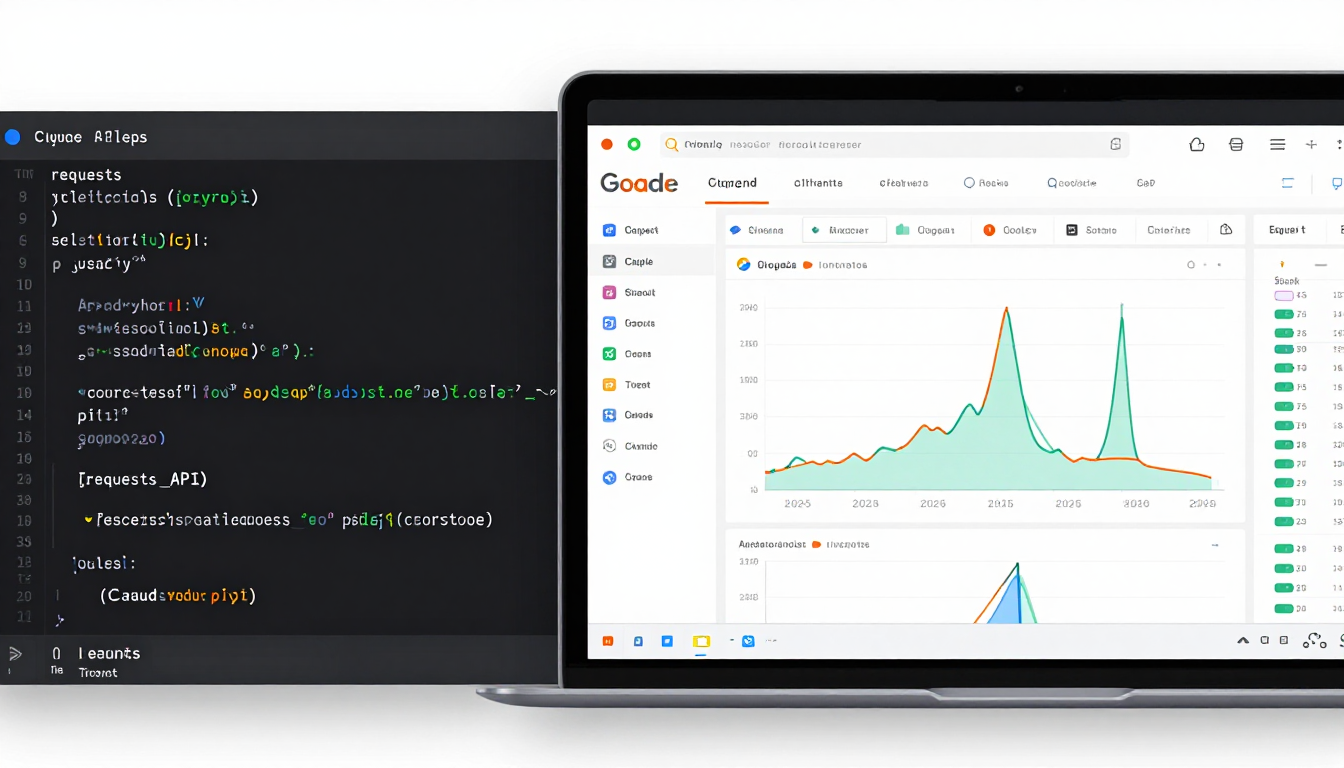
Method: Using the Claude Max API
Claude Max provides an API endpoint to run prompts programmatically and receive a JSON response.
You can use this to automate a daily summary.
Example Python Snippet (for a Google Sheet):
import requests
import gspread
import os

# --- Configuration ---
CLAUDE_API_KEY = os.environ.get("CLAUDE_MAX_API_KEY")
CLAUDE_API_URL = "https://api.anthropic.com/v2/claude_max/query"
PROMPT = "Provide a JSON object summarizing my sleep from last night (2026-01-14). Include keys: totalSleep, deepSleepPercent, hrv, and a one_sentence_summary."

# --- Fetch from Claude Max API ---
headers = {
    "Authorization": f"Bearer {CLAUDE_API_KEY}",
    "Content-Type": "application/json"
}
data = {"prompt": PROMPT}

response = requests.post(CLAUDE_API_URL, headers=headers, json=data)

if response.status_code == 200:
    # --- Parse the structured JSON response ---
    insight = response.json()

    # --- Authenticate with Google Sheets ---
    gc = gspread.service_account()
    sh = gc.open("My Biohacking Dashboard").sheet1

    # --- Append a new row with the data ---
    row_to_add = [
        '2026-01-15',
        insight.get('totalSleep'),
        insight.get('deepSleepPercent'),
        insight.get('hrv'),
        insight.get('one_sentence_summary')
    ]
    sh.append_row(row_to_add)
    print("Dashboard updated successfully.")
else:
    print(f"Error fetching data: {response.text}")
This script can be run daily (e.g., via a cron job or cloud function) to automatically populate your dashboard with high-level, AI-generated insights.
Ethical Considerations and Data Privacy
Using AI for biohacking is powerful, but it requires responsibility.

- Data Privacy is Paramount:
Your health data is some of the most sensitive personal information you have.
Ensure any AI tool you use, including Claude Max, has a clear privacy policy.
Use the most secure authentication methods (OAuth2) and grant only the minimum necessary permissions (read-only). - AI is Not a Doctor:
Claude Max is a data analysis tool, not a medical professional.
Its interpretations are based on correlations in your data, not a medical diagnosis.
Always consult a qualified physician for medical advice, diagnosis, or treatment. - Beware of Bias:
AI models can sometimes exhibit biases based on the data they were trained on.
If you have a rare condition or belong to an underrepresented demographic, the model's 'normal' baseline may not apply to you.
Use insights as a starting point for your own experiments, not as absolute truth. - Data Ownership:
You own your data.
Regularly review which services have access to your health information and revoke access for any tools you no longer use.
Translating Claude Max Insights into Actionable Lifestyle Changes
The final, and most important, step is turning data into action.
Create a feedback loop: Insight -> Hypothesis -> Experiment -> Re-evaluation.
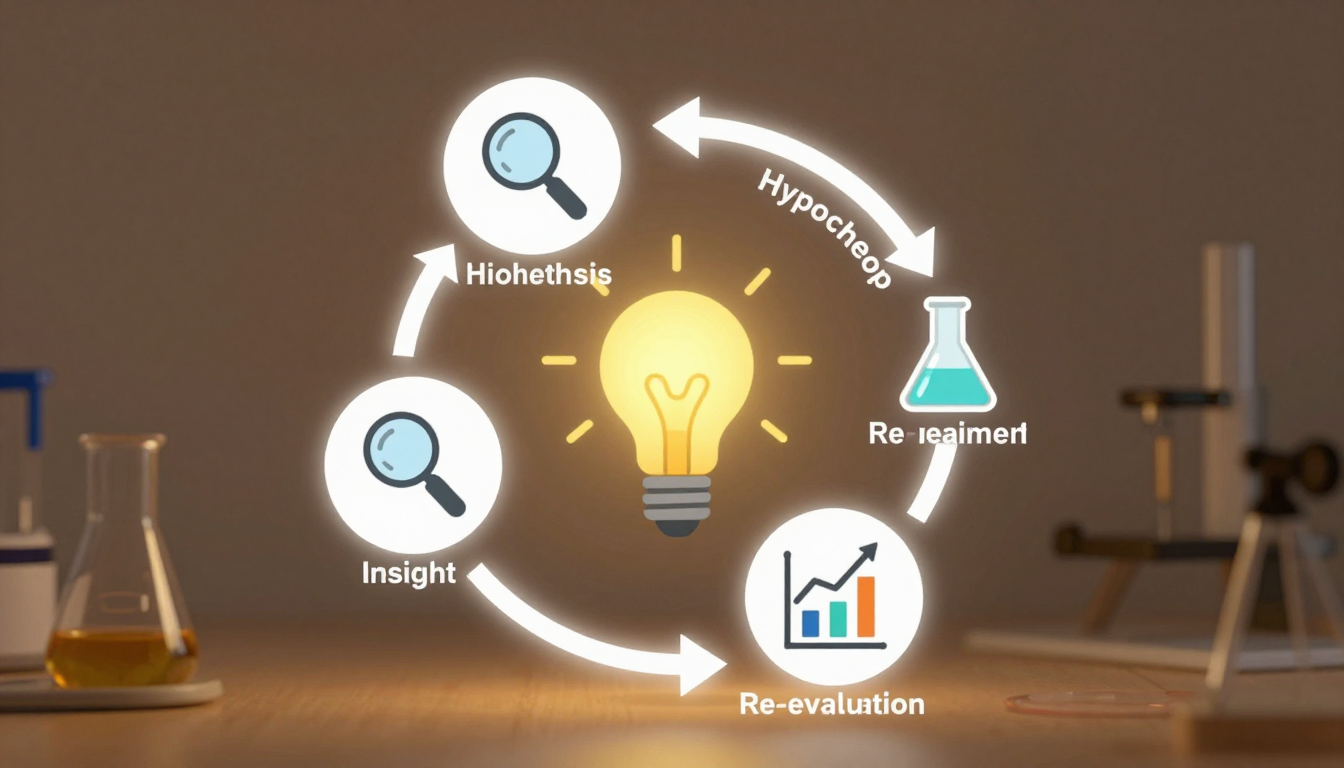
Example Workflow:
- Generate an Insight (The 'What'):
- Prompt:
"What is the strongest correlation between my nutrition logs and my sleep quality over the past month?" - Claude Max Insight:
"Your data shows a strong correlation between consuming meals containing over 50g of carbs within 2 hours of bedtime and a 20% average reduction in deep sleep duration."
- Prompt:
- Form a Hypothesis (The 'Why'):
- "My hypothesis is that late-night carbohydrates are disrupting my blood sugar and body temperature regulation, which in turn inhibits deep sleep."
- Design an Experiment (The 'How'):
- "For the next 14 days, I will implement a strict 'no carbs after 7 PM' rule. I will change nothing else about my routine. I will continue to track my sleep and nutrition data diligently."
- Re-evaluate with Claude Max (The 'Result'):
- After 14 days, run a new prompt:
"Compare my deep sleep percentage from the last 14 days against the 14-day period prior. Did my experiment of eliminating late-night carbs have a positive impact? Quantify the change."
- After 14 days, run a new prompt:
This closed-loop system of inquiry and experimentation is the core of effective biohacking, with Claude Max acting as your personal data science engine to guide the process.