🚀 Key Takeaways
- OpenAI is developing a Desktop Superapp to unify and simplify its diverse product ecosystem, enhancing user experience.
- The superapp will integrate key AI tools including the ChatGPT app, Codex AI coding app, and an AI-powered Atlas browser.
- Currently in the planning and development phase for a desktop launch, this initiative aims to overcome past challenges of product fragmentation.
- This strategic move represents a concerted effort to refocus company efforts and double down on successful AI innovations, without impacting the existing mobile ChatGPT experience.
OpenAI is embarking on an ambitious new project: the development of its own Desktop Superapp.
This initiative is designed to unify and simplify various existing product efforts, ultimately aiming to significantly improve the overall user experience.
Currently in the crucial planning and development phase, this superapp is slated for a future desktop launch, marking a significant strategic direction for the company.
The envisioned superapp will act as a central hub, seamlessly integrating core AI components such as the standalone ChatGPT app, the powerful Codex AI coding app, and a brand-new AI-powered Atlas browser.
This consolidation is a direct response to past challenges where product fragmentation has hindered development speed and made it difficult to achieve desired quality standards.
By bringing these tools together, OpenAI seeks to refocus its resources and double down on successful technologies like Codex.
It's important to note that while this desktop strategy is a major shift, the existing mobile version of ChatGPT will remain unchanged.
The goal is to provide a cohesive and robust desktop environment that empowers users with integrated AI capabilities, moving beyond disparate applications to a truly unified interface.
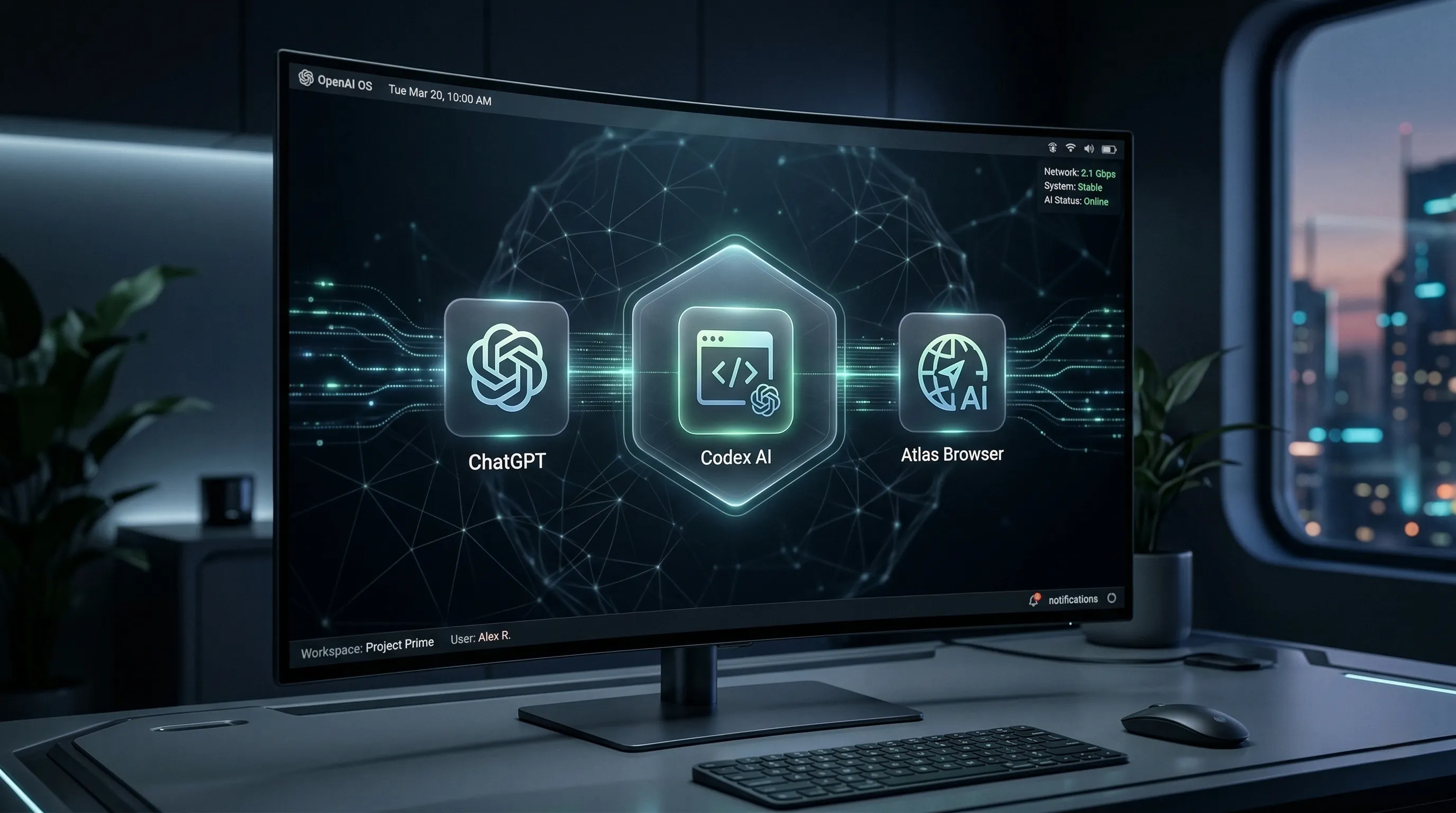
1. Beyond the Hype: Deconstructing OpenAI's Desktop Superapp Architecture
🔹 The Unified AI Trinity: A Core Component Breakdown
The architecture of OpenAI's Desktop Superapp is built upon a strategic integration of three core pillars.
These components are the conversational ChatGPT app, the developer-focused Codex AI coding app, and the new AI-powered Atlas browser.
The explicit purpose driving this consolidation is to unify and simplify OpenAI's various product efforts into a single, cohesive desktop experience.
This initiative is currently in the planning and development phase, signaling a decisive move to streamline how users interact with its toolset.
🔹 From Context Switching to a Cohesive Command Center
The real-world benefit of this unified architecture is the elimination of workflow friction.
Imagine a developer debugging a web application: they can use the Codex pane to generate and refine JavaScript, have the integrated Atlas browser pull up and summarize relevant Stack Overflow threads in real-time, and use the ChatGPT component to draft user-facing error messages, all within a single window.
This approach directly combats the fragmentation that has been slowing down product development, allowing OpenAI to refocus company efforts on a single, high-quality platform.
For users, this means a more powerful, less cumbersome experience, effectively turning their desktop into a seamless AI-augmented workspace rather than a collection of disparate tools.
🔹 A Calculated Retreat from Fragmentation
Industry analysis suggests this is less about feature addition and more about strategic consolidation.
The move is a direct response to internal feedback that product fragmentation was making it harder to hit desired quality standards and slowing down innovation cycles.
By creating the superapp, OpenAI can double down on successful bets like Codex while building a more stable and integrated foundation for future products.
It is critical to note that this is a focused desktop launch; the company has confirmed the existing mobile version of ChatGPT is not changing, indicating a deliberate, phased approach to this significant architectural pivot.

2. The AI Gauntlet: How OpenAI's Superapp Could Reshape the Desktop Landscape
🔹 The Strategic Unification
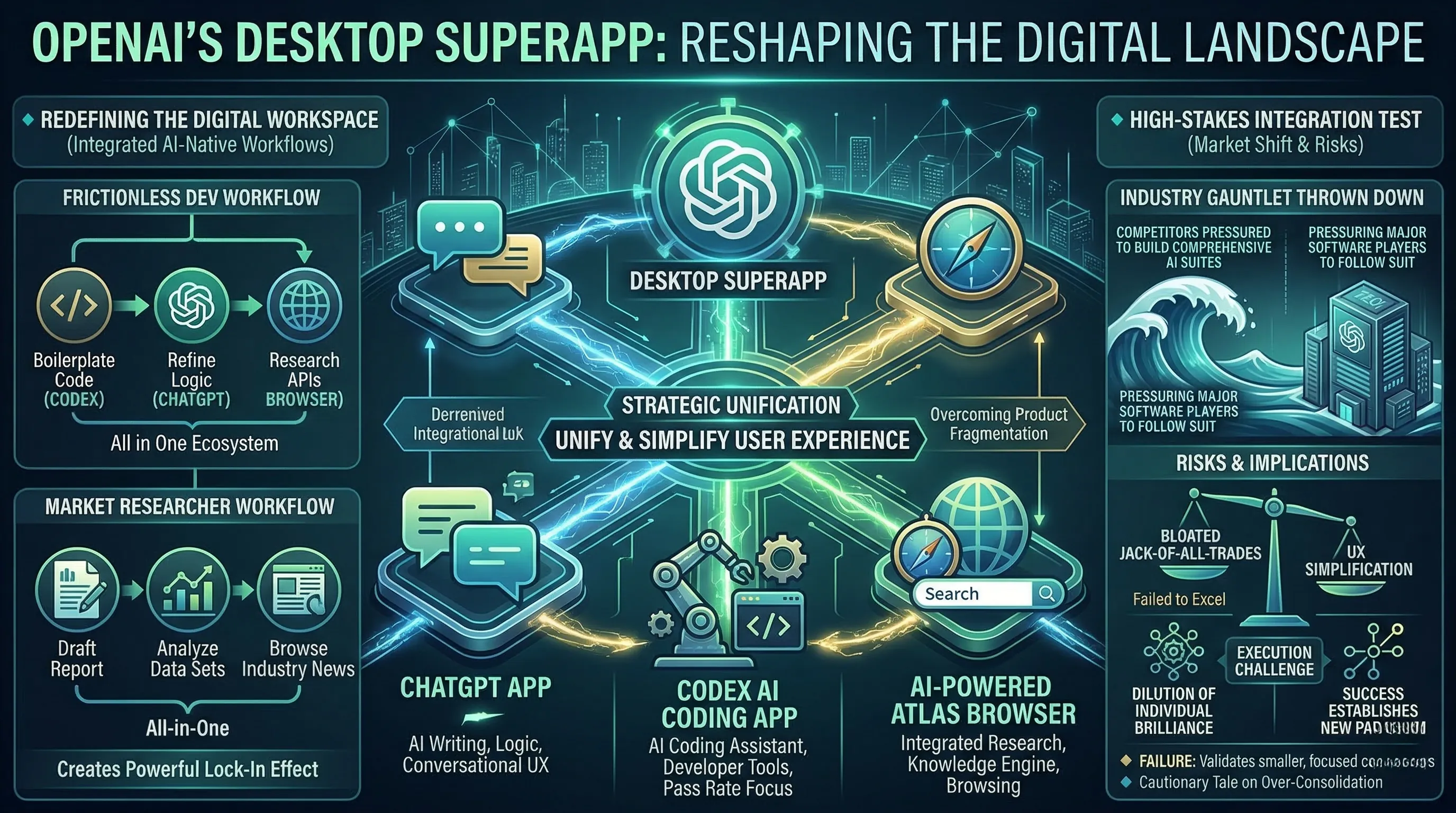
OpenAI is moving to consolidate its various desktop products into a single, cohesive `Desktop Superapp`.
This planned application will integrate the `ChatGPT app`, the `Codex AI coding app`, and a new `AI-powered Atlas browser` into one environment.
The official purpose is to `unify and simplify` the user experience, a direct response to internal challenges where product fragmentation has reportedly slowed development and made it difficult to maintain desired quality standards.
This strategic shift aims to refocus company efforts and double down on proven successes like `Codex` within a more streamlined framework.
🔹 Redefining the Digital Workspace
By bundling these powerful tools, OpenAI is effectively throwing down the gauntlet, challenging the industry to move beyond single-function applications and toward integrated `AI-native workflows`.
This move could force a significant market shift, compelling competitors who offer standalone AI writing aids, coding assistants, or research tools to consider building their own comprehensive suites or risk becoming niche features in a superapp's world.
For a developer, the potential is a frictionless workflow: generating boilerplate code with `Codex`, refining logic through a conversation with `ChatGPT`, and researching APIs in the `Atlas browser`, all without switching windows.
Similarly, a market researcher could draft a report, analyze data sets, and browse industry news within this single ecosystem, creating a powerful `lock-in effect` that makes leaving for disparate, single-purpose tools less appealing.
🔹 The High-Stakes Integration Test
The core challenge for OpenAI will be execution.
While unifying products can solve fragmentation, it introduces the risk of creating a bloated, `jack-of-all-trades` application that fails to excel at any single task.
The industry will be closely observing whether the superapp's `user experience` is truly simplified or if the individual brilliance of tools like Codex gets diluted in a complex interface.
Success would establish a new paradigm for desktop productivity, pressuring major software players to follow suit with their own deeply integrated AI environments.
Failure, however, could validate the approach of smaller, more focused competitors and serve as a cautionary tale about the perils of over-consolidation.
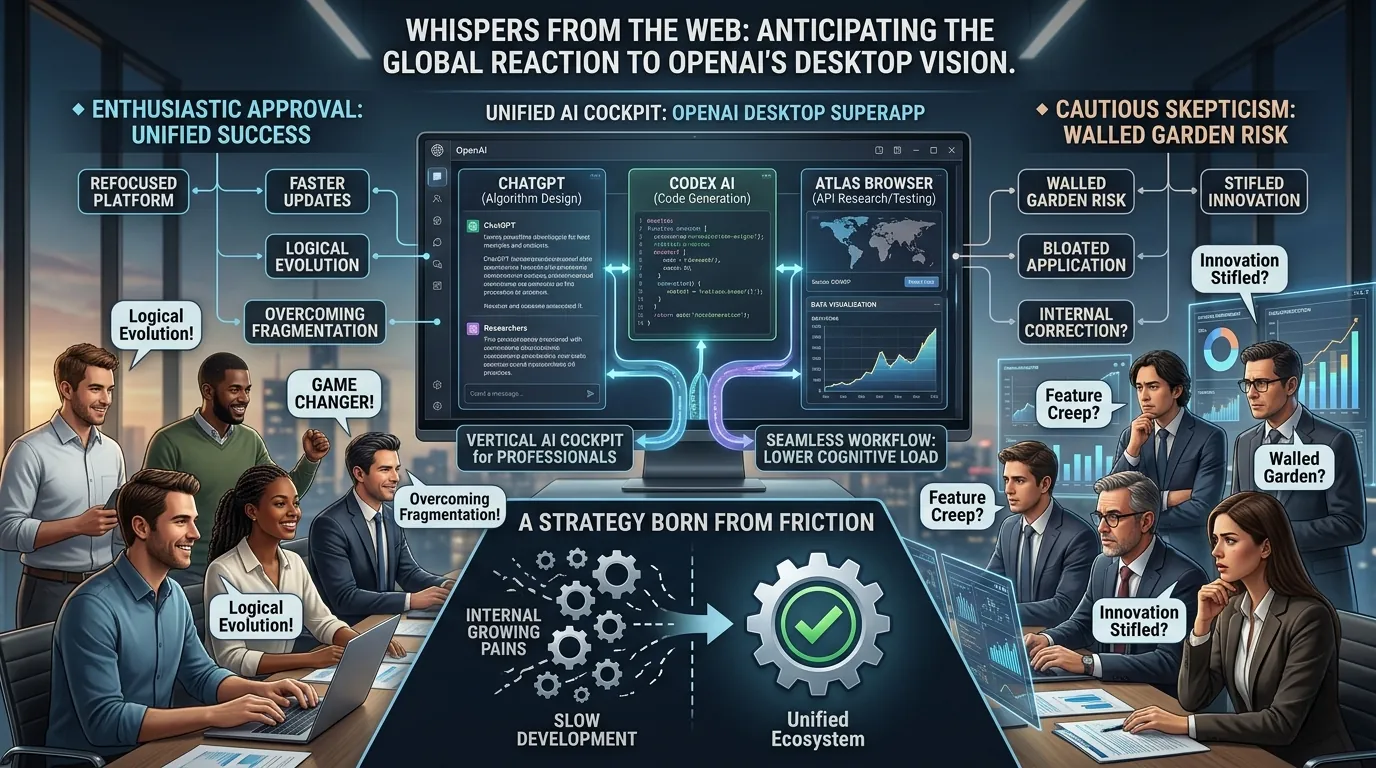
3. Whispers from the Web: Anticipating the Global Reaction to OpenAI's Desktop Vision
🔹 A Strategy Born from Friction
The core driver behind OpenAI's planned desktop superapp appears to be a direct response to internal growing pains.
Sources indicate that significant `fragmentation` across its product lines has been actively slowing down development cycles.
This siloed approach has reportedly made it increasingly difficult for the company to achieve its desired `quality standards` across the board.
The proposed solution is a unified desktop application, which is currently in the planning and development phase, set to integrate the `ChatGPT app`, the `Codex AI coding app`, and a new `AI-powered Atlas browser` into a single ecosystem.
It's a strategic consolidation designed to refocus company efforts and streamline the user experience, while the existing mobile version of ChatGPT remains unchanged.
🔹 Unifying the AI Workflow
Industry analysts will likely frame this move as the creation of a vertically integrated `AI cockpit` for professionals.
For a developer, the real-world impact is a seamless workflow: conceptualizing an algorithm with `ChatGPT`, generating the functional code with `Codex AI`, and researching documentation or testing APIs within the `Atlas browser`, all without leaving a single application window.
This move to `simplify user experience` could dramatically lower the cognitive load for researchers and data scientists, who could use the superapp to collate information, generate analytical scripts, and draft reports in one fluid process.
For everyday power users, the consolidation transforms a set of powerful but disconnected tools into a single, approachable utility, effectively doubling down on OpenAI's most successful bets.
🔹 Cautious Optimism from the Digital Trenches
The community's reaction is anticipated to be a mix of enthusiastic approval and cautious skepticism.
Developers and early adopters who have been juggling multiple OpenAI interfaces will almost certainly welcome the promise of a `refocused` and unified platform, viewing it as a logical and necessary evolution.
The implicit promise of faster updates and higher quality resulting from overcoming internal `fragmentation` will be a significant point of praise.
However, tech pundits may raise concerns about the risks of a "walled garden," questioning whether bundling these services could stifle innovation or create a bloated application that fails to master any single function.
The key debate will likely center on whether this strategic pivot to `avoid fragmentation` is primarily for the user's benefit or a necessary internal correction to manage an expanding and complex product suite.
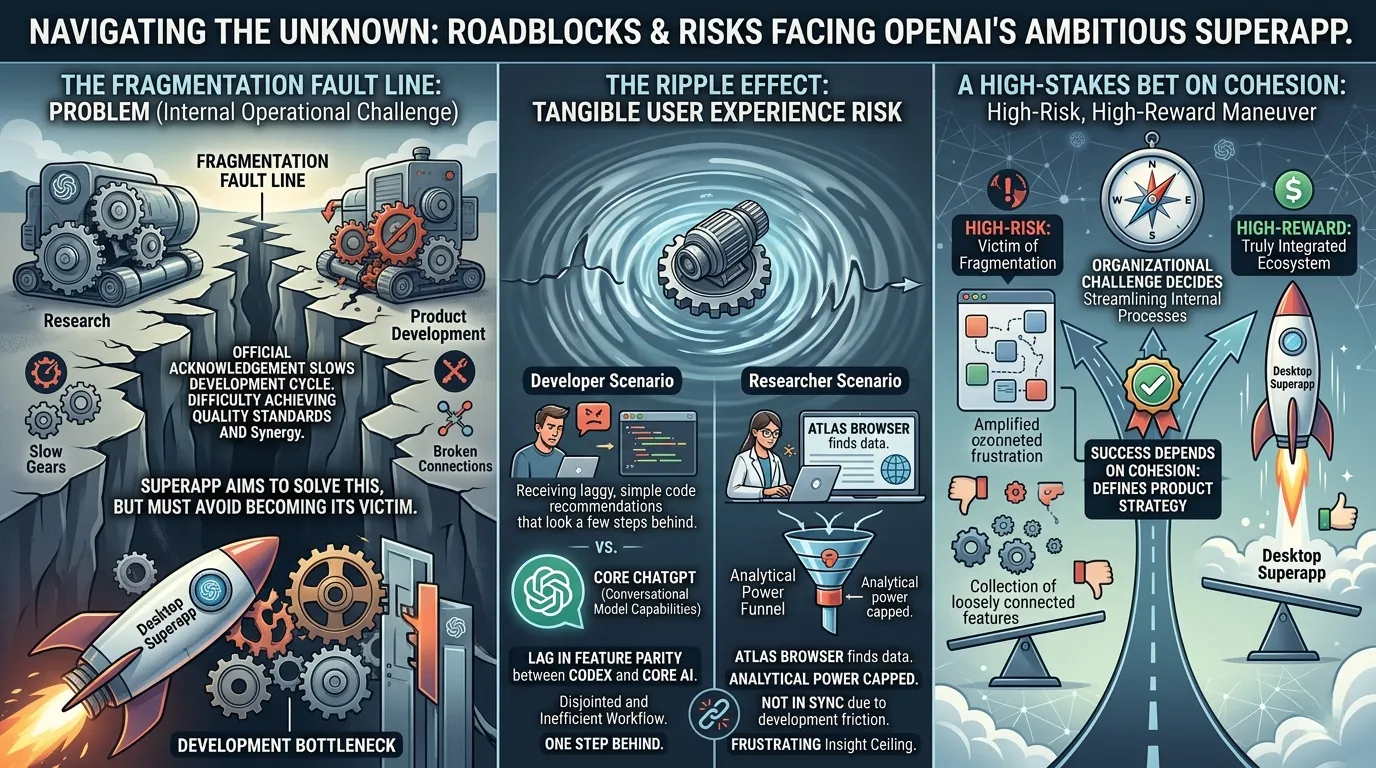
4. Navigating the Unknown: The Roadblocks and Risks Facing OpenAI's Ambitious Superapp
🔹 The Fragmentation Fault Line
The most significant hurdle for OpenAI is not external competition, but an internal operational challenge identified as fragmentation.
This issue has been officially acknowledged as a primary factor slowing down product development across the board.
Consequently, this fragmentation has made it increasingly difficult for the company's various product efforts to achieve their desired quality standards.
The Desktop Superapp is, in essence, a direct response to this pre-existing and critical development bottleneck.
🔹 The Ripple Effect of a Stalled Engine
A slowdown in development directly translates to a tangible risk for the end-user experience.
For a developer relying on the Codex AI coding app component, a lag in feature parity with the core ChatGPT app could create a disjointed and inefficient workflow, where code suggestions feel a step behind conversational model capabilities.
For a researcher, the AI-powered Atlas browser might discover cutting-edge information, but if the core AI model isn't updated in sync due to development friction, its analytical power is immediately capped, creating a frustrating ceiling on insight.
This lack of synergy risks turning the promise of a unified platform into a reality of three siloed applications trapped in a single window, defeating the core purpose of a simplified user experience.
🔹 A High-Stakes Bet on Cohesion
The central risk is that the Desktop Superapp, a product designed to solve fragmentation, could itself become a victim of it.
If the underlying development hurdles aren't cleared before launch, the app could debut as a collection of loosely connected features rather than a truly integrated ecosystem.
Community sentiment hinges on whether OpenAI can streamline its internal processes; failure to do so risks launching a product that amplifies existing frustrations rather than eliminating them.
Ultimately, the success of this ambitious project depends on solving the very organizational challenge that made it necessary in the first place—a high-risk, high-reward maneuver that will define the company's product strategy for years to come.
5. The Horizon Ahead: OpenAI's Strategic Leap Towards a Unified AI Future
🔹 From Fragmentation to Focus: The Superapp Blueprint
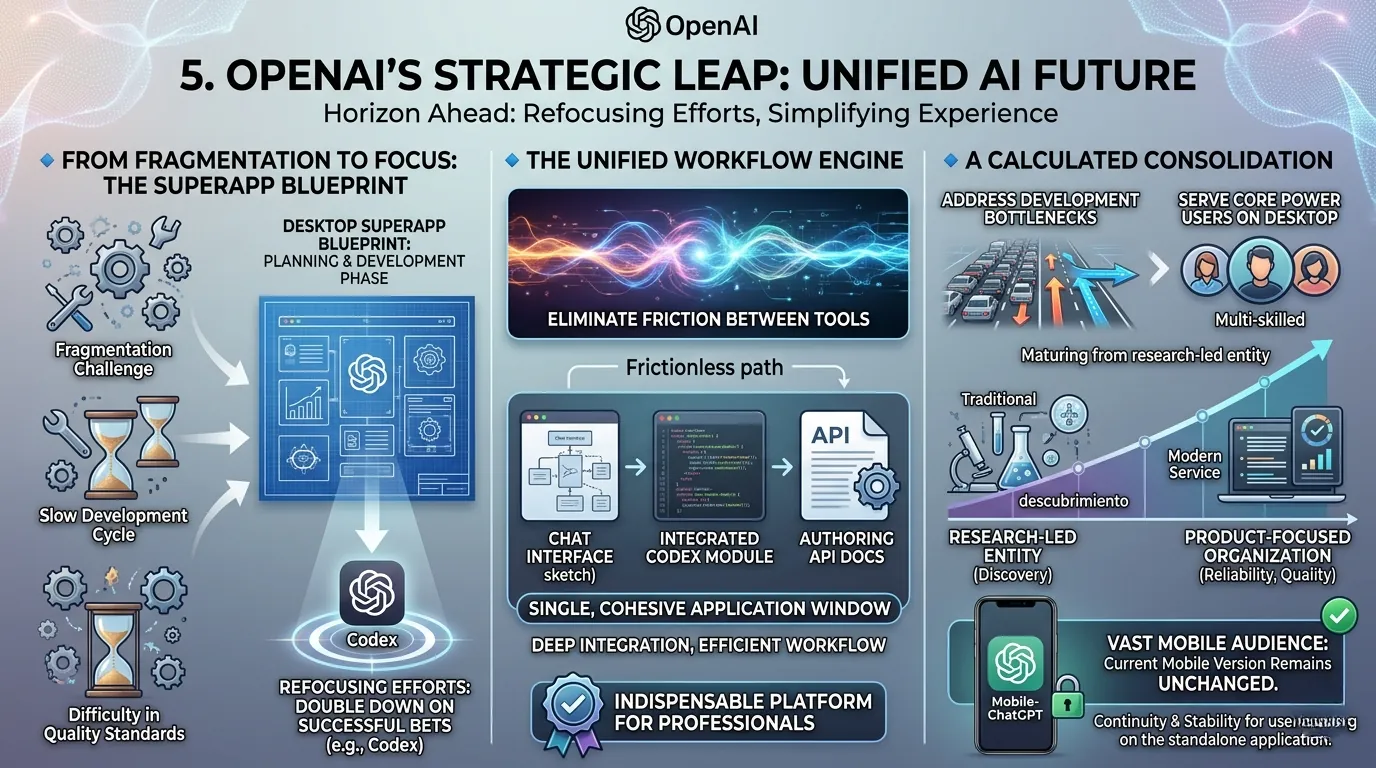
OpenAI is actively shifting its strategy towards a consolidated desktop-first experience, with a new Desktop Superapp now in the planning and development phase.
The primary objective of this initiative is to unify and simplify the company's various product efforts, which have reportedly suffered from fragmentation.
This fragmentation has been identified as a key factor slowing down product development and making it more challenging to achieve desired quality standards across the board.
The plan involves a significant refocusing of company efforts, specifically by doubling down on highly successful bets like its powerful coding assistant, Codex.
🔹 The Unified Workflow Engine
This strategic unification points towards a future where the friction between different AI tools is completely eliminated for desktop users.
For a developer, this could mean drafting an application's architecture in a chat interface, generating the corresponding code with an integrated Codex module, and then authoring the API documentation without ever leaving a single, cohesive application window.
This move from a series of siloed web services to an all-in-one productivity hub aims to drastically improve user experience by creating a deeply integrated and efficient workflow.
The potential to streamline complex tasks could position the superapp not just as a tool, but as a central, indispensable platform for technical and creative professionals.
🔹 A Calculated Consolidation
This pivot is a clear signal of OpenAI maturing from a research-led entity to a product-focused organization prioritizing a sustainable and high-quality user experience.
By consolidating its strengths, the company is directly addressing the internal development bottlenecks to better serve its core power users on desktop platforms.
This is less about adding new features and more about perfecting the synergy between existing, proven technologies to build a more powerful and reliable ecosystem.
Crucially, for its vast mobile audience, OpenAI has officially stated that the current mobile version of ChatGPT remains unchanged, ensuring continuity and stability for users who rely on the standalone application for on-the-go access.
6. 💡 Tech Talk: Making Sense of the Jargon
- Desktop Superapp: Imagine your computer having one master control center that brings together all your favorite OpenAI tools – like a single, powerful command bridge for all your AI needs, making everything easier to find and use.
- Product Fragmentation: This is like having all the pieces of a LEGO set scattered across different rooms; it's hard to build anything big or cool because you spend all your time searching for parts.
For a company, it means their different apps and features don't talk to each other well, slowing down innovation and confusing users. - Codex AI Coding App: Think of it as a super-smart coding assistant that understands human language and can help you write, debug, and understand computer code much faster, making programming accessible to more people.
- AI-powered Atlas Browser: This isn't just a regular internet browser; it's like having a personal research assistant built right into your web surfing.
It could intelligently summarize pages, answer questions based on content, or even help you create content directly within the browser, powered by advanced AI.
📚 Related Posts
The Quantum Leap: Redefining Intelligence with Asynchronous Cognitive Mesh
🚀 Key TakeawaysStreamline workflow efficiency by automating complex data analysis and report generation, saving critical time.Gain unparalleled predictive insights into market trends and customer behavior, empowering smarter, data-driven decisions.Boost
tech.dragon-story.com
The Grand Arrival of GPT-5.4 Mini & Nano
🚀 Key TakeawaysThe release of GPT-5.4 mini and GPT-5.4 nano on March 17, 2026, introduces significantly faster, more cost-effective, and highly capable small models from the GPT-5.4 family.GPT-5.4 mini offers near-GPT-5.4 performance for its size, runni
tech.dragon-story.com
Samsung Galaxy S26 Ultra: Redefining Flagship with Next-Gen AI and Privacy Display
🚀 Key TakeawaysExperience a revolution with next-gen AI features powered by Smarter Galaxy AI and One UI 8.5, promising an efficient and user-friendly intelligent experience.Enjoy unparalleled visual fidelity and security with a Built-in Privacy Display
tech.dragon-story.com


